

Alloy Resistor Reliability: Which One Should You Trust?
2026-06-28
When it comes to precision current sensing, alloy resistor reliability isn't just a spec—it's a dealbreaker. From thermal drift to long-term stability, not every resistor delivers on its promises. So, which one should you trust when your design’s accuracy is on the line? At Milliohm, we believe reliability is built on proven materials and rigorous testing, not just datasheet claims. Let’s dive into what really matters.
What Actually Determines an Alloy Resistor's Lifespan?
The endurance of an alloy resistor hinges primarily on thermal stress management. Each current pulse causes the resistive element to heat and expand, then cool and contract. Over time, these repeated mechanical cycles can lead to micro-cracks in the alloy or at the junction points, especially if the resistor is operated beyond its rated power or in environments with poor heat dissipation. Material fatigue isn't just about total energy; it's the rate of temperature change and peak temperatures that accelerate degradation. A design that minimizes hotspots and ensures even current distribution can dramatically extend useful life.
Chemical stability is another silent determinant. Alloy resistors, particularly those with copper-manganese or nickel-chromium formulations, can suffer from oxidation or corrosion at elevated temperatures. Even trace amounts of moisture or sulfur in the surrounding atmosphere can trigger intergranular attack, slowly eroding the conductive path. This is why high-reliability resistors often feature protective passivation layers or are hermetically sealed. Yet, it's not just external threats—internal electromigration under continuous DC load can also shift the resistance value permanently, making precise alloy composition and manufacturing purity critical for long-term stability.
The Hidden Trade-offs in Alloy Resistor Selection
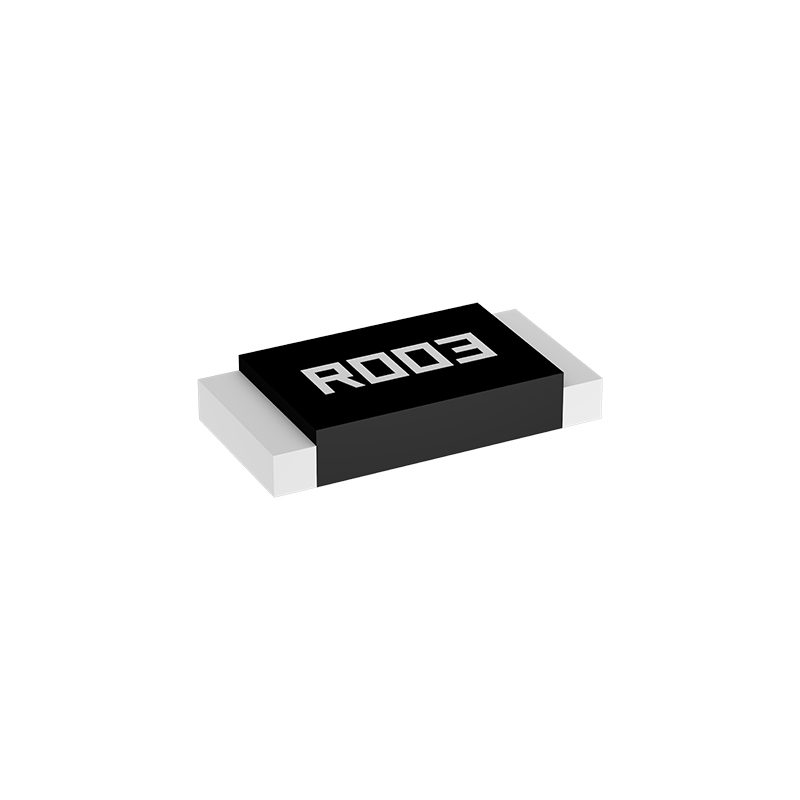
Alloy resistors are often chosen for their precision and low temperature coefficient, but a closer look reveals less obvious compromises. The very properties that make these components stable under varying electrical loads can introduce subtle thermal EMF effects at the junction of dissimilar metals, skewing measurements in sensitive DC circuits. Engineers frequently overlook this until it surfaces as an inexplicable drift during low-voltage testing.
Another trade-off lies in long-term drift versus initial tolerance. While alloy types like constantan or manganin boast excellent resistance to oxidation, their resistivity can shift over thousands of hours when exposed to elevated humidity, even if they pass initial environmental screening. This gradual change may go unnoticed in applications that demand decade-long reliability, turning a supposedly stable reference into a source of error.
Size and power handling also present a hidden decision point. The use of a smaller package to save board space can raise the film temperature significantly under pulse conditions, altering the resistance in ways not captured by the continuous power rating alone. Designers must weigh the benign datasheet figure against real-world thermal cycling, where the mismatch in expansion coefficients can fatigue the internal bond, ultimately affecting performance far earlier than predicted.
Real-World Stress Tests That Separate Reliable from Fragile
Nothing reveals the true nature of a system quite like an unscripted, high-pressure scenario. Lab simulations and controlled benchmarks can offer a glimpse, but they often miss the messy, unpredictable variables that real life throws at us. It’s when the server room overheats on launch day, when a supplier vanishes overnight, or when user demand spikes tenfold in a matter of minutes that you see what’s genuinely robust. These moments strip away the polish and expose whether the foundation is built on disciplined engineering or just hopeful assumptions.
Consider the e-commerce platform that coasts through regular traffic but buckles the moment a flash sale goes viral. The difference isn’t just about capacity planning; it’s about how the system handles cascading failures, how gracefully it degrades under load, and whether monitoring tools actually alert the right people in time. In financial services, a sudden market swing can distinguish a well-architected trading engine from one riddled with hidden race conditions. Even in physical infrastructure, a bridge’s behavior during an unexpected storm tells you more than any theoretical model. These stress tests aren’t designed—they’re inflicted. And they have a brutal, honest way of separating what’s dependable from what merely looks good on paper.
Getting through such ordeals unscathed demands more than a checklist of best practices. It requires a culture that embraces chaos engineering, values blameless postmortems, and actively seeks out weaknesses before external circumstances force the issue. The teams that learn to thrive under these conditions don’t just react to incidents; they anticipate them, building feedback loops that turn every surprise into a lesson. In the end, reliability isn’t a static achievement. It’s a continuous negotiation with reality, and the real-world stress test is the only referee that matters.
Why Material Composition Isn't the Whole Story
Judging a material solely by its chemical makeup overlooks the subtle interplay of processing and structure. Two alloys with identical elemental lists can behave radically differently—one brittle at room temperature, the other ductile—simply because of how they were cooled or forged. Grain size, phase distribution, and residual stresses often override the inherent properties of the raw elements, shaping everything from hardness to fatigue life in ways a composition sheet can't capture.
Consider how a ceramic's toughness isn't just about purity but about flaw population and crack-tip shielding. Even tiny variations in sintering temperature or the introduction of controlled porosity can flip a material from shattering like glass to withstanding repeated shock. This is why engineers fixate on microstructure maps and thermal histories: the real character of a material emerges from its biography, not just its birth certificate of elements.
How to Spot Premature Failure Before It Costs You
Products rarely fail without warning. There are almost always early signs—faint noises, slight performance dips, or subtle changes in behavior—that get ignored until it’s too late. The trick is training yourself to notice these whispers before they become screams. Instead of waiting for a breakdown, build a habit of regular check-ins. For example, keep a simple log of operating temperatures, cycle times, or output quality. When a reading starts drifting from its typical range, you’ve caught the failure while it’s still cheap and easy to fix.
Another often-missed signal is inconsistency. A machine that hums perfectly every morning but stumbles once a week might have an issue hiding in plain sight. People tend to dismiss occasional glitches as flukes, but patterns matter. Track the frequency of those “random” hiccups; if the intervals are shrinking, you’re watching a failure curve steepen. Pair that with observations from the people who interact with the equipment daily—operators often notice odd smells, sounds, or feels long before any sensor triggers.
Finally, stop treating maintenance schedules as rigid calendars. Time-based intervals can lull you into replacing parts too soon or too late. Instead, use the early signals you’ve identified to trigger interventions. If a pump starts drawing 10% more current to deliver the same flow, that’s your cue—regardless of what the calendar says. This shift from reactive panic to proactive reading of the equipment’s own language is what separates a controlled hiccup from a costly disaster.
The Overlooked Factor That Sinks Most Designs
It's rarely the obvious flaws that doom a design. More often, it's a quiet assumption woven into the very first sketch—the belief that users will interact with the product exactly as the designer imagined. This assumption steers every decision, from layout to color to copy, and it becomes invisible to the team. They test, iterate, and polish, but never stop to ask if the fundamental framing is even valid. The result is a coherent, elegant solution to a problem no one really has.
What makes this factor so insidious is that it feels like rigour. User personas are crafted, journeys are mapped, yet they all rest on a scenario detached from real-world friction. People don't encounter designs in isolation; they bring distraction, emotional states, and competing goals. A banking app that assumes calm, deliberate use will break when someone tries to check their balance while rushing through an airport. The difference between a design that works and one that doesn't often comes down to how honestly the context of use was treated in those early, quiet moments before any pixel is placed.
FAQ
Their construction typically involves metal alloys that resist thermal drift and mechanical wear better than pure metal films, which translates into steadier performance under heavy loads and temperature cycles.
Thick-film versions tend to have a more rugged makeup with greater mass, absorbing transient spikes with less parametric shift. Thin-film counterparts, while offering tighter initial tolerances, can be more susceptible to drift if the alloy layer is too fine.
There can be. Achieving both often demands careful material balancing. For instance, nickel-chromium alloys deliver excellent pulse endurance but can introduce slightly more current noise compared to specialized low-noise formulations like Evanohm.
Absolutely. Moisture ingress can corrode the resistive element or lead to electrochemical migration across terminals. Hermetic packaging or conformal coating is often necessary when the component operates in condensing environments.
Look for extended shelf-life testing data, third-party certification marks, and consistency in lot-to-lot TCR measurements. Also, talk to the manufacturer about their derating philosophy — conservative derating curves often signal deeper confidence in the product.
It usually boils down to the proprietary blend of the resistive alloy, the termination materials, and the protective coating. High-temperature alloys like those used in downhole drilling instruments incorporate elements that maintain a stable oxide layer without scaling.
Bulk metal foil resistors often earn that trust due to their near-zero TCR, non-inductive design, and inherent immunity to electro-static discharge damage. They're pricey but set the benchmark for infield reliability where failure simply isn't an option.
Conclusion
When it comes to alloy resistor reliability, the choice is rarely straightforward. What actually determines an alloy resistor's lifespan goes well beyond the datasheet. It's a combination of manufacturing consistency, internal stresses from thermal cycling, and the subtle electrochemical reactions at interfaces. The hidden trade-offs in alloy resistor selection often come down to balancing precision with endurance under surge conditions. Real-world stress tests that separate reliable from fragile expose that even resistors with identical alloy compositions can behave markedly differently depending on their internal construction and termination quality. Material composition isn't the whole story—a resistor's performance is heavily influenced by its processing history and environmental interactions.
Designers often overlook early signs of degradation: a slight drift in resistance value or an increase in current noise can signal impending failure. Learning how to spot premature failure before it costs you involves looking beyond baseline specifications and performing accelerated life tests that mimic actual use. The overlooked factor that sinks most designs is poor thermal management at the board level; even a robust resistor will fail prematurely if heat isn't dissipated properly or if solder joints introduce additional stress. Trust in an alloy resistor ultimately hinges on a holistic evaluation that accounts for real conditions, not just theoretical quality.
Contact Us
Contact Person: Yuying Gao
Email: [email protected]
Tel/WhatsApp: +86 18926013721
Website: https://en.milliohm.net/