

Best Precision Turning Machine: Expert Insights for Smart Buyers
2026-07-30
When it comes to high-stakes manufacturing, settling for mediocre turning machines can cost you precision, time, and profitability. Whether you’re prototyping intricate components or scaling up production, choosing the right equipment demands a sharp focus on real-world performance, not just spec sheets. In this guide, we cut through the noise—drawing on expert insights to help smart buyers like you identify what truly matters. Along the way, we’ll spotlight how WINNRUI CNC redefines reliability in turning technology, blending robust engineering with the finesse your toughest jobs require. If you’re ready to move beyond textbook advice and invest with confidence, let’s turn the page on guesswork.
What Separates a True Precision Lathe From the Rest
A true precision lathe isn’t just about tight tolerances stamped on a spec sheet—it’s a philosophy of engineering where every component from the spindle nose to the tailstock quill is obsessed over. You’ll notice it first in the spindle: ground-in-place bearings that laugh at runout, with dynamic balancing that makes a gentle hum, not a vibration. The bed isn’t just cast iron; it’s stress-relieved and hand-scraped to a level of flatness that most shops can’t measure. Feed screws are ground, not just cut, with backlash compensation that feels telepathic. And the tailstock? It locks dead center by instinct, not by luck.
Beyond the mechanics, a genuine precision lathe reveals itself in the little things that mass producers skip. The coolant delivery system isn’t a hose flailing around; it’s a precisely directed flood that hits the cutting edge without splashing the ways. Dials have crisp, micrometer-style markings that actually mean something when you nudge them. The carriage handwheel feels weighted, moving the tool post with an absence of slack that makes tenths adjustments intuitive. Even the paint job resists chipping after years of cutting oil baths—not because it’s pretty, but because the machine is expected to work hard without degrading. These details add up to a tool that doesn’t just hit a dimension once; it holds it all day, across parts, without babysitting.
What truly separates it, though, is thermal stability. A lathe built for precision doesn’t grow and shrink with every shift in room temperature. The headstock is designed to dissipate heat symmetrically, so the spindle axis stays put as bearings warm up. Major castings are often cooled by a controlled flow of oil or coolant that maintains a constant temperature—sometimes within a degree. This isn’t overkill; it’s the difference between parts that measure fine at 9 a.m. and parts that are scrap by noon. When you turn a shaft on a machine like that, you’re not fighting the lathe; you’re collaborating with it, and the result is work that holds a mirror finish without polishing, and fits its mating part without debate.
Spindle and Guideway Technologies That Define Accuracy
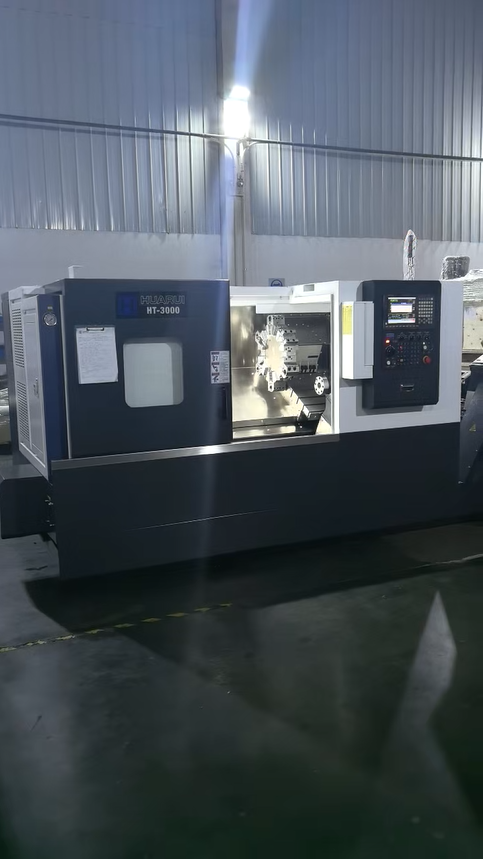
The heart of any precision machine tool lies in its spindle and guideway system—these components directly translate design intent into measurable accuracy. A spindle’s rotational runout, thermal stability, and stiffness dictate how faithfully a cutting edge follows a commanded toolpath. Similarly, guideways determine the straightness, flatness, and repeatability of linear axes. When these elements work in unison, the result is a machine capable of holding micron-level tolerances over hours of continuous duty. The interplay between spindle bearings and guideway preload, for example, can either amplify or absorb vibrational energy, making material selection and lubrication strategies critical.
Modern advancements in spindle technology push beyond conventional ball bearings into hydrostatic and aerostatic designs, where a thin film of fluid or air eliminates metal-to-metal contact. This not only reduces friction but also provides inherent damping, smoothing out the micro-interruptions that cause chatter and surface irregularities. Meanwhile, guideway configurations have evolved from simple box ways to linear motion systems with rolling elements or even magnetically levitated stages. Hydrostatic guideways, in particular, offer near-frictionless motion along with high load capacity, ensuring that even heavy workpieces can be moved without sacrificing positional accuracy. These technologies are often paired with closed-loop feedback from high-resolution encoders, closing the gap between the electronic command and the physical response.
Beyond individual component performance, true accuracy emerges from how the spindle and guideways are integrated into the machine structure. Thermal compensation algorithms rely on embedded sensors to counteract heat-induced drift, but the physical design must minimize thermal asymmetries in the first place. The stiffness of the guideways directly affects the spindle's ability to maintain proper cutting geometry under dynamic loads. In pursuit of ever-tighter tolerances, machine builders now model the entire kinematic chain, from spindle nose to guideway rails, using finite element analysis to optimize damping and deflection. The result is a cohesive system where every micron of slide movement translates into predictable tool-to-workpiece interaction, ultimately defining the achievable precision of the finished part.
The Overlooked Role of Thermal Stability and Damping
In many engineering contexts, thermal stability shapes how a material or component holds its dimensions and properties as temperatures shift. This quality often gets sidelined by more tangible specs like tensile strength or hardness. Yet when operating conditions stray from the assumed norm, even a slight expansion or contraction can introduce internal stresses that quietly accumulate, eventually forcing premature cracks or deformation.
Damping sits in a similarly underrated corner. Its ability to dissipate vibrational energy governs how quickly a system settles after a disturbance, directly affecting noise levels and dynamic precision. A precision spindle on a lathe, for example, might chatter incessantly without adequate damping, ruining surface finishes and accelerating tool wear. Despite this, damping is frequently treated as an afterthought rather than a core design lever.
What really amplifies the risk is the interplay between the two. Elevated temperatures can shift a material’s damping characteristics, while poor damping magnifies the cyclic loads driven by thermal expansion and contraction. In fields like satellite instrumentation or high-speed spindles, overlooking this pair means inviting unexplained drift and fatigue, where the cost of retrofitting dampers or thermal barriers far outstrips the effort of early-stage co-optimization.
Control Systems and Software That Elevate Part Quality
Modern machining cells thrive on adaptive control software that reads subtle signals from the spindle and cutting zone. Instead of running a fixed program, the system varies feed rates based on sensed torque, acoustic emissions, or even slight shifts in coolant flow. Over a long production run, these micro-adjustments prevent burr formation and heat-induced expansion that quickly wash out tight tolerances. It’s the difference between a batch with ten good parts out of twelve and one where every piece passes the CMM check the first time.
Data-centric platforms add another layer by drawing from tool history, environmental conditions, and past measurements to predict part quality before a probe touches the surface. A dashboard flags drift in real time, not by comparing to abstract limits but by referencing a running baseline of how the process actually performs at its best. Operators then receive plain-language suggestions—slow down this finish pass by two percent or swap the insert after the next four cycles—turning tribal knowledge into something measurable and repeatable across shifts.
The real payoff comes when this software ties together every stage of production, from raw stock inspection to final audit. A part that runs slightly off-center early on won’t survive to assembly where it might jam automated feeders; the system catches the issue downstream and triggers a gentle alarm before value-added work piles on top of a bad base. In this way, control software doesn’t just police quality—it practically co-authors the build sequence, ensuring each operation sets up the next for success.
Material and Build Quality: Signs of a Durable Machine
A machine's longevity often reveals itself in the subtle details that mass-market descriptions overlook. Instead of fixating on mere marketing claims, run your fingers along the casting seams—rough, uneven joints betray shortcuts in manufacturing that lead to stress fractures under load. A truly robust unit will have seams that are virtually invisible or meticulously smoothed, a sign that the manufacturer invested in precise mold engineering rather than rushing to cut costs. Equally telling is the choice of fasteners: look for stainless steel hardware in high-vibration areas, where inferior zinc-plated screws would inevitably corrode and loosen, causing a cascade of alignment issues over time.
Beyond the surface, press your ear to the chassis during operation. A well-built machine hums with a singular, consistent tone, its structural damping materials absorbing discordant frequencies that cheaper frames amplify. Notice how the frame responds to dynamic loads—rock the machine gently and observe if the base stays planted or betrays a slight torsional twist. Heavy cast-iron components, often relegated to industrial-grade equipment, do more than add weight; they serve as inherent stabilizers that counteract resonance and tool chatter. These are the unsung heroes of durability, quietly extending the lifespan of bearings and precision surfaces without ever appearing on a spec sheet.
Don't underestimate the narrative told by the service panels and access points. Quality engineering declares itself through hinged doors with reinforced latch mechanisms that click closed with satisfying certainty, not flimsy covers that warp after the third removal. Inside, you'll discover the true story: wiring harnesses are routed with heat-resistant loom away from moving parts, connectors are securely clipped rather than left dangling, and critical fluid reservoirs feature sight glasses or integrated filtration that speaks to a design team anticipating maintenance realities. These are the hallmarks of a machine built for years of faithful service—thoughtful, deliberate choices that transform a collection of parts into a consistent, trustworthy ally in your workshop.
Smart Automation Features Worth Paying For
Not all automation is created equal. The features that truly earn their keep are the ones that adapt to your workflow instead of forcing you into rigid routines. Look for tools that let you chain actions intelligently—triggering follow-up tasks only when specific conditions are met, rather than blindly executing every step. This conditional logic prevents automation from becoming a nuisance when exceptions arise.
Another game-changer is the ability to learn from your behavior over time. Imagine a platform that quietly observes which emails you never open and automatically filters them out, or notices the recurring files you attach to weekly reports and pre-loads them for you. These subtle, predictive helpers save mental energy without demanding constant configuration.
Finally, cross-platform connectivity separates useful automation from isolated gimmicks. The best systems bridge gaps between your calendar, email, project boards, and messaging apps. When a task is marked complete, your team gets a Slack notification, the client’s CRM entry updates, and your timesheet logs the entry—all without switching tabs. That kind of seamless orchestration is worth every penny because it removes the hidden friction of context-switching.
FAQ
Precision turning machines are built to hold incredibly tight tolerances, often down to microns, through superior spindle accuracy, rigid construction, and advanced thermal compensation. Unlike general-purpose lathes, they minimize vibration and deflections, ensuring every part comes out consistent, even over long production runs.
Don't just look at the spec sheet. Ask about the base casting design—a one-piece, heavily ribbed bed offers far better damping. Physically inspect the linear guideways: are they generously sized and preloaded? A machine that feels heavy and solid during a demo cut will spare you headaches later.
It depends on your part complexity. If you often do secondary milling or drilling, combining them in one setup slashes cycle times and eliminates stacking errors. Even a basic Y-axis can unlock off-center features. However, if you mostly handle simple cylindrical parts, skip the cost and stick with a robust 2-axis machine.
Spindle stiffness and runout. Even a tiny wobble translates directly into chatter and poor surface quality. A spindle with proper bearing preload and minimal thermal growth will give you a mirror finish consistently. Pair that with a rigid toolholder setup and you're golden.
It's more than just ease of use. A conversational control can shorten programming time on the floor, but for complex profiles you'll want full G-code capability. Look for features like tool load monitoring and USB/network connectivity—they let you adapt quickly and analyze tool life without constant supervision.
Chip flow isn't just about coolant pressure. A steep, unobstructed slant bed design combined with properly positioned chip conveyors prevents re-cutting and heat buildup. For long, stringy materials, an integrated chip breaker cycle can be a game changer—program it to reverse the spindle momentarily and snap the chip.
Absolutely, but you need a machine designed with high dynamic stiffness. Look for roller or box guides over ball guides, very rigid turret clamping, and a spindle motor that delivers peak torque at low RPMs. Controlling the chip is tricky, but a high-pressure through-spindle coolant system makes a huge difference.
Conclusion
A genuine precision turning machine distinguishes itself through uncompromising spindle and guideway engineering, where sub-micron runout and hydrostatic or linear motor drives eliminate the vibration and lag that plague lesser lathes. Yet even the finest bearings and ways can't compensate for thermal drift or chatter, which is why leading builders embed temperature-controlled coolant circuits and heavily ribbed castings to absorb harmonics rather than transmit them. The combined effect is a platform that holds tighter tolerances hour after hour without operator intervention, turning complex geometries with surfaces that need almost no post-process polishing.
Beyond the iron, the control system and software stack are what allow shops to translate precision potential into actual part quality—look for real-time tool center point control, adaptive feed rate smoothing, and conversational interfaces that reduce programming guesswork. A durable machine also signals its longevity through box ways over linear rails, hand-scraped mating surfaces, and oversized ballscrews that resist wear over decades of use. Smart automation, from automatic tool presetters to gantry loaders that sync with production schedules, pays off quickly by eliminating idle spindle time. Discerning buyers weigh these features against their specific part envelopes, knowing that the right combination of thermal discipline, structural heft, and intelligent motion control separates a commodity turning center from an asset that redefines what their shop can produce.
Contact Us
Contact Person: Tim
Email: [email protected]
Tel/WhatsApp: +86 15522553731
Website: https://www.winnrui-cnc.com/