

China Siemens Reducers: A Comprehensive Guide to Industrial Efficiency
2026-07-21
In the world of industrial automation, efficiency isn't just a goal—it's a necessity. Siemens reducers have long been the backbone of reliable power transmission, and sourcing them from China offers a unique blend of quality and cost-effectiveness. But navigating this market can be tricky. That's where Soochee steps in, providing clarity and dependable solutions. This guide breaks down everything you need to know about China Siemens reducers to keep your operations running smoothly and your bottom line strong.
Inside the Engineering of Siemens Reducers
Siemens reducers rely on a meticulous approach to gear geometry. Tooth profiles are carefully modified—often by micro-level crowning or tip relief—to ensure even load distribution under heavy torque. This isn’t just about textbook involute curves; years of field feedback shape the proprietary finishing that keeps meshing quiet and wear predictable.
The housing isn’t just a shell. Cast iron or aluminum bodies are internally ribbed after stress mapping, so their stiffness counteracts deflection right where forces concentrate. The lubrication system runs deep too: internal channels direct oil to each tooth contact, and in larger units, directional flow prevents starvation at critical mesh points, even when the reducer operates at steep tilt angles.
You’ll also see how Siemens engineers leave room for adaptation. Mounting flanges, motor adapters, and cooling fans can be positioned in multiple directions, and bearing preloads are factory-adjusted for specific motor coupling scenarios. This flexibility comes from iterative prototyping—not just CAD simulations—which means even 10-year-old reducers often get silent updates that improve today’s production.
Tailoring Gearboxes for China’s Industrial Landscape
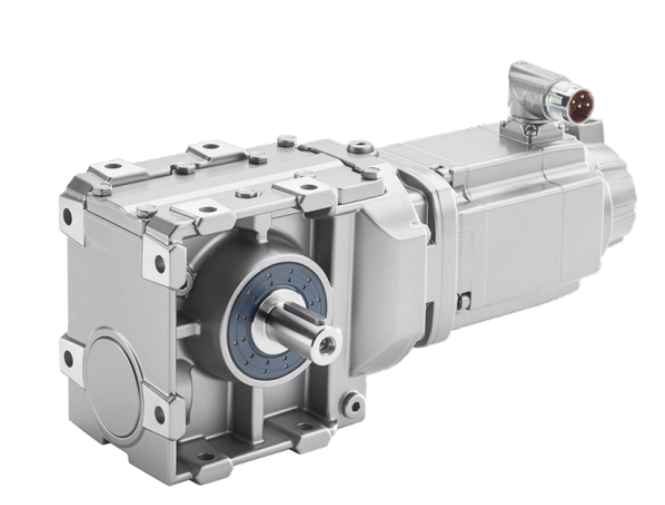
China’s industrial terrain is far from uniform—coastal manufacturing hubs demand high-speed precision, while inland mining and heavy industries require brute torque and resilience against dust and vibration. Standard off-the-shelf gearboxes often stumble when confronted with this split personality. That’s why we’ve moved away from one-size-fits-all engineering. Our approach starts with on-site duty cycle analysis, mapping real load spikes, ambient temperatures, and maintenance intervals unique to each facility. The result is a gearbox that doesn’t just fit the machine—it fits the rhythm of the entire operation.
Power supply stability varies dramatically across provinces, and with it, the tolerance for sudden voltage sags or frequency swings. Rather than treating this as an afterthought, we integrate adaptive lubrication systems and asymmetric tooth profiles that absorb these irregularities without sacrificing efficiency. For textile mills in Zhejiang, that means quieter running at partial loads; for cement plants in Shaanxi, it means surviving start-stop cycles that would shred a conventional drive train. The customization goes deeper than ratios and materials—it’s about anticipating how a gearbox ages in a specific corner of China’s economy.
Local supply chains have reshaped our design philosophy too. By tapping into regional foundries and bearing specialists, we’ve shortened lead times and enabled a modular architecture that lets customers swap input stages or cooling methods as their needs evolve. A gearbox heading to a cold storage facility in Heilongjiang might share 70% of its DNA with one destined for a Guangdong automotive line, yet the final assembly diverges sharply in sealing, lubrication, and thermal management. This blend of platform thinking and hyper-local tweaks keeps downtime low and performance high, even as China’s industrial policies push for rapid automation upgrades.
Efficiency Gains That Redefine Production Metrics
For decades, factory floors leaned on simple benchmarks—units per hour, total daily volume, or line speed—to gauge productivity. Yet those figures often masked hidden drags: equipment idling between changeovers, material waiting at bottlenecks, or rework piling up unnoticed until month-end. Today’s efficiency gains expose these blind spots by tracking how work actually flows. When a packaging line suddenly runs 17% slower on humid afternoons, it’s no longer dismissed as an anomaly—it becomes a trigger to recalibrate humidity controls or reschedule certain runs. The conversation shifts from “how fast did we go?” to “how smoothly did everything connect?”
Once you start measuring production through a wider lens, the definition of a “good shift” changes completely. Traditional metrics rewarded running equipment to the redline, even if it meant stockpiling parts that wouldn’t be needed for weeks. More nuanced views now value synchronization: achieving target output with minimal sprint-and-stop cycles, using just-in-time staging so inventory isn’t tying up cash, and keeping quality checks woven into the process so defects are caught before they cascade. One automotive supplier redefined its primary metric as “value-adding minutes per shift” and discovered that 22% of previously counted productive time was actually spent on non-value tasks like excessive conveyor travel or waiting for approvals.
The ripple effects show up in places that old scorecards never reached. Shorter production cycles mean a plant can accept rush orders without overtime panic; lower scrap rates shrink raw-material demand until it aligns more closely with actual consumption. Even energy usage becomes a performance indicator—when a compressed-air system adjusts to real-time demand rather than running at full blast, the kilowatt-per-unit metric drops sharply, telling a story that unit-cost calculations alone never could. In this light, redefining metrics isn’t just about counting better; it’s about recognizing that every saved minute, every avoided defect, and every kilowatt not wasted is production capacity without the capital spend.
Unconventional Applications Driving Demand
Who could have predicted that used coffee grounds would end up in high-performance sneakers, or that pineapple leaves would replace leather in luxury car interiors? These are not eco-marketing stunts; they're real-world pivots fueled by industries seeking materials that outperform conventional options. A mushroom-based packaging startup recently landed a contract with a major electronics brand — not because it's biodegradable, but because it absorbs shocks better than Styrofoam. Demand is no longer shaped by what a product was designed for, but by what it can unexpectedly become.
Medical labs are quietly driving demand for gaming-grade GPUs, repurposing them for protein folding simulations that traditional hardware can't handle cost-effectively. Meanwhile, some wineries are adopting lithium brine extraction techniques to desalinate irrigation water, a crossover nobody saw coming a decade ago. These off-script applications create supply chain ripples that make linear forecasting nearly useless. The common thread? Problem-solvers who ignore the intended purpose and ask, “What else can this do?”
Maintenance Wisdom Beyond the Manual
There's a quiet confidence that comes from knowing your equipment well enough to hear when it speaks. Manuals give you schedules and tolerances, but they rarely teach you to listen for the faint tick that says a bearing is about to go, or to feel the subtle vibration change before it becomes a headache. Real maintenance wisdom grows in the gap between what the documentation tells you and what the machine shows you over time. It’s that cumulative, hands-on understanding that turns reactive fixes into proactive care, often starting with simple habits like wiping down surfaces not just for cleanliness but to check for wear you can only feel with your fingertips.
Some of the best tricks never make it into print. Like using a piece of cardboard as a poor man’s stethoscope to isolate an engine knock, or learning that a cold morning start can reveal leaks that a warm engine hides. Veteran operators develop almost a sixth sense, knowing to glance at a fluid's color and smell as much as its level, or recognizing that a quick blast of compressed air in the right spot can prevent hours of teardown later. This kind of wisdom isn't about shortcuts—it's about reading the subtle signs and adapting your approach based on what the environment and usage are telling you, not just what the service intervals prescribe.
Over time, you build a personal maintenance philosophy that blends the manual's structure with your own hard-won insights. It might mean keeping an informal log of repairs that you actually reference, or developing a pre-shift ritual that catches problems before they cascade. This beyond-the-manual knowledge is what separates a parts-changer from a true custodian of the machine. It’s less about following rules and more about developing a relationship with the hardware—one where you know its quirks, forgive its age, but never ignore its warnings.
Integrating Smart Reducers into the Factory of Tomorrow
Smart reducers are reshaping how motion is controlled on the factory floor, merging mechanical precision with embedded intelligence. Unlike conventional gearboxes that simply transmit torque, these units actively monitor their own health, adjusting parameters in real time to prevent wear and unexpected stoppages. This self-awareness shifts maintenance from a calendar-driven chore to a condition-based strategy, cutting idle time and extending equipment life without adding operational complexity.
Beyond predictive upkeep, smart reducers talk directly to higher-level systems, feeding performance data into digital twins and manufacturing execution platforms. This two-way dialogue allows a production line to self-optimize—speeding up or slowing down segments based on live demand signals. The result is a more elastic factory where throughput adjusts fluidly, and energy consumption drops during low-load periods without human intervention, making lights-out manufacturing a practical reality.
Adoption does come with hurdles, chiefly the need for a unified communication backbone that can handle the deluge of edge data without choking the network. Early adopters are finding that pairing these reducers with lightweight edge gateways and standard protocols keeps integration lean. As legacy machines get retrofitted, the factory of tomorrow takes shape not as a grand overhaul but as a stepwise upgrade, where each intelligent actuator adds a layer of adaptability and insight.
FAQ
Siemens reducers manufactured in China combine German engineering standards with localized production, ensuring consistent quality and stringent testing. The use of advanced materials and precision machining results in units that withstand heavy loads and harsh environments, while the global support network guarantees spare parts and technical assistance are readily available.
These reducers incorporate optimized gear geometries and low-friction bearings that minimize power loss during transmission. Many models are designed to work seamlessly with high-efficiency motors, and the reduced heat generation means less energy wasted as thermal loss, directly lowering electricity consumption on the factory floor.
Key design elements include helical or bevel gear arrangements for smoother operation, housing rigidity to reduce vibration, and modular designs that allow flexible mounting. Integrated cooling fins or fan options help manage thermal loads, while high-precision sealing prevents contamination, extending service life even in demanding conditions.
They are widely adopted in material handling, automotive assembly, food processing, and packaging lines. Mining and cement plants also rely on them for conveyors and crushers, while water treatment facilities use them for agitators and pumps—essentially any sector requiring reliable torque conversion and speed control.
Producing in China reduces import tariffs and logistics expenses, leading to more competitive pricing. The local supply chain shortens lead times, and regional service centers stock common parts, so delivery and support are faster compared to fully imported alternatives.
Regular oil analysis and timely lubricant replacement are critical. It's also important to check alignment periodically, monitor vibration trends to detect early wear, and keep breather vents clean. Following the manufacturer's guidelines for seal inspections and bolt re-torquing prevents unexpected downtime.
The Flender helical and bevel-helical units from the Siemens portfolio are commonly preferred, particularly the H.. and B.. series. Compact designs like the S.. series for light-duty applications and the robust P.. series for heavy industrial uses are also frequently specified for their adaptability and reliability.
Thanks to high gear quality ratings and optimized tooth profiles, Siemens reducers typically exhibit lower operating noise and vibration. Their housings are often more rigid than budget competitors, which helps maintain alignment under load and extends bearing life, making them a durable choice for continuous operation environments.
Conclusion
Siemens reducers in China represent a fusion of precision engineering and adaptive design, purpose-built to handle the demanding rhythms of local industry. The mechanical core—from helical gearing to optimized bearing architectures—delivers torque density that shrinks footprints while expanding capability. Factory floors in automotive hubs and steel mills now see these gearboxes tuned for high-inertia starts and frequent reversals without sacrificing thermal stability. It’s the quiet tuning for China-specific duty cycles that sets them apart: lubricant chemistry modified for coastal humidity, housing geometries recast for tight machine layouts, and noise profiles flattened to comply with urban plant regulations. Beyond the datasheets, the real story hides in unconventional uses—like driving rotary kilns in cement plants or actuating stage machinery in cultural venues—where standard catalogue models have been creatively redeployed through field engineering insight.
Efficiency gains go straight to the bottom line, with measured improvements in motor energy draw and cycle-time reduction rewriting production KPIs. But longevity is where the advantage deepens. Maintenance regimes informed by condition monitoring data—not fixed calendar intervals—shift teams from reactive firefighting to predictive rhythm. Vibration signatures and thermal trends captured by onboard sensors flow into plant-level dashboards, flagging anomalies weeks before bearing wear triggers a line stop. This smart integration doesn’t just bolt onto existing infrastructure; it gradually reshapes how factories conceive their drive systems, moving toward digitally twin-enabled commissioning and adaptive load management. The result is a quiet, ongoing transformation where the reducer becomes not simply a torque converter, but a node of operational intelligence that learns the pulse of the production line.
Contact Us
Contact Person: Jenny Jaa
Email: [email protected]
Tel/WhatsApp: 0086 152 9510 6006
Website: https://www.china-motor-supplier.com