

China Urban Pipe Gallery Mold: Advancing Infrastructure Development
2026-07-08
Beneath the bustling streets of modern cities, an intricate network of urban pipe galleries silently powers daily life—channeling water, electricity, gas, and data. As China’s urbanization surges, the demand for robust, high-precision pipe gallery molds has never been greater. Enter LugongMachinery, a name synonymous with engineering excellence in this critical sector. Their innovative mold technology not only speeds up construction but also ensures decades of underground resilience. So, what makes their approach a game-changer for tomorrow’s infrastructure? Let’s explore.
Redefining Urban Foundations: The Emergence of Pipe Galleries
Beneath the familiar streets and towering buildings, a quiet revolution is reshaping how cities manage their most critical lifelines. Traditional buried utilities have long been the norm, but their limitations are becoming starkly apparent in an era of frequent extreme weather and aging infrastructure. Pipe galleries—essentially walkable tunnels that house multiple utility lines—offer a radical departure from the dig-and-patch approach that has dominated urban engineering for over a century.
These underground conduits bring water, electricity, telecommunications, and heating systems into a single, accessible corridor, fundamentally altering maintenance and resilience. Instead of tearing up asphalt for every repair, workers can simply walk through and address issues in minutes rather than days. The concept isn’t entirely new, but its adoption is accelerating as cities grapple with the dual pressures of climate adaptation and the need for smarter, more efficient public spaces. From Tokyo’s extensive networks to emerging projects in Rotterdam and Singapore, pipe galleries are proving that the foundation of a modern city can be both invisible and intelligent.
Crafting Precision: Mold Engineering Behind Efficient Tunnel Systems
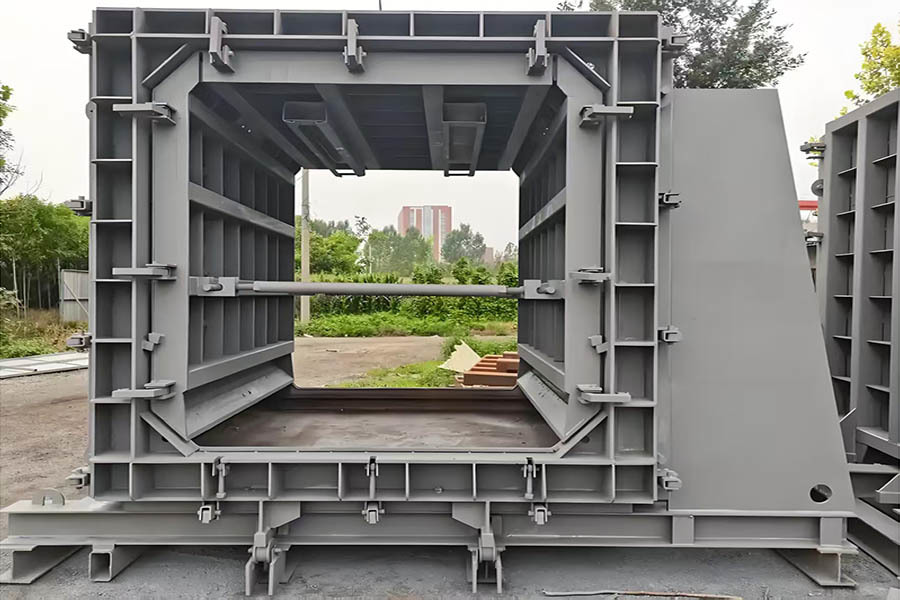
Behind every seamless tunnel segment lies a mold engineered not just for casting concrete, but for orchestrating perfect alignment and long-term durability. The real art is in sculpting steel surfaces with tolerances that leave no room for micro-deviations—because a millimeter's drift at the mold face can translate into costly geometric errors deep underground. To achieve this, mold components undergo iterative thermal stress analysis, ensuring they maintain their form under repeated high-pressure pours and curing cycles. It’s less about brute force and more about understanding how steel breathes, flexes, and returns, shot after shot.
Vibration dynamics, too, play a quiet yet decisive role. Rather than relying on generic oscillation settings, each mold configuration is tuned to the specific concrete mix design and segment geometry. The goal is to coax the concrete into filling every intricate detail of the mold cavity without trapping air or segregating aggregate—a balance that demands fine-tuning of frequency and amplitude based on real-time feedback. By embedding sensor arrays directly into the mold walls, engineers can read the fill pattern as it happens, adjusting the compaction rhythm to eliminate weak zones before they set in stone.
Beyond the pour, the demolding process often marks the boundary between a flawless ring and a chipped edge. That’s where surface coatings and release angles step in, but not as off-the-shelf solutions. Each mold surface is treated with a tailored combination of low-friction linings and micro-textures, calculated to let the cured segment slide free with minimal force. This attention to friction control protects both the segment’s sharp corners and the mold’s longevity, directly cutting down maintenance intervals. In this quiet domain of precision, every decision is a quiet rebellion against the blunt-force approach—proving that the most efficient tunnel systems are forged long before the first ring is ever assembled underground.
Building Resilience: How Advanced Molds Shape Safer Cities
In the quiet hum of a factory floor, precision-engineered molds are quietly rewriting the rules of urban safety. These aren't the crude casts of a bygone era—they are computational marvels, designed with algorithmic exactness to produce components that can withstand the violent shudder of an earthquake or the relentless press of rising floodwaters. By shaping concrete, steel, and composite materials into forms that interlock, flex, and distribute stress with near-organic intelligence, advanced mold technology is embedding resilience directly into the bones of our cities. It's a silent evolution, one where a millimeter's deviation in a mold means the difference between a structure that crumbles and one that stands defiant against nature's fury.
The real genius lies in the ability to replicate complexity at scale without losing fidelity. A single optimized mold can birth thousands of identical, fault-tolerant elements—be it a coral-textured seawall segment that dissipates wave energy, or a buckling-restrained brace core that absorbs seismic shocks without fracturing. This repeatability eliminates the variability that often plagues manual construction, ensuring that every apartment block, every bridge pier, every storm drain acts as a reliable node in a larger protective network. What was once a craftsman’s intuition is now encoded in steel and silicone, allowing cities to grow not just quickly, but wisely, with safety woven into their very fabric from the first pour.
Beyond brute strength, these molds enable a quieter kind of resilience: adaptability. They allow for local customization—thicker walls where the soil is soft, drainage channels where the monsoon hits hardest—all while maintaining the integrity of the master design. This marriage of standardization and flexibility means that safer cities aren't a luxury reserved for wealthy capitals; they can be molded into existence anywhere, using local materials and labor, guided by a mold that holds the intelligence of a thousand engineering insights. In this way, a simple tool becomes a catalyst for equity, shaping not just concrete, but a future where communities withstand, recover, and thrive. The city of tomorrow isn't just built—it's cast, with care, from a blueprint that understands the stakes.
From Blueprint to Boulevard: Streamlining Underground Construction
Bringing a project from initial sketches to a fully functional street involves a complex dance of logistics, and nowhere is this more pronounced than beneath the surface. The shift toward streamlined underground construction has been driven by a simple need: minimize disruption above while maximizing efficiency below. Trenchless methods, advanced mapping, and modular components have transformed what was once a maze of open pits and detours into a more predictable, less invasive process. The goal isn't just to dig faster, but to stitch the city's underbelly together without the public ever feeling the seams.
Precision planning now anchors every step, with 3D modeling and ground-penetrating radar revealing conflicts long before a shovel meets soil. Instead of relying on outdated as-built records, teams use real-time data to route utilities around obstacles, reducing costly surprises. This proactive approach allows for parallel workflows—crews can install conduits, lay pipe, and backfill in tight sequence without the usual stop-and-go delays. When the blueprint actually mirrors the existing subterranean environment, the leap from design to pavement becomes shorter, and the boulevard above reopens sooner.
Material and machinery advancements play an equally critical role. High-strength, lightweight piping sections are assembled in situ with fewer joints, cutting inspection time and future maintenance triggers. Vacuum excavation, replacing traditional air hammers, minimizes vibration and precisely exposes existing assets without damage. These silent evolutions are what truly streamline the process: less noise, fewer crew hours, and a noticeably smoother transition from concept to concrete. The underground network—often forgotten once buried—now arrives faster, only to disappear gracefully, letting daily life resume overhead with barely a trace of the work below.
Eco-Driven Design: Minimizing Disruption in Infrastructure Projects
Every road, bridge, or utility line carves a path through living landscapes. The shift toward eco-driven design asks engineers to think less about conquering terrain and more about dancing with it. By mapping wildlife corridors early and adjusting alignments to spare mature trees or wetlands, projects can shed their reputation as blunt instruments. Tunneling under sensitive habitats, for instance, preserves surface life while still moving people and resources. It’s a quieter kind of progress—one that leaves the hum of insects and the seep of groundwater largely undisturbed.
Construction phasing is another quiet revolution. Instead of clearing wide swaths at once, teams now work in narrow strips, letting animals retreat to adjacent refuges. At night, lighting is shielded and angled downward to avoid disorienting bats and migrating birds. Even the rumble of machinery gets rethought: electric or hybrid equipment is swapped in near stream crossings, where vibrations can cloud spawning gravels. These choices rarely make headlines, but they’re what keep a creek’s temperature stable or a fox den intact long after the ribbon is cut.
Post-construction, the real test of minimal disruption lies in healing. Designers are embedding native seed banks into erosion-control blankets, turning raw cut slopes into instant scrubland. Culverts are sized not just for flood flows but for the shoulder height of a passing moose. When we start measuring success by how quickly a place forgets we were there, infrastructure stops being a scar and starts behaving like a neighbor. That’s the underlying principle: borrow the landscape’s own patterns, and you might just slip through without breaking its rhythm.
Future-Proofing Metropolises: The Next Wave of Subterranean Networks
Beneath the crowded streets where traffic snarls and sidewalks heave with pedestrians, a quiet revolution is boring through bedrock and clay. Tomorrow's cities are looking downward, not just to bury utility lines or carve out transit tunnels, but to weave a hidden fabric of interconnected spaces that could redefine urban life. From multi-level logistics arteries that whisk goods in silent capsules to geothermal labyrinths that heat entire districts, the subterranean is becoming a frontier for solving surface-level gridlock. This isn't merely digging deeper—it's stitching together a parallel city that breathes in sync with the one above.
The shift is being driven by a convergence of pressures that stack higher each year: land scarcity, climate adaptation, and the insatiable demand for faster everything. Instead of treating underground as a dumping ground for what we’d rather not see, planners are crafting holistic blueprints where delivery bots share conduits with stormwater storage, and data cables run alongside farms lit by fiber optics. It’s a layered ecosystem, each stratum engineered for a specific purpose yet designed to flex with decades of technological change. Getting this right means anticipating not just the next decade but the next century—building in pathways for innovations we haven’t yet imagined.
What sets this wave apart is a refusal to repeat the mistakes of the past, where subsurface projects became brittle monoliths frozen in time. New construction leans on modular galleries and digital twins that mirror every pipe and sensor, so expansions and retrofits happen with surgical precision. Meanwhile, communities that once saw underground as a dark afterthought are beginning to shape these spaces into public assets—imagine subterranean parks flooded with filtered daylight, or maker spaces carved from abandoned vaults. The goal is a city that thrives not by sprawling outward or soaring skyward but by unfolding deep into the earth, creating a resilient core that keeps the metropolis humming no matter what the future throws at it.
FAQ
They are used to fabricate precast concrete segments for underground utility tunnels, which house pipelines for water, gas, electricity, and telecommunications, ensuring organized and efficient urban infrastructure.
By enabling rapid, standardized production of tunnel components, they accelerate the construction of comprehensive pipe galleries, reducing surface disruptions and enhancing the resilience of city utility networks.
High-strength steel is the typical choice due to its durability, precise dimensional control, and ability to withstand repeated concrete casting cycles.
Recent innovations include modular design for flexible assembly, automated demolding systems, and the use of IoT sensors for real-time monitoring of mold conditions and concrete curing.
Absolutely, manufacturers often tailor mold dimensions, shapes, and connection details to meet specific tunnel cross-sections and local geological conditions.
Strict processes include material inspection, precision machining, assembly checks, and trial casts to ensure dimensional accuracy and surface finish meet engineering standards.
They allow off-site prefabrication of tunnel segments, which are then transported and assembled, cutting on-site labor, minimizing weather delays, and speeding up project timelines.
By facilitating the construction of durable, long-lasting utility tunnels, they reduce the need for frequent road excavations and repairs, lowering long-term maintenance costs and environmental impact.
Conclusion
Beneath China’s rapidly expanding urban centers, an unseen revolution is reshaping the very foundations of city life. The emergence of pipe galleries—integrated subterranean corridors housing utilities from water to telecommunications—has redefined how infrastructure is conceived. At the heart of this transformation lies the precision engineering of pipe gallery molds, which allow for the creation of durable, factory-controlled tunnel segments that fit together with minimal on-site complexity. These advanced formwork systems not only accelerate construction cycles but also elevate structural resilience, ensuring that the underground networks can withstand seismic shifts and the relentless pressures of dense urban environments above. By shifting much of the fabrication to off-site facilities, molds reduce labor exposure and material waste, embedding safety and sustainability directly into the concrete frame of the city.
The impact of such mold technology extends far beyond the construction phase. With eco-driven design principles now guiding project planning, modern molds enable streamlined methods that cut traffic disruption, noise, and dust—turning what was once a chaotic streetscape into a barely noticed operation. As blueprints transition to bustling boulevards, the speed and cleanliness of installation foster public acceptance and long-term usability. Looking forward, these subterranean networks are becoming the nerve center for smart cities, ready to accommodate evolving utilities without constant excavation. China’s investment in pipe gallery mold innovation is not just about building conduits; it’s about future-proofing metropolises, crafting adaptable underground frameworks that can evolve with tomorrow’s demands while quietly supporting the life pulsing above.
Contact Us
Contact Person: Zhang Zhenlai
Email: [email protected]
Tel/WhatsApp: 8618563210000
Website: https://en.lugongmachinery.com/