

Coal-Based Powdered Activated Carbon from China: Applications, Benefits, and Market Insights
2026-07-21
As industries worldwide seek efficient, cost-effective solutions for water and air purification, coal-based powdered activated carbon continues to gain traction. Its remarkable adsorption capacity, driven by a highly porous structure, makes it a go-to material for everything from municipal water treatment to industrial emission control. Yet, not all activated carbons are created equal—sourcing, consistency, and application expertise matter. That’s where Tundrr steps in, connecting you with reliable supply chains and deep market insights. In this blog, we’ll unpack why this humble black powder is capturing global attention and what buyers should look for to stay ahead.
Where Coal-Based Powdered Carbon Excels in Industry
In water treatment facilities, coal-based powdered carbon consistently outperforms alternatives when dealing with stubborn organic contaminants and taste-and-odor compounds. Its highly developed pore structure, a direct result of carefully controlled activation, allows for rapid adsorption of micropollutants, making it the go-to for municipal plants facing seasonal algae blooms or industrial discharge spikes. Operators value its predictable performance and the fact that a smaller dose often achieves the required purity, cutting both chemical costs and waste sludge volume.
The metallurgy sector has quietly come to rely on this material for fine gold recovery, where its inherent hardness resists attrition better than softer coconut-shell carbons during high-agitation cyanidation. This durability means less dusting, higher mechanical integrity in the process, and ultimately better precious metal capture rates. Beyond precious metals, it serves in flue gas treatment within smelters, efficiently stripping mercury and dioxins from exhaust streams at high temperatures without degrading.
Even in less obvious corners like food and beverage clarification, coal-based grades offer advantages that wood or lignite carbons often cannot match. Their elevated fixed carbon content and low ash ensure minimal leaching of impurities back into the product, a critical factor when decolorizing sugar liquors or purifying organic acids. Taste neutrality, a subtle but vital trait, makes it suitable for treating potable water and bottling-grade spirits without imparting off-flavors.
The Advantage of Chinese Manufacturing for Activated Carbon
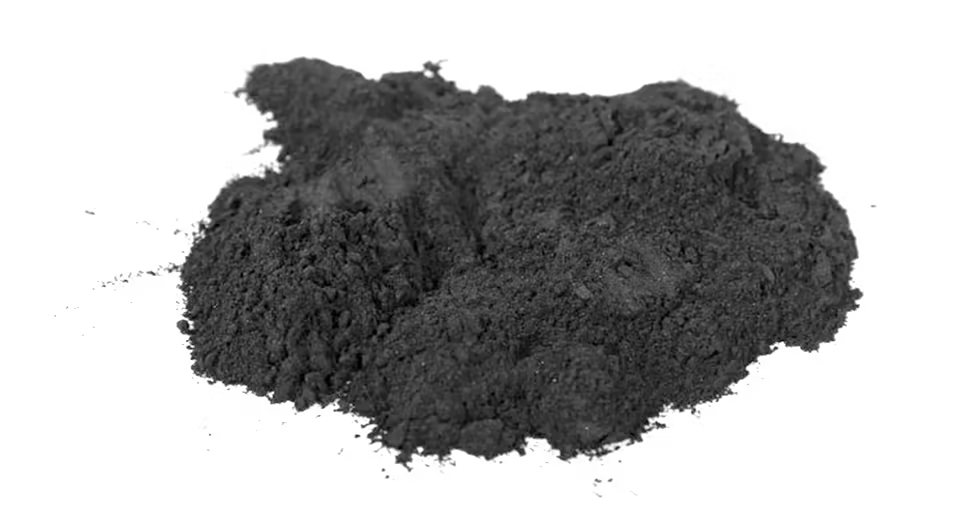
China's position as a global manufacturing hub brings distinct advantages to the production of activated carbon, primarily through extensive raw material availability and cost efficiency. The country has abundant sources of carbon-rich materials like coal, coconut shells, and wood, which enable large-scale production at competitive prices. This resource advantage, combined with well-established supply chains, allows Chinese manufacturers to offer a wide range of activated carbon products while maintaining consistent quality and supply stability.
Another key strength lies in technological innovation and manufacturing expertise. Over the years, Chinese producers have invested heavily in advanced activation furnaces and purification systems, achieving higher adsorption capacities and tailored pore structures for specific applications. The deep integration of research institutions with industry players accelerates the development of specialized grades for water treatment, air purification, and gold recovery. This technical prowess ensures that Chinese activated carbon not only meets international standards but often exceeds performance expectations.
Furthermore, the manufacturing ecosystem in China supports rapid scalability and customization. With a network of experienced engineers and a flexible industrial base, factories can swiftly adapt to market demands, producing small batches for niche uses or undertaking massive orders for global clients. The combination of cost, quality, and agility makes Chinese activated carbon a preferred choice for businesses worldwide seeking reliable, high-performance filtration solutions.
Performance Metrics That Matter for Filtration Systems
When evaluating filtration systems, raw efficiency percentages often steal the spotlight, but they rarely tell the full story. A filter that boasts 99.9% particle removal might fall short under real-world flow conditions or degrade rapidly after just a few cycles. That’s why savvy engineers look beyond the spec sheet. Dirt-holding capacity, for instance, reveals how much contaminant a filter can trap before pressure drop becomes unmanageable—directly impacting maintenance intervals and operational costs. Meanwhile, the relationship between pore size ratings and actual retention can be deceptive without context; a “10-micron nominal” rating means little if the test standard isn’t specified.
Another often-overlooked metric is beta ratio stability. While a beta ratio of 1,000 sounds impressive in a lab setting, it can drop sharply if the filter media isn’t robust enough to handle pulsating flow or chemical attack. This is where cycle testing under dynamic conditions separates workhorses from paper tigers. Similarly, careful attention to the initial clean pressure drop versus the lifetime energy cost can reshape procurement decisions. A filter that starts with a slightly higher differential pressure may actually save thousands in pumping energy if its gradual loading curve avoids early bypass. Ultimately, the metrics that matter most are those that align with the system’s specific failure modes—whether it’s protecting sensitive servo valves from silt or ensuring sterile air in bioreactors.
How Market Shifts Are Influencing Carbon Supply
Carbon supply chains are feeling the ripple effects of evolving market dynamics, where shifts in consumer demand and regulatory pressures are reshaping production landscapes. As industries pivot toward low-carbon alternatives, traditional carbon-intensive sectors face supply constraints that ripple through global trade networks. This realignment isn't linear—some regions experience sudden shortages while others grapple with excess capacity, all driven by the uneven pace of decarbonization efforts across economies.
The interplay between technological innovation and investment flows further complicates carbon supply. Breakthroughs in carbon capture and storage, alongside cheaper renewables, are making low-carbon feedstocks more accessible, yet the capital required to scale these solutions remains concentrated in mature markets. This disparity creates a patchwork of availability, where carbon supply becomes both a commodity and a strategic asset, influenced by geopolitical tensions and the race to secure sustainable resources.
Market volatility, spurred by energy transitions and policy uncertainty, injects another layer of unpredictability. Sudden shifts in carbon pricing mechanisms or changes in trade agreements can abruptly alter the cost and availability of carbon-intensive goods. Companies that once relied on stable supply lines now navigate a landscape where carbon supply is as much about anticipating regulatory trends as it is about physical logistics. The result is a market where agility and foresight determine who can secure the carbon inputs needed for the next wave of industrial growth.
Sustainable Production Methods Gaining Traction
Across industries, producers are rethinking how goods are made—shifting away from linear models and embracing circular approaches that minimize waste from the start. It’s no longer just about recycling at the end of a product’s life; now, design teams are choosing biodegradable inputs and modular components that can be easily repaired or repurposed. This upstream focus is cutting material costs and reducing environmental footprints in ways that consumers increasingly notice and reward.
Energy use is another area where quiet transformations are underway. Manufacturing facilities that once relied solely on grid power are now integrating on-site solar arrays and wind turbines, sometimes combined with battery storage to smooth out production schedules. Even in energy-intensive sectors like textiles and food processing, heat recovery systems and smart sensors are trimming consumption without sacrificing output. The result is a dual benefit: lower operational expenses and a credible path toward carbon neutrality that appeals to both investors and regulators.
Perhaps the most overlooked shift is happening at the supply chain level. Rather than simply auditing distant suppliers, companies are co-investing in regenerative agriculture projects and clean-water initiatives within their sourcing communities. This creates a more resilient foundation—fewer raw material shortages, stronger local partnerships—and often leads to higher-quality inputs. It’s a practical recognition that sustainable production isn’t just a factory-floor issue, but a whole-system challenge that rewards those willing to look beyond short-term margins.
Matching Carbon Specifications to Real-World Challenges
Carbon markets often operate with a one-size-fits-all mentality, but the reality is that different sectors face vastly different decarbonization hurdles. A carbon credit designed for a forestry project may not adequately address the complexities of methane capture from landfills or the permanence of soil carbon sequestration. To close this gap, specifications must be tailored to the specific environmental and operational contexts, ensuring that each credit represents a genuine, additional tonne of avoided or removed emissions that aligns with the unique dynamics of the challenge at hand.
Consider industrial decarbonization: retrofitting a cement plant with carbon capture technology demands a specification that accounts for energy penalties, monitoring precision, and long-term storage assurance. In contrast, a nature-based solution like mangrove restoration requires specifications built around biodiversity co-benefits, community engagement, and resilience to climate shocks. Matching the specification to the challenge means moving beyond generic checklists and developing granular criteria that reflect the scientific, social, and economic dimensions of each project type, thereby building trust and attracting targeted investment.
The real world is not static, and neither should carbon specifications be. As technologies evolve and our understanding of climate systems deepens, the rules governing carbon credits must adapt through continuous stakeholder input and rigorous validation. This means not only setting high initial benchmarks but also embedding mechanisms for periodic review and adjustment, so that specifications remain fit for purpose in rapidly changing landscapes—whether that’s dealing with new leakage risks or improved monitoring tools. Only by maintaining this dynamic alignment can we ensure that carbon markets deliver lasting impact where it’s needed most.
FAQ
Coal-based powdered activated carbon is a highly porous material made from selected coal sources through a controlled activation process. The production involves crushing coal into a fine powder, then activating it with steam or chemicals at high temperatures. This creates an extensive internal pore network that gives the material its huge surface area—often exceeding 1000 square meters per gram. The result is a fine black powder that excels at adsorbing impurities from liquids and gases.
It's widely used in water treatment to remove organic pollutants, chlorine, and taste-and-odor compounds. Municipalities rely on it for drinking water purification, while industries use it for wastewater remediation. Beyond water, it's critical in flue gas treatment to capture mercury and dioxins from power plant emissions, in food and beverage processing for decolorization and purification, and in pharmaceutical manufacturing to refine active ingredients. It also finds roles in gold recovery, solvent recovery, and air purification systems.
China benefits from abundant high-grade coal reserves, particularly anthracite and bituminous coal, which serve as ideal raw materials. The country has invested heavily in advanced activation kilns and grinding technologies, enabling large-scale production at competitive costs. Additionally, a mature domestic supply chain, skilled labor force, and supportive export policies have positioned Chinese manufacturers as key players in the global market. This combination of resource availability and industrial capability allows them to offer consistent quality at prices difficult for other regions to match.
Compared to coconut shell or wood-based carbons, coal-based powder often provides a higher density and a more balanced pore distribution suitable for adsorbing a wide range of molecule sizes. Its mechanical hardness reduces dusting during handling, and its performance in removing small-molecule contaminants like phenols and chlorinated compounds is typically superior. It also tends to be more cost-effective for high-volume applications, making it the go-to choice for municipalities and large industrial plants where budget and performance must be balanced.
The market is experiencing steady growth, driven by tightening environmental regulations worldwide—especially in water and air quality. Demand from emerging economies is rising as they upgrade infrastructure. In China itself, stricter industrial emission standards are boosting domestic consumption. However, the market faces challenges like fluctuating coal prices and occasional supply chain disruptions. Despite this, many leading Chinese producers are expanding capacity and pursuing international certifications to strengthen their global foothold.
Key factors include the iodine number and molasses number, which indicate adsorption capacity for small and large molecules respectively. Moisture content, ash content, and particle size distribution are also critical to match the intended use. Buyers should request batch testing reports and check for certifications like NSF, AWWA, or REACH compliance to ensure safety and performance. It's wise to work with suppliers who have a transparent quality management system and can provide consistent product from well-defined raw material sources.
The activation process is energy-intensive and generates emissions, but Chinese manufacturers are increasingly adopting cleaner production methods. Many plants now use waste heat recovery systems, install flue gas treatment units, and employ water recycling to minimize environmental impact. The use of coal as a raw material also raises questions, but compared to direct combustion, converting coal into activated carbon is a form of carbon sequestration, as the carbon is locked into a stable solid matrix. Leading companies are investing in research to further reduce the carbon footprint.
Innovation is focusing on producing carbons with tailored pore structures for specific contaminants, such as PFAS and heavy metals. There's growing interest in reactivation services to reduce waste and cost. As global sustainability policies tighten, Chinese producers will likely emphasize circular economy models—offering spent carbon reactivation and exploring bio-based binders. Digitalization and automated quality control are also expected to improve product consistency and traceability throughout the supply chain.
Conclusion
Coal-based powdered activated carbon manufactured in China has become a cornerstone for industries demanding high-performance filtration and purification. Its robust porous structure, derived from carefully selected bituminous and anthracite coals, delivers exceptional adsorption capacity for contaminants ranging from organic compounds in drinking water to colorants in food processing. Chinese producers leverage decades of process refinement, large-scale production, and integrated supply chains to offer consistent quality at competitive prices. Key performance indicators such as iodine number, methylene blue adsorption, and particle size distribution are rigorously monitored to ensure the carbon meets the exacting demands of water treatment, air purification, and pharmaceutical applications. Beyond traditional uses, these carbons are increasingly deployed in specialized areas such as biogas purification and catalyst support, demonstrating their versatility. The ability to tailor activation parameters further allows these carbons to achieve targeted pore volumes, optimizing them for specific molecular sizes.
Market dynamics are reshaping the global supply of activated carbon, with stricter environmental regulations driving demand and raw material fluctuations prompting producers to innovate. Chinese manufacturers are increasingly adopting sustainable practices, including energy-efficient activation kilns and the use of waste heat recovery, reducing the carbon footprint of their products. At the same time, real-world challenges—such as emerging contaminants like PFAS and complex industrial effluents—require a more nuanced approach to carbon selection. Suppliers now work closely with end-users to match specifications like ash content, hardness, and surface chemistry to the unique conditions of each treatment system, ensuring optimal performance and longer filter life. As global supply chains face disruptions, the reliability of Chinese sourcing has become even more critical, with many producers offering technical support to optimize system design and reduce total cost of ownership. This combination of technical expertise, manufacturing scale, and responsiveness positions Chinese coal-based powdered carbon as a strategic choice for global buyers navigating evolving filtration needs.
Contact Us
Contact Person: Ellen Zhang
Email: [email protected]
Tel/WhatsApp: +86(21) 2287 6756
Website: https://www.tundrr.com/en/