

Export Heavy Duty Mixer Truck Washing Machine: What Every Global Buyer Should Know
2026-08-16
Every global buyer knows the frustration: a mixer truck comes back caked in dried concrete, and cleanup eats hours, water, and labor. But when you're importing heavy-duty washing machines, the real challenge is spotting the difference between a machine that lasts a decade and one that fails in six months. Sinou, a name trusted in concrete equipment export, breaks down what matters—from pressure ratings and nozzle design to corrosion-resistant frames and after-sales support. This guide gives you the unfiltered checklist before you sign the purchase order.
Where export orders usually go wrong before the machine reaches the port
A surprising number of export orders for machinery derail long before the container is sealed. The bill of lading might carry a slightly different model number than the commercial invoice, or the packing list omits the exact weight of the heaviest sub-assembly. Customs brokers then spend days requesting revised documents while the machine sits in a warehouse, accruing demurrage. Even a one-digit error in the harmonized system code can trigger an inspection that nobody budgeted time for.
Another common failure point is the electrical configuration. A machine built for 50 Hz often leaves the factory with a control panel configured for the domestic market, not the destination country’s voltage and plug standard. The buyer discovers the mismatch only when local engineers open the crate. By then, the original export order has already been marked “shipped,” but the real cost of rectification lands on the seller’s after-sales team.
Packaging mistakes also multiply when a machine is broken into multiple crates. Export crates that lack proper ISPM-15 stamps for solid wood can be rejected at the destination port. Loose components inside crates shift during ocean transit, causing alignment issues that are only noticed when the machine fails its first test run abroad. None of these issues show up on the purchase order, but each one can turn a profitable export into a loss before the vessel arrives.
Nozzle placement matters more than pump power against dried concrete
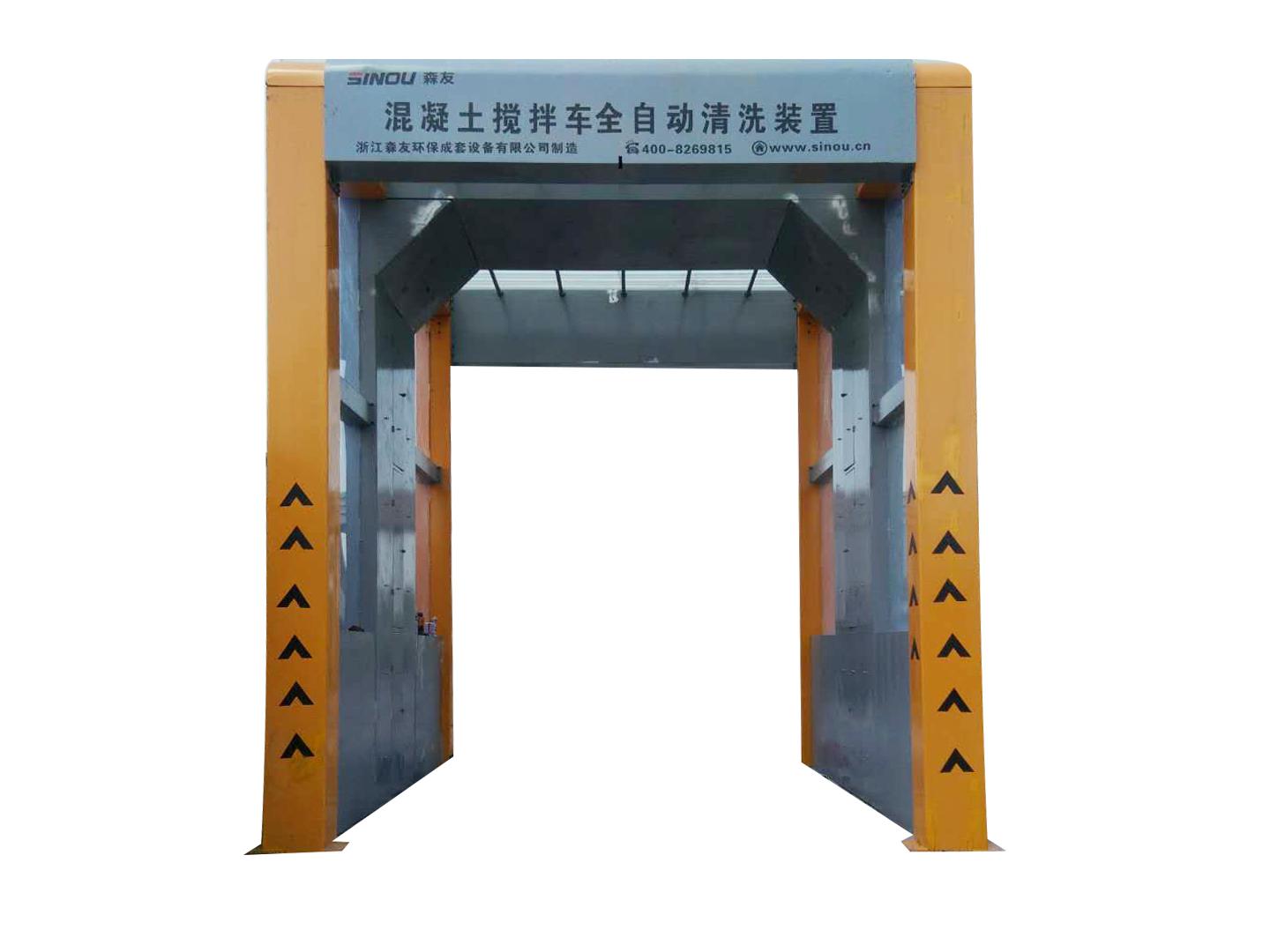
When tackling dried concrete, many operators instinctively reach for a bigger pump or crank up the pressure, assuming raw force is the answer. But time and again, the real difference comes down to where the nozzle sits relative to the surface. A well-placed nozzle at moderate pressure can shatter and lift cured material far more efficiently than a high-powered blast aimed carelessly.
The geometry of the spray matters because dried concrete doesn't yield to brute impact alone. You need the water jet to find the micro-fractures and edges where the concrete has begun to separate from the substrate. Holding the nozzle at a low angle, roughly 15 to 30 degrees off the surface, lets the stream wedge underneath the material rather than simply hammering it head-on. This peeling action reduces both water consumption and the risk of damaging the underlying surface.
On the flip side, even a modest pump can outperform a larger unit if the operator maintains the right standoff distance. Too close and the stream diffuses before it can bite; too far and you lose kinetic energy to air resistance. The sweet spot is usually between 6 and 12 inches, depending on the nozzle type. In practice, crews who master nozzle placement often report cutting their cleanup time by a third or more without ever upgrading their equipment.
The mounting surface on site matters more than the shipping crate
You can spend all day inspecting the crate for scratches, dents, or a loose corner brace, but that tells you almost nothing about how the unit will actually sit once it's unboxed. The real question is what's waiting underneath it: a warped concrete pad, an old wooden platform that's been soaking up moisture for years, or a freshly poured slab still curing unevenly. A flawless shipping container doesn't guarantee a level foundation, and a rough-looking crate doesn't mean the machine bed will be out of true. What matters is pulling out a precision level and checking the footprint before you even think about bolting anything down.
On plenty of job sites, people assume the crate's flat top or its sturdy base can serve as a temporary reference for alignment. That assumption falls apart fast. The crate may have been built on a shop floor that's perfectly level, but once it's been bounced around on a trailer, stacked in a warehouse, or dropped by a forklift, its geometry shifts. The wood dries, swells, or twists. Meanwhile, your actual mounting surface might have high spots, low corners, or a slope that no amount of shimming against the crate will fix. Save yourself the headache: treat the crate as disposable packaging, not as a datum. Lay out your own reference marks on the floor or pad, and level the machine to that, not to what it arrived in.
Voltage, frequency, and local certification are the three quiet deal-breakers
Voltage mismatches are often overlooked until a device is plugged in and nothing happens—or worse, something burns out. A product rated for 110V will struggle or fail on a 220V grid, and while dual-voltage power supplies are common, not every component in a system shares that flexibility. Checking the fine print on every plug, adapter, and internal power board is tedious but necessary.
Frequency is the quieter sibling of voltage. Even if voltage is converted, a 50Hz motor or timer designed for 60Hz will run slow, overheat, or drift out of spec. This shows up in appliances with AC motors, older clocks, and some industrial controls. The label may claim 110-240V, but if it doesn't state 50/60Hz, you're still gambling.
Local certification seals—CE, UL, FCC, KC, PSE and the rest—aren't just bureaucratic stickers. Without the right mark, customs can hold the shipment, distributors may refuse to list the product, and insurers can deny claims after a fault. Each region has its own testing labs and paperwork, and retrofitting a product for a new market often means redesigning a circuit board rather than simply slapping on a label.
Mobile wash bay or fixed installation, which one really lowers lifetime cost
Most buyers fixate on the sticker price, but a wash bay's real cost shows up years later in relocation, repurposing, and compliance headaches. A mobile unit can follow the fleet or site as needs shift, so you aren't pouring concrete into a location you might outgrow. Fixed installations look permanent and impressive, yet changing a drainage slope or adding a second lane often means tearing up the slab and starting over.
Maintenance tells a sharper story. Mobile wash bays are built on skids or trailers with accessible plumbing and containment, so a failed pump or cracked sump can be swapped in an afternoon without shutting down the whole site. A fixed bay with buried pipes and cast-in trench drains turns a small leak into an excavation project, and every day it's offline, trucks are either dirty or washed elsewhere at premium rates.
Then factor in resale and depreciation. A well-kept mobile wash bay holds a surprising chunk of its value because the next buyer can drop it into a new yard immediately. A fixed installation adds little to a property's resale price unless the buyer wants exactly that layout - most don't. Over a ten-year horizon, the mobile option usually wins on lifetime cost once you account for flexibility, downtime, and the ability to take it with you.
What to demand for spare parts and remote support when the factory is far away
When the factory sits hundreds of kilometers from the nearest service center, spare parts logistics shift from convenience to survival. Demand that your supplier maintains a rolling stock of high-failure-rate components—think seals, filters, sensors, and drive belts—at a regional hub that can dispatch within 24 hours, not from a central warehouse two time zones away. Equally critical is securing modular assemblies: instead of shipping a single broken gear, you want a pre-tested cartridge or subassembly that your local team can swap in without specialized calibration. Insist on a written list of “recommended on-site spares” tied to your equipment’s actual runtime and failure history, not a generic brochure.
Remote support needs to go beyond a phone line and a shared screen. Require a dedicated technical engineer who knows your machine’s serial-number-specific configuration and can access its PLC or IoT data stream in real time—not just after you email error logs. Push for a guaranteed response window measured in minutes for critical stoppages, with escalation to a second-tier specialist if the first fix fails. Also demand that the supplier provide structured troubleshooting guides—short videos, annotated wiring diagrams, and torque specs—that your maintenance crew can follow when the internet is patchy. The goal is to turn your night-shift mechanic into a first responder, not a courier.
Finally, negotiate a “remote commissioning” clause for any new or repaired equipment. Before it leaves the supplier’s floor, insist on a live video walkthrough of calibration steps, safety interlocks, and common fault resets, recorded and stored locally. Ask for a secure VPN tunnel to the machine’s controller with role-based access—read-only for your team, full control for the vendor’s engineers during an outage. The harsh reality is that when the factory is far away, every unplanned downtime hour costs more than the spare part itself. Your contract should reflect that: penalties for missed response times, quarterly remote health checks, and a clear path to ship a technician on the next available flight when remote fixes are exhausted.
FAQ
It combines high-volume water delivery with rotating nozzles or spray bars that target the drum's interior and exterior at controlled angles. The pressure is strong enough to break the bond between concrete and steel, but the flow rate and nozzle spacing keep impact forces below the threshold where surface pitting or seal damage occurs. Many units also add a recirculation system so the wash water carries away solids without letting abrasive grit continuously blast the same spot.
Don't get stuck on bar or psi alone. A mixer truck washer lives or dies by sustained flow rate, usually measured in liters per minute. Higher flow at moderate pressure clears thick slurry faster than extreme pressure with low volume. Ask for the pump duty rating at the nozzle, not just the motor rating, and confirm the tank capacity can support a full wash cycle without starving the pump.
CE marking is the baseline for most regions, but it is not a quality certificate. Look for EN 60204-1 for electrical safety, and if the machine includes pressure vessels, ask about PED compliance. For markets with stricter local rules such as Australia or Canada, verify whether the supplier has shipped units that passed local electrical or machinery inspections. A serious exporter should provide an EC Declaration of Conformity and full technical file on request, not just a logo on a brochure.
The deciding factors are fleet size and turnaround time. If you wash more than 15 to 20 trucks a day or need consistent cleaning before every shift, an automatic system with PLC controls will reduce labour and water waste. Manual systems make sense for smaller fleets, remote sites with limited power, or operations where trucks have irregular shapes and need targeted hand washing. Be realistic about how often your crew will actually use the equipment properly.
Water treatment and sludge removal are the big ones. A heavy duty washer can generate several cubic metres of concrete-laden wastewater per day, and you cannot simply discharge it into a drain. Clarifiers, settling tanks, or filter presses add significantly to the project cost. Also budget for electrical upgrades, air compressor requirements if pneumatic controls are used, and a local technician for the first installation. Spare parts like nozzles, seals, and high-pressure hoses should be stocked from day one.
Very important in cold or tropical environments. In freezing conditions, exposed pipework and pumps need insulation, heat tracing, or a heated enclosure, otherwise residual water will crack components overnight. In high-humidity or coastal areas, corrosion protection on the frame and control cabinet should be upgraded to stainless steel or heavy epoxy coating. If the site has extreme dust, ask for sealed bearings and filtered air intakes on motors.
Request a reference list of units already operating in your country or a similar climate. Ask who handles warranty claims locally and what the typical response time is. Confirm whether the supplier provides CAD layout drawings and a site readiness checklist before shipment. Also clarify who is responsible for unloading, uncrating, and commissioning if an engineer cannot travel. A supplier that answers these directly is usually easier to work with than one that only sends a price list.
Conclusion
Export orders for heavy-duty mixer truck washing systems often unravel long before the container reaches the port. Buyers who skip pre-shipment inspection of nozzle angles, pump seals, and control wiring end up with a machine that looks right on paper but fails against dried concrete. Nozzle placement, not raw pump pressure, determines whether hardened residue actually releases from mixer drums and chutes. Equally critical is the mounting surface at the installation site—if the pad is uneven or drains poorly, even a well-crated machine will underperform. Smart buyers ask for photos of the exact frame geometry and anchor points, and they verify that the manufacturer has tested the unit on a simulated concrete mix, not just clean water.
Voltage, frequency, and local certification are quiet deal-breakers: a 380V/50Hz motor without the right approvals can stall a project at customs or cause premature failures. Compare mobile wash bays against fixed installations by tracking water recycling, chemical consumption, and labor time over five years, not just the purchase price. Finally, negotiate spare parts and remote support before signing—insist on a two-year critical spares kit, video-guided troubleshooting, and a clear response time for replacement pumps and nozzles. A supplier who only offers a one-year warranty and ships parts by sea when downtime is measured in hours is not a real export partner.
Contact Us
Contact Person: HaiYan
Email: [email protected]
Tel/WhatsApp: +86 18957325588
Website: https://www.senyoubeton.com/