

Heavy Weight Soundproofing Blanket Export Guide for Industrial Buyers
2026-11-17
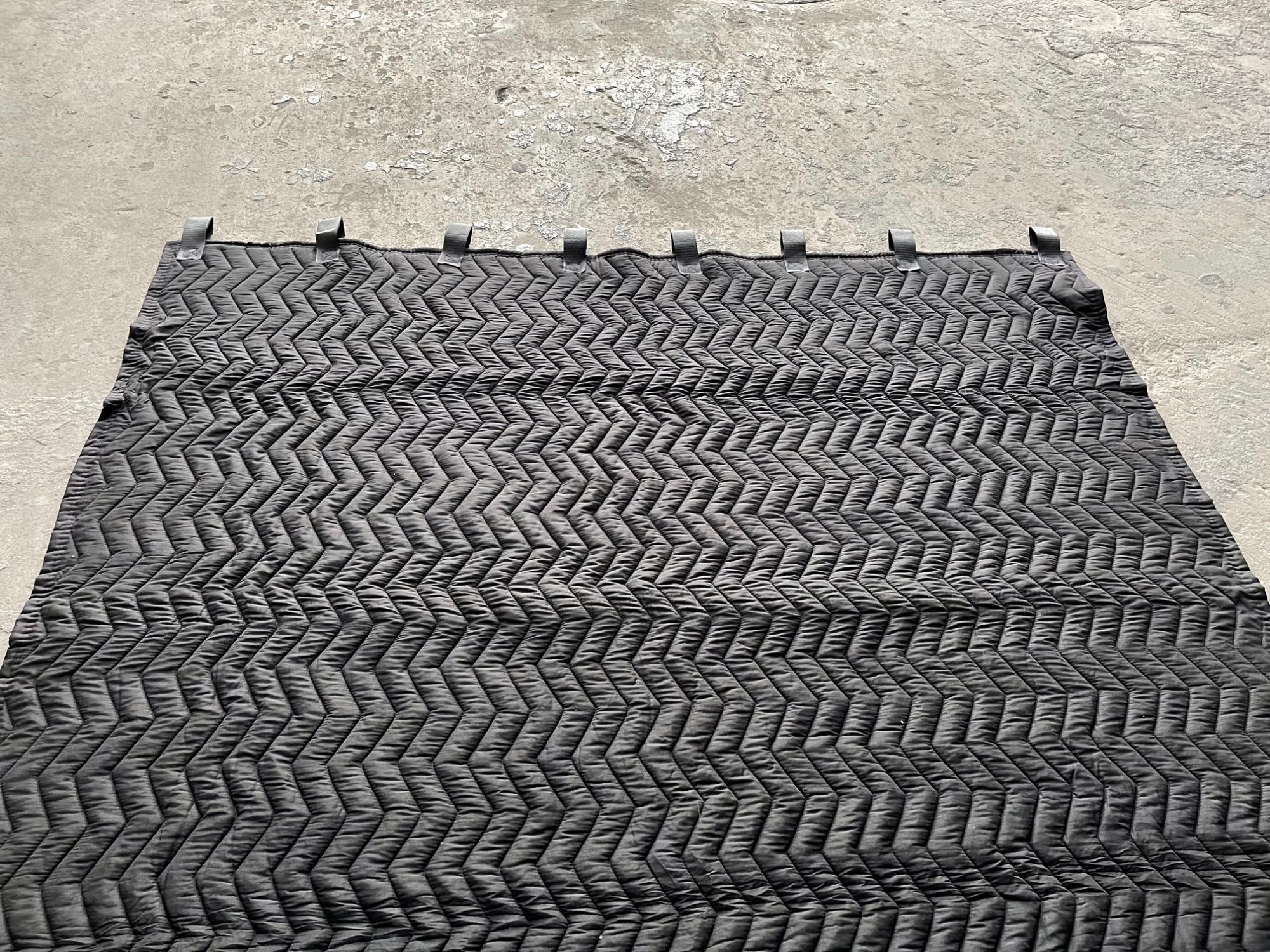
Industrial buyers often learn the hard way that a heavy weight soundproofing blanket which clears one market can still stall at another border. Density, grommet placement, fire ratings, and export packing all determine whether an order moves smoothly or drains your margin. This guide focuses on the details that actually matter when sourcing these blankets for industrial projects, from spec verification to customs-ready packaging. If you have been comparing suppliers on thickness alone, the next few sections may change your shortlist. At Top Packaging, we build soundproofing blankets with export realities in mind, not just the datasheet.
What Heavyweight Actually Means Once the Blanket Leaves the Factory
Once a blanket leaves the factory, the listed grams per square metre stop being a reliable promise. The fabric has been rolled, vacuum-packed, and shipped, which temporarily flattens the loft that made it feel substantial on the production line. What you notice in the first week is often stiffness rather than warmth, and the real character of the weave only emerges after the fibres have had a chance to relax.
Heavyweight, in practice, has more to do with how the material holds heat across a cold room than with the number on the label. A dense but breathable cotton weave can feel heavier and sleep warmer than a loosely spun synthetic with a higher nominal weight, simply because the yarns sit closer together and trap air more consistently. The useful test is not the scale but whether the blanket stays evenly warm without turning clammy by morning.
That divide becomes clearer after several washes. Some heavy blankets tighten and lose their drape, while others soften into a weight that feels grounded rather than suffocating. If the stitching and fibre length are good, the blanket keeps its shape and warmth; if not, the extra grams just add bulk that takes longer to dry and harder to fold.
Manufacturing Tolerance Checks That Catch Subpar Batches Early
Tolerance checks often get treated as a final gate, but the most useful ones happen while material is still moving through the line. A shift of a few microns in a seal groove or a slight oval in a bore can show up long before the batch is finished. When those numbers are read against the upper and lower limits at the machine, not just in a lab days later, a drifting process becomes visible early enough to adjust pressure, temperature, or tool wear.
The checks that catch trouble tend to focus on features that will actually fail in assembly. Snap-fit tabs, bearing seats, thread minor diameters, and mating surfaces deserve tighter attention than cosmetic edges. Rather than measuring everything, experienced inspectors track the dimensions most sensitive to process drift and record the spread, not just the average. A batch can pass an average while individual parts creep toward the edge of the tolerance band.
Timing matters as much as the measurement itself. First-article checks alone miss the slow changes that appear after thermal cycles and tool wear settle in. Short-interval sampling after startup, after material lot changes, and around known wear points gives a clearer picture. Paired with simple run charts, those readings make subpar batches hard to miss without waiting for downstream returns or a customer complaint.
Harmonized Tariff Coding and the Paperwork That Holds Up a Container
Every customs broker has seen the same scene: a container sits untouched at the terminal while emails fly back and forth about a six-digit code. The difference between 8471.30 and 8471.41 can mean days of storage charges, demurrage fees, and a frustrated client wondering why their shipment is stuck. Harmonized Tariff Coding is not just a clerical detail—it is the invisible gatekeeper of global trade, and the paperwork attached to it often determines whether goods clear in hours or weeks.
The paperwork that holds up a container rarely looks dramatic. A commercial invoice with a vague product description, a packing list that says “spare parts” instead of identifying each component, or a certificate of origin that does not match the bill of lading. Each mismatch forces a customs officer to ask for clarification, and every clarification adds another day. Brokers who learn to read the tariff schedule as a language—not just a list—can spot these problems before the container ever reaches the dock.
What separates a smooth clearance from a costly delay is rarely the tariff rate itself. It is the discipline of asking the right questions at the point of origin: What is this product made of? What does it actually do? Is it part of something larger, or sold as a complete unit? When those answers are written into the paperwork with precision, the code almost selects itself. When they are left vague, the container pays the price in idle time.
Crush-Resistant Packaging and Pallet Patterns for Ocean Freight
Ocean freight puts cartons through sustained top-load pressure that road or air moves rarely match. A carton rated for a short truck run can still buckle after three weeks under a four-high stack in a humid container. The first line of defense is not thicker board but better geometry: vertical flute alignment, full-height internal partitions, and void fill that keeps the product from settling. Once a carton sags even a few millimeters, the load path shifts away from the walls and into the product.
Pallet patterns change how that top load travels. Column stacking keeps corners aligned and preserves most of the carton's compression strength, but a slight shift during rough seas can turn a column into a leaning stack. Interlocking patterns add lateral stability at the cost of strength, since each carton then bridges across the one below. A practical compromise is to column-stack within the pallet, use a rigid tier sheet between layers, and reserve interlocking only for the top two layers where weight is minimal.
For mixed loads, the trick is to build a flat, uniform top surface before the next pallet is placed. Recessed lids, exposed strapping, or irregular carton heights create point loads that crush lower boxes long before the container reaches port. Corner boards, anti-slip sheets, and clearly marked stack limits tend to do more for intact arrivals than simply upgrading to double-wall board everywhere.
Sampling Rules That Keep Suppliers Honest on Large Tenders
In large tenders, the real deterrent is not the size of the contract but the uncertainty of when a buyer will look closely. Random sampling strips away that comfort. A supplier never knows which batch, shipment, or production run will be pulled apart for testing, so skimping on materials or fudging compliance records turns into a quiet gamble. When inspection points are too predictable, vendors quickly learn where to hide weak spots; unpredictable sampling keeps that guesswork alive and shifts the risk back onto the supplier.
The power of sampling grows when a small failure carries an outsized consequence. One failed test on a limited sample can trigger a wider audit, a payment hold, or removal from an approved shortlist. That connection between a minor check and a major penalty means buyers do not need to inspect every unit to protect the tender. Over time, suppliers begin treating the sampling protocol as the client's operational standard, and they tighten their own internal controls simply to avoid the ripple effects of being caught once.
Warranty Coverage and Replacement Logistics After Delivery
Once the unit is signed for, warranty coverage shifts from the sales conversation to the actual handling of parts and return shipments. This is where most delays happen, so we focus on making the replacement path as short as possible. The original packaging can usually be reused for the return, but if it has been discarded, a reinforced carton with at least two inches of padding on each side is required before the carrier will accept the item.
Replacement logistics are handled door-to-door rather than through a regional depot. After the fault is confirmed, a prepaid return label is issued and the replacement unit is dispatched only after the return tracking shows movement, which prevents duplicate charges and keeps inventory accurate. In most metro areas that handoff adds one to two business days, while rural routes may need up to four depending on pickup schedules.
There are a few exclusions worth checking before filing a claim: cosmetic wear from installation, damage caused by third-party modifications, and consumable components are not covered under the standard terms. If the unit arrives with freight damage, note it on the delivery receipt and photograph the external carton before opening, because that documentation determines whether the claim is processed as a warranty replacement or a carrier liability case.
FAQ
Look for a reinforced facing such as vinyl-coated fiberglass or foil over a dense mineral wool or fiberglass core. Ask for surface density in kg/m² or lb/ft² rather than total weight alone, and confirm temperature resistance if the blankets will be used around hot piping or turbines. Edge stitching should use high-tensile thread, and grommet spacing needs to match your mounting points instead of being left to chance.
These blankets are usually compressed and strapped to pallets, but too much compression can crush the acoustic core. Request vacuum packing only if the manufacturer can show recovery test results after unpacking. Pallets need edge protectors and weather-resistant wrap, and each bundle should carry a label with the exact weight, panel count, and HS code rather than only a generic product name.
Ask for an ISO 17025 lab report covering sound absorption or transmission loss instead of a polished marketing datasheet. Fire performance matters in plant environments, so request ASTM E84, EN 13501-1, or a comparable local rating. A factory audit report, REACH/RoHS statements for the facing material, and a batch traceability record are also worth requesting before you commit to a large order.
Lock down the Incoterm and check whether the quoted rate includes dunnage, pallet overhang, and tailgate delivery. Since the product is bulky but does not always max out container weight, ask the supplier to quote by cubic meter utilization as well as per unit. Also confirm whether the destination port charges extra for oversize pallets or wood packaging and whether an LCL option really saves money after customs brokerage fees are added.
Request a small pre-production sample made with the same core density and facing as the full order, then test it in your own facility against the specific noise frequency rather than just overall dB reduction. Ask for the full test curve from 125 Hz to 4 kHz. If the order is large enough, arrange a third-party inspection during production to confirm the core material and facing match the approved sample.
Look for uneven core distribution where the filling shifts and leaves thin spots near the edges. Other repeated issues include grommets tearing out under load, stitching that unravels after UV exposure, and facing layers separating after a few temperature cycles. Ask the supplier to run a pull test on grommets and a fold test on the facing before shipment.
Custom sizes reduce on-site cutting and waste, but they usually mean longer lead times and higher per-unit pricing. If your equipment dimensions repeat across the facility, a small set of standard panels with extra grommet positions may be more flexible and easier to reorder. Get a nesting or cutting plan from the supplier so you can see how many custom panels fit per roll width before deciding.
Conclusion
A spec sheet quoting 5 kg/m² means little once the blanket has been compressed, wrapped, and loaded into a container. Moisture pickup, roll tension, and trimming can shift the actual shipped weight by enough to trigger a dispute at the receiving dock. Smart buyers lock down an acceptable tolerance band before production, then have third-party inspectors pull samples at the line, not just from the top of a pallet. The same early discipline applies to shipment paperwork. A mismatched harmonized tariff code or a missing mill certificate can hold a container at the port far longer than any production delay, so the export file needs to be treated as part of the product itself.
Ocean freight punishes weak packaging. Without crush-resistant edges and a stable pallet pattern, stacked blankets settle and deform, especially on long-haul routes through humid terminals. Ask your supplier to show exact pallet maps and strap counts, not just a generic export box. For large tenders, random lot sampling with an agreed reject threshold keeps suppliers honest; a single pass/fail certificate is not enough when thousands of units are involved. Finally, warranty terms should go beyond the blanket itself to cover replacement logistics after delivery—who covers freight, how fast a replacement ships, and what happens if the damage is discovered only after unpacking. A supplier that resists these details is usually telling you something useful.
Contact Us
Contact Person: Shelly
Email: [email protected]
Tel/WhatsApp: 86-577-64286522
Website: https://www.topmovingpad.com/