

Lost Wax Casting Vendor Selection Tips for Precision Manufacturing
2026-11-03
Every precision manufacturing engineer knows the frustration: you’ve designed a part with tight tolerances and complex internal features, but the lost wax casting vendor you chose delivered warped, porous, or dimensionally unstable components. The difference between a flawless production run and a costly scrap pile often comes down to vendor selection—not just price or lead time, but how well a foundry understands metallurgy, process control, and your specific application. At Supreme Machinery, we’ve seen what works and what fails. This guide cuts through the noise with practical, field-tested tips for evaluating lost wax casting suppliers, so you can avoid the hidden pitfalls and secure a partner that actually delivers precision.
Check Their Scrap Rate Before You Trust Their Tolerance Claims
A low scrap rate is the unspoken proof behind a tolerance claim. Any shop can say they hold ±0.005 inches, but if you dig into their reject pile and see a steady stream of parts that failed final inspection, that precision is just marketing. Scrap rate reveals how often they actually hit the numbers they promise, not what their best-case setup can do on a good day.
Ask for the scrap rate broken down by feature, not just a shop-wide average. A vendor might post 2% overall while quietly scrapping 15% on tight bores or thin-wall sections. That mismatch shows where their real capability ends and where they are hoping you will not look. If they cannot or will not share that data, treat their tolerance claims as unverified.
A consistently low scrap rate on similar geometries means the process is under control, not just lucky. It means the operator is not hand-fitting parts or hiding bad runs. Before you sign off on a supplier's capability, make the scrap rate part of the conversation—if it is not, you are trusting a number that has not earned its place on the drawing.
The Prototype Stage Separates Precision Shops from Pattern Makers
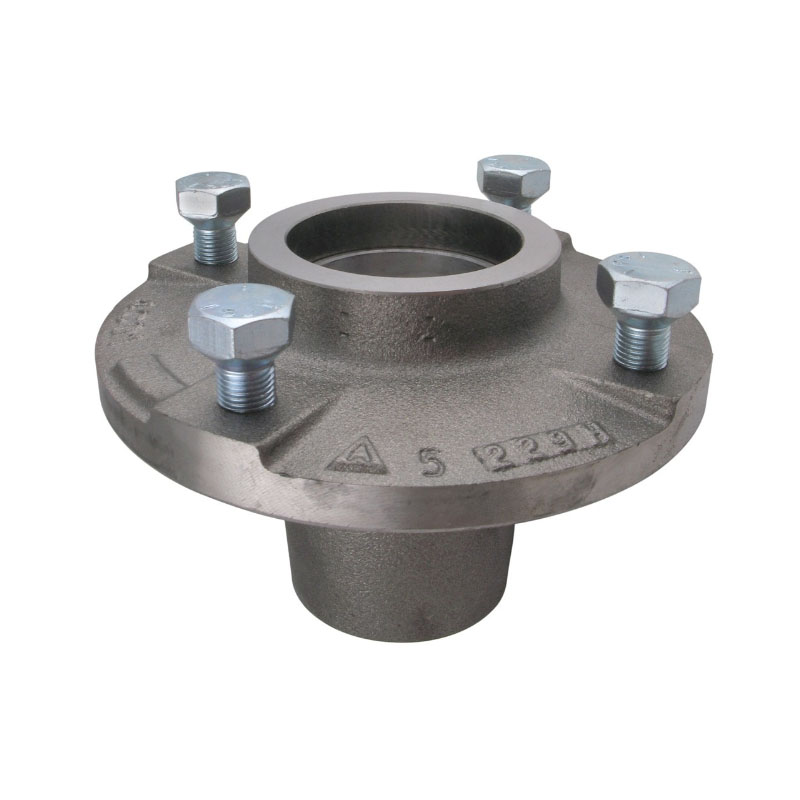
Prototyping strips away the safety net of production tolerances. A pattern maker can get away with a slightly loose fit, a dab of filler, a sympathetic sanding pass—because the pattern only needs to suggest the final form. But a precision shop building a prototype has to hold real dimensions on real materials, often from a CAD model that hasn’t been fully debugged. The first cut reveals whether the shop understands datum structures, thermal drift, and tool deflection, not just whether it can read a print.
The difference shows up in the details nobody photographs. A pattern maker might leave a sharp internal corner because the foundry will radius it later, or ignore a surface finish because the casting will get machined anyway. A precision shop treats the prototype as the first article—it has to assemble, seal, spin, or slide against something else right now. That forces decisions about fixturing, cutter selection, and sequence that pattern work simply doesn’t demand. When the part comes off the machine, the shop already knows whether the design is manufacturable, not just whether it looks right on a screen.
There’s also the matter of failure. A pattern maker’s mistake costs foam or wood; a precision shop’s mistake costs tool steel, titanium, or a week of programming. So the prototype stage filters out shops that rely on hand-fitting and hope, leaving those that plan every op, simulate every toolpath, and measure before the part leaves the fixture. That discipline doesn’t just make a better prototype—it makes a shop that can be trusted with the production run, because the prototype proved they weren’t just making a shape.
Ask About Alloy Limits—Not Just the Ones on Their Website
Most material data sheets read like a highlight reel. You'll see tensile strength at room temperature, maybe a corrosion note for one specific chemical. But alloys misbehave at the edges—when temperature swings, when loads cycle, when the surface finish isn't perfect, or when the batch chemistry drifts toward the upper limit of the spec. If you only ask about the numbers they publish, you're not getting the full picture. You need to ask about the limits they didn't put in the polished datasheet: creep behavior after 10,000 hours, fatigue life under variable amplitude, notch sensitivity, weldability with less common filler metals, and how the alloy behaves after a few years of thermal aging.
A good supplier will tell you where their alloy stops being the right choice. Ask direct, scenario-based questions instead of broad ones. Instead of “Is this alloy corrosion resistant?” try “What happens if this alloy sits in chlorinated water at 60 degrees Celsius with intermittent drying cycles?” That shift usually separates marketing from metallurgy. You might find that the published corrosion rate was measured under fully immersed conditions, while your application sees splash zones and evaporation. Those are the details that cause unexpected failures.
It's also worth asking for data from failed qualification tests, not just the successful ones. Every alloy has been tried in applications where it didn't work. The reasons behind those rejections are often more useful than the polished case studies. If a supplier can walk you through the limits of their material—where it cracks, what impurities hurt it, which environments accelerate pitting—you're talking to someone who actually understands what they're selling. And that's the partner you want when you're pushing an alloy to its real-world edge.
A Real Quality System Shows Up in Revision Handling, Not Just Paperwork
Revision handling tells you more about a quality system than any binder full of signed policies. When a change request comes in, the way the team tracks it, debates it, and closes it reveals whether the system is alive or just decorative. A real system doesn't treat revisions as interruptions to be minimized; it treats them as the actual work of staying reliable.
Look at how discrepancies are logged and routed. In a living system, a technician on the floor can flag a suspect drawing or a questionable tolerance and know that it will reach the right engineer within hours—not sit in an inbox for weeks. The revision path is visible, with clear ownership at each step, and the reason for every change is captured in plain language. That habit of documenting the "why" alongside the "what" is what separates a robust system from a folder of forms.
The true test comes after the revision is approved. A paper-only system stops at the signature. A real one follows the change into production, checks that old versions are actually pulled from use, verifies training updates, and confirms that the next batch reflects the new spec. If you want to judge a quality system, skip the manual and ask to see the last five revisions—how they moved, who touched them, and what happened on the line afterward.
Compare Lead Times by Asking What Happens When Something Changes
Most teams measure lead time as a static number, but that number hides a lot. A better way is to ask what actually changes when an input changes. If you double the order quantity, does the wait grow linearly, or does it jump because a particular step becomes a bottleneck? If you swap a supplier, does the lead time collapse or stretch? These questions force you to map the real dependencies instead of relying on an average.
Start with a simple sensitivity check: pick one variable, move it by 20%, and trace the effect through each handoff. You will often find that lead time stays flat until a threshold is crossed, then spikes. That threshold is usually where capacity or approval limits sit. Asking what happens at the edge of a change gives you a more honest picture than any dashboard metric.
This approach also helps you compare options without running a full simulation. Instead of asking for a lead time quote, ask what would have to be true to cut it in half. The answer reveals whether the current delay is structural or just habitual. Over time, the team builds a better instinct for which changes matter and which are noise.
The Best Vendors Tell You What They Won't Cast
A foundry that lists every alloy, every size range, and every surface finish as "no problem" is quietly telling you something else: they'll figure it out on your dime. Truly skilled casting vendors draw lines. They'll tell you a thin-walled stainless impeller under 2 mm is beyond their flask pour control, or that a particular nickel-chrome alloy tends to tear unless they adjust gating—and if you need it anyway, they'll suggest forging or machining instead. That refusal isn't weakness; it's the only reliable signal that their "yes" actually means something.
Watch what happens when you push on tolerances. A polished sales rep may promise ±0.005" on an as-cast surface because it sounds good in a quote. An honest vendor will push back: "We can hold that on the machined faces, but the parting line will wander. Plan for secondary ops." Or they'll warn you that your undercut design can't be pulled from a two-part mold without a core that doubles tooling cost and weakens repeatability. That friction saves you from prototypes that look great in CAD and fail in the first production run.
The best shops also admit when your job isn't for them. A high-volume aluminum die caster might tell you a low-run ductile iron bracket would be cheaper and stronger as a weldment. A sand casting specialist might pass on your tiny investment casting with 0.03" internal channels because their shell can't ensure clean burnout. These "won't cast" moments feel inconvenient, but they filter out the vendors who quote first and investigate later. When a supplier volunteers their limits before you ask, you've found the one who will actually care about what comes out of the mold.
FAQ
Ask for their in-house inspection capabilities, not just a final dimensional report. Look for real-time process monitoring during wax injection, shell building, and pouring. Request sample data on non-destructive testing methods like X-ray or dye penetrant for internal soundness, and ask how they handle non-conformances. A vendor who can walk you through their corrective action process for a past defect gives you more confidence than one who only shows a polished quality manual.
It matters more than most people expect. Different alloys shrink at different rates, flow differently, and react uniquely to gating and riser design. A vendor who has poured hundreds of nickel-based superalloy parts will have already solved the hot tearing and porosity issues you would otherwise discover on your own production run. Ask for a list of alloys they cast most frequently and specific examples of parts similar to yours in geometry and weight.
A good prototyping phase is not just about getting a few sample castings. It shows whether the vendor thinks through tooling design, wax pattern injection parameters, and shell drying cycles before committing to production. If they suggest multiple iterations with documented shrinkage factors and offer to adjust gate locations to reduce post-machining distortion, that's a sign they understand precision manufacturing rather than just casting to a drawing.
Request a current equipment list with machine ages and maintenance logs, not just a marketing brochure. Ask about the number of wax injection presses, robotic shell lines if any, furnace sizes, and whether they have dedicated cells for high-precision work. A virtual tour or live video walkthrough can show workflow and housekeeping. References from customers with similar part sizes and alloy families will also tell you if they can handle your volume without outsourcing critical steps.
The minimum is usually ISO 9001, but for aerospace or medical work you need AS9100 or ISO 13485 respectively. If they supply automotive, IATF 16949 is expected. NADCAP accreditation for non-destructive testing or heat treating is a strong signal because it requires special process audits. However, certifications alone are not enough; ask to see the scope of the certificate and whether the actual production line you will use is included.
Surface finish depends on wax pattern quality, slurry composition, stucco application, and shell drying conditions. If a vendor cannot hold a consistent finish from batch to batch, it usually means they are not controlling variables like humidity, slurry viscosity, or wax temperature carefully. In precision manufacturing, an inconsistent finish leads to unpredictable dimensional variation and higher scrap rates after machining, so it's one of the first things to check on sample parts and previous production runs.
Pay attention to the questions they ask during quoting. A vendor with real DFM expertise will ask about draft angles, wall thickness transitions, and whether certain features can be combined or simplified. They will suggest changes that reduce tooling cost or improve metal flow without weakening the part, and they will explain the trade-offs in terms of shrinkage allowance and machining stock. If they accept your drawing without any comments, they are either not looking closely or they will pass along hidden costs later.
Conclusion
Precision lost wax casting vendors often put a tolerance number on a line card and call it a day, but the scrap rate behind that number tells the real story. A shop that claims ±0.003 inch yet loses a quarter of every batch to dimensional drift is not a precision partner—it is a pattern maker with a furnace. Before signing anything, sit down with their batch records and ask how many castings they actually ship against how many they pour. Then move to the prototype stage: a true precision shop treats the first article as a process audit, adjusting gating, shell thickness, and wax temperature until the casting repeats the same way, not just until one part happens to measure in spec. This distinction shows up again when you ask about alloy limits. Many vendors list a broad menu of materials on their website, but in conversation they admit they only run two or three well. Push them on nickel-based superalloys, high-copper alloys, or thin-wall stainless—if they hesitate or start qualifying their answers, you have learned more than any brochure could tell you.
Beyond the melt deck, a real quality system reveals itself in how a vendor handles revision changes, not in the binder of certificates they hand you at the audit. Ask for a recent example of a mid-run drawing change: did they re-verify wax tooling, update inspection plans, and quarantine old-version castings, or did they just add a sticky note to the traveler? The best shops treat a revision as a full re-qualification, because in lost wax casting a tiny geometry change can shift solidification paths and create porosity where none existed before. Lead time comparisons should follow the same logic—not how fast can you cast this perfect print but what happens when I move a hole or change a wall thickness two weeks in. A vendor that gives you a confident answer about schedule impact and cost delta, without acting annoyed, is one you can plan around. Finally, the vendor that tells you what they won't cast is more valuable than the one that says yes to everything. Whether it is a wall below 0.040 inch, a blind internal cavity, or a surface finish they know they cannot hit on a repeat basis, that honesty is a sign of engineering judgment. It means they understand the process well enough to know its edges—and that is exactly who you want managing your precision parts.
Contact Us
Contact Person: Paul
Email: [email protected]
Tel/WhatsApp: 8615067447509
Website: https://www.spironcasting.com