

ODM Healthcare RFID Tag Strategies for Smarter Patient Care and Asset Visibility
2026-11-16
Hospitals are under constant pressure to track more with less—more patients, more mobile equipment, more medication—yet with fewer wasted steps and fewer costly delays. While many facilities still rely on manual counts or barcode scans that only work at close range, a quieter change is taking hold: ODM healthcare RFID tags designed not just for inventory, but for real-time patient flow and asset visibility. At OSRFID, we’ve seen how the right tag strategy can turn a chaotic nurse’s station into a calm, predictable operation. This post unpacks the practical choices behind smarter care—what to look for in a tag, where it pays off first, and why customization matters more than most vendors admit.
Why RFID Pilots Succeed in the Supply Closet and Fail at the Bedside
The supply closet gives RFID an almost perfect set of conditions. Tagged boxes sit still on metal shelving, doorways create natural choke points for antennas, and the only real question is whether an item moved past a reader. There are no IV lines, no patient blankets, no hurried hands grabbing supplies mid-procedure. In that environment the technology can behave like a highly accurate counting tool, and the pilot ends with tidy numbers that make the whole idea look ready for the rest of the hospital.
The bedside strips away those controlled conditions and replaces them with fluid, unpredictable motion. A tag attached to a pump or a medication bin has to be read while people walk between it and the antenna, while metal rails and saline bags distort signals, and while the item itself gets moved, wiped down, or partially covered. The failure is rarely about one big technical flaw. It is the accumulated effect of hundreds of small missed reads that make clinicians stop trusting the system, and once trust is gone they work around it instead of with it.
What gets overlooked is that the closet pilot was never really asked to support a moment of care. Counting inventory can tolerate a short delay or a later correction, but the bedside demands timely, reliable information tied to an actual patient and an actual action. A successful transition means redesigning tag placement, reader angles, and workflow around what nurses and technicians already do, not expecting them to pause so a reader can get a clean signal. Without that shift, the pilot fails in the very place where the technology was supposed to matter most.
Tag Selection Starts With the Worst Things That Happen to a Tag
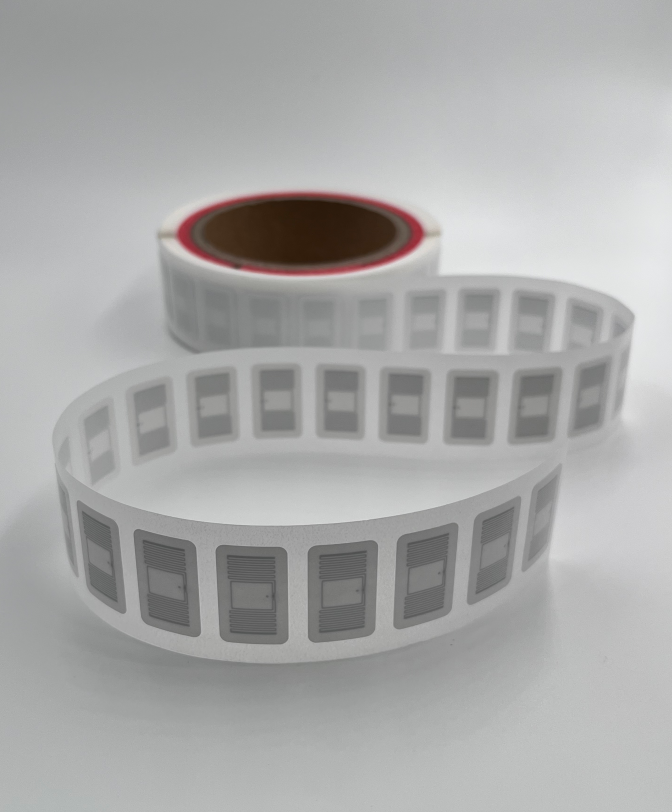
Most people pick tags by thinking about what sounds right in the moment. A better starting point is the opposite: imagine every way a tag can turn useless. It can become a dumping ground for loosely related notes, split into near-duplicate variations like ux, UX, and user experience, or slowly drift until nobody remembers what it was supposed to mean.
When you begin with those failure modes, the selection criteria change. A strong tag earns its place by surviving the worst-case scenario: it has one clear meaning, it does not overlap with existing terms, and it still makes sense six months later when the original context has faded. If a tag cannot handle that, it does not get created.
That approach also makes cleanup easier. Instead of arguing about which of five overlapping tags should win, you can point back to the original test. The tag that stays is the one least likely to repeat the same failure.
When Faster Pump Location Translates Directly Into Shorter Length of Stay
A hospital stay is rarely prolonged by one dramatic failure. It stretches through small repeated delays—a nurse walking to another floor for an infusion pump, a coordinator checking three supply rooms, a transport team waiting on equipment that should already be staged. When pump location becomes immediately visible, those searches shrink to a glance. The difference shows up not only in quieter workflows but in the time between a discharge order and the patient actually leaving.
Faster pump location changes assignment logic. Staff stop routing the closest available pump through memory or phone calls and begin matching equipment to the next clinical move. A patient ready for step-down care is not held back because a required pump cannot be found. Each saved delay may look insignificant on its own, but across a week of admissions those minutes become earlier departures and more predictable bed turnover.
The connection is most direct in units where equipment shortages routinely stall morning rounds. Once location data sits at a glance, the conversation moves from “who can find a free pump” to “who is clinically ready to move.” That shift shortens the gap between a care decision and a physical transfer, giving length of stay a measurable downward pull without adding beds, staff, or new equipment.
Designing Tag Data for Charge Nurses Rather Than Asset Managers
Most tag data schemas start with purchase order numbers, depreciation schedules, and storage locations. Charge nurses rarely need any of that at 6:40 a.m. They need to know whether the bladder scanner on the fourth floor has been cleaned since the last isolation patient, or whether the only pediatric-sized portable monitor is currently parked outside room 212. A tag record built for nursing flow might show current unit, last cleaned time, battery status, and any pending service flag, with enough plain-language detail that a staffer can glance at a handheld screen and move on.
The difference comes down to what the data prompts someone to do. Asset managers want counts, values, and audit trails. Charge nurses want the missing telemetry pack or the wheelchair that never came back from radiology. Designing for that role means using field labels like “ready for next patient” and “return to central supply” instead of inventory categories. It also means keeping updates event-driven rather than batch-reconciled, so the information reflects the hallway as it is right now, not what was logged at the end of the last shift.
The Overlooked Handoff Between Real-Time Location and Infection Control
Badge pings and sensor logs already capture movement through hallways, patient rooms, and shared equipment alcoves. What usually gets missed is that none of this data is handed to the people who need it most after an exposure. Infection control nurses often end up calling facilities or IT to ask for a CSV export while the window for effective contact tracing narrows.
The gap becomes obvious with a single positive test. If a patient with C. difficile walked to radiology and spent eleven minutes in a waiting area, that room-level history should immediately shorten the list of people and surfaces to check. Instead, a nurse may be reconstructing the timeline from a chart and a phone call to transport, which adds hours and leaves room for error.
A workable handoff tends to come from shared triggers rather than another dashboard. The infection prevention team can define which events matter—a positive test, an isolation breach, a missed terminal clean—and the location system can push the relevant movement history into their queue. Without that agreed trigger, the data stays locked in separate systems and the exposure response slows down for no clinical reason.
Stop Counting Assets and Start Measuring Time Saved per Shift
Most warehouses and hospitals still track how many scanners, pumps, or tablets they own. That number rarely tells you whether a shift ran smoothly. A facility can have forty devices on the shelf and still lose hours every day because staff walk across the building to find one that works. Counting assets gives you inventory. It does not give you capacity.
Shift-level time savings are more honest. When a nurse no longer spends eighteen minutes hunting for an IV pump, that is measurable capacity returned to patient care. When a forklift operator avoids a ten-minute detour because the right pallet jack is charged and in place, the gain appears directly in throughput. These small recoveries compound faster than most asset audits suggest.
The switch is uncomfortable because asset counts are easy to defend in a budget meeting. Time saved per shift requires watching actual workflows and admitting where delays happen. But the teams that measure the minutes instead of the boxes start making different decisions: they buy fewer, place better, and maintain what actually moves work forward.
FAQ
The main difference is that ODM tags are engineered around clinical constraints, not just cost per unit. They tend to use medical-grade adhesives and substrates that withstand repeated cleaning with quaternary ammonium or hydrogen peroxide, and their read characteristics are tuned for metal-heavy environments like crash carts and infusion pumps. A generic retail tag often becomes unreadable after a few wipe-downs or when placed near conductive surfaces.
It helps to split the problem by workflow rather than choosing one frequency for everything. HF works well for close-range, high-accuracy reads such as medication tray checks and wristband verification. UHF offers longer read distances for locating wheelchairs, pumps, and linens in hallways. BLE fits use cases where continuous location updates matter, like wandering-risk patients or rental equipment arriving at a loading dock. Most hospitals end up with a hybrid design once they map actual movement patterns.
The most durable options are fully encapsulated tags, usually overmolded with medical-grade silicone or epoxy. For assets, low-profile rigid tags with recessed mounting holes work better than adhesive labels because they resist impact from carts and bed frames. For patient wristbands, direct-printed or fused-inlay designs hold up better under hand sanitizer, soap, and repeated scanning than stick-on labels. Attachment method matters as much as the chip itself.
A well-designed RFID tag strategy can remove friction from routine clinical tasks. For example, tagging breast milk containers, lab specimens, and surgical sponges reduces manual logbook entries and misidentification risk. When a tag is optimized for handheld readers used at the bedside, nurses scan faster and spend less time correcting data. The care benefit comes from fewer interruptions and fewer wrong-item events, not from the tag itself.
Tags need to tolerate the hospital's actual disinfectants and cleaning frequencies. That means testing against bleach, alcohol, and hydrogen peroxide exposure, not just water spray. Smooth, sealed surfaces without crevices are also important because rough edges can harbor bacteria. In sterile areas, the tag should either be autoclavable or covered by a disposable sleeve that doesn't interfere with reads.
The usual failure point is not the tag but the data handoff. Hospitals may have location software, EHR middleware, and asset management platforms that use different identifiers. If the RFID system only reads tag IDs without mapping them cleanly to room-level context or asset records, staff get noisy alerts and lose trust. Planning the identifier scheme and API mapping before deployment prevents most of that friction.
Pilot success in one department doesn't automatically transfer to others because ceilings, walls, metal density, and staff movement differ. A scaling plan should include a site survey for each new area, reader density adjustments, and a clear process for replacing failed tags. Budgeting also needs to account for tag attrition, not just initial hardware, since some tags will be lost or damaged in day-to-day use.
Conclusion
ODM’s approach to healthcare RFID shifts attention from stockroom tracking to the harder realities of clinical spaces. Pilots often succeed in supply closets because conditions stay predictable, while bedside use exposes tags to disinfectants, fluids, impacts, and constant handling. Tag selection therefore begins by listing the worst things that will happen to a tag, then matching materials, attachment, and sealing to those failure modes rather than relying on a generic asset label. That same practical view shapes the data on each tag: charge nurses need to see location, pump status, and cleaning readiness immediately, not purchase-order codes or depreciation fields designed for asset managers.
The value becomes clearer when faster infusion pump location cuts wait times and helps shorten length of stay, and when real-time location feeds infection control without a manual handoff. Instead of counting devices, ODM measures time saved per shift through faster searching, cleaning, setup, and retrieval. This turns RFID into a clinical operations tool rather than an inventory checkbox. That shift changes what gets reviewed each week: not counts, but minutes returned to nursing staff. Tags become part of the patient care path, showing staff where a clean pump is, documenting movement, and giving infection prevention teams a location trail that closes gaps normally left between departments.
Contact Us
Contact Person: Esme Mo
Email: [email protected]
Tel/WhatsApp: 0086 191 2931 7837
Website: https://www.osrfidglobal.com/