

OEM Shearing Machine: Key Factors to Evaluate Before Purchase
2026-10-21
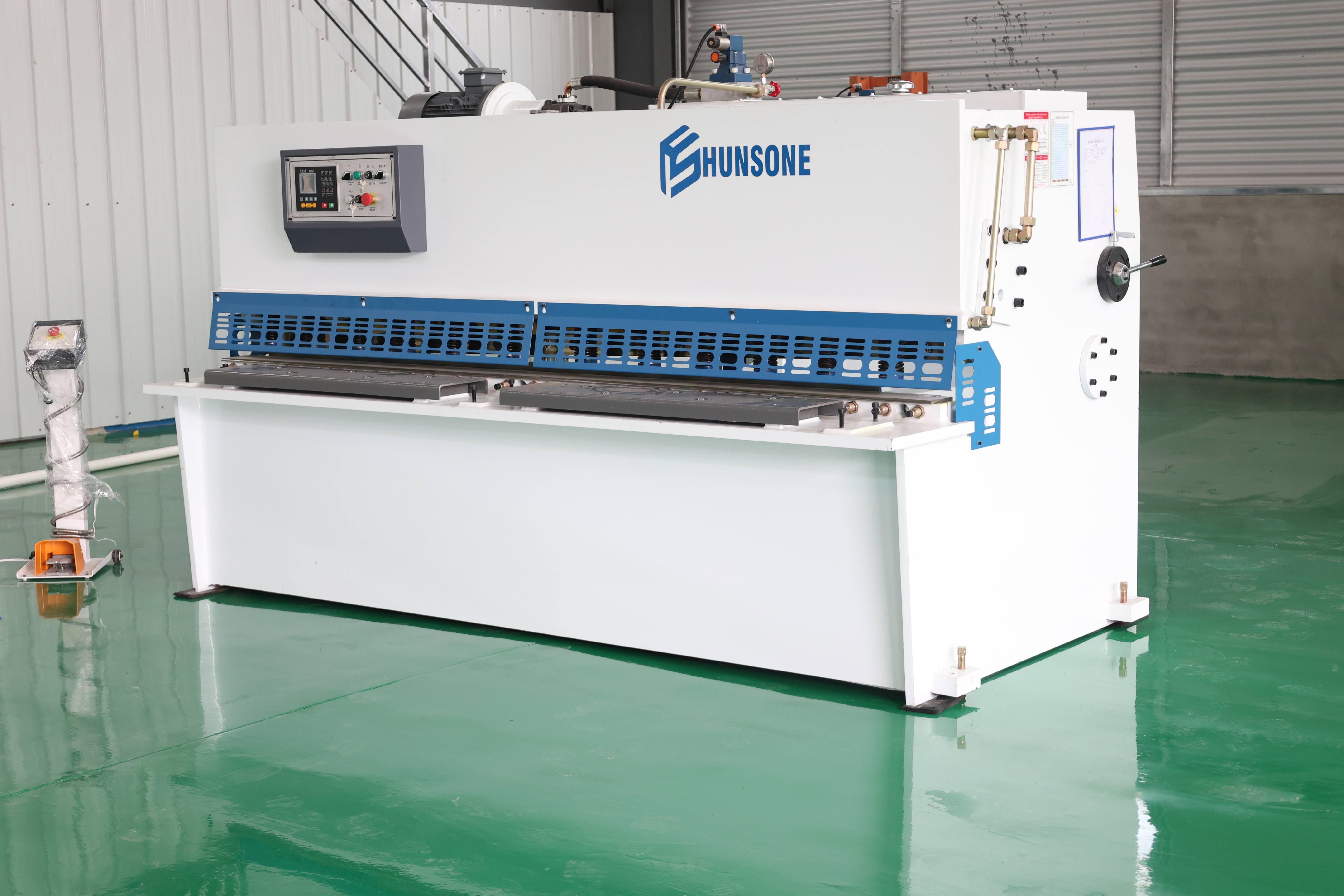
Purchasing an OEM shearing machine isn't a decision to take lightly. With countless suppliers promising top performance, how do you cut through the noise and identify what actually matters? The wrong choice leads to downtime, imprecise cuts, and hidden costs that surface months later. Before you sign any contract, you need to evaluate several factors that are often glossed over in glossy brochures. At HUNSONE, we've seen how a well-informed purchase can reshape a production floor. This guide breaks down the key considerations you can't afford to ignore.
Beyond the Blade: What Actually Determines Cut Quality Over Time
Most people blame a dull knife on the steel, but what actually determines cut quality over time has very little to do with the blade's initial sharpness. Edge geometry shifts with every pass through material, and tiny changes in the angle at which you sharpen accumulate into a completely different cutting profile after a few months. The real culprits are usually the surfaces you cut on, how the knife is stored, and whether the edge gets realigned rather than just ground away.
A bamboo cutting board might feel sturdy, but its hardness causes microscopic chips along the apex, which then tear rather than slice. Softer materials like end-grain wood or high-density polyethylene allow the edge to bite without folding over. Equally important is the sharpening routine itself: a few strokes on a ceramic rod every couple of days can keep the existing edge aligned, while waiting until it's visibly blunt means removing far more metal to restore the geometry. That cycle of neglect and aggressive grinding is what really shortens a knife's useful life.
Storage conditions also play a bigger role than most realize. Even "stainless" alloys develop fine pitting when left damp in a drawer, and those pits become weak points that fracture during normal cutting. Meanwhile, knives tossed loose in a drawer bang against other utensils, rolling or flattening the edge invisibly. If you want cut quality to hold up over time, pay attention to where the knife lives, what it touches, and how often you give the edge a light tune-up. The blade itself is only one part of the equation.
Tonnage Claims vs. Real-World Capacity: A Sizing Reality Check
Marketing brochures love to tout a vessel's gross tonnage, but anyone who has actually tried to squeeze a tender garage, a beach club, and a helipad into that number knows the truth: tonnage is a volume measurement, not a liveable-space guarantee. A 500 GT yacht and a 499 GT yacht can feel nearly identical below deck, yet one triggers a different regulatory headache and crew certification spiral. The gap between what the paperwork says and what your guests experience usually comes down to hull shape, deck layout, and how creatively the designer has hidden the technical spaces.
Real-world capacity shows up in awkward places: the number of sun loungers that actually fit on the sundeck without touching, the size of the tender that can launch without a crane operator's prayer, and whether the master cabin has enough headroom for someone over six feet. Builders often inflate guest counts by counting convertible sofas and Pullman berths, but nobody wants to sleep in a corridor. A smarter check is to walk the deck plan with a tape measure and imagine seven days of rough weather, not just a two-hour sea trial in flat water.
The mismatch becomes expensive fast: over-claiming capacity leads to cramped crews, under-sized galleys, and the kind of negative word-of-mouth that no refit can erase. Owners who focus on actual usable volume, rather than tonnage certificates, end up with boats that feel larger than their numbers. Next time a broker quotes displacement and GT, ask for the stowage plan for six sets of scuba gear, three paddleboards, and a week's worth of provisions. That will tell you more than any classification society's arithmetic.
Controls and Repeatability: Where Precision Is Won or Lost
Precision rarely survives contact with sloppy controls. A machine that drifts by half a degree between runs, or an operator who tightens a clamp by feel rather than torque, will scatter results in ways no calibration curve can fully rescue. The first place repeatability dies is often the least documented: the morning shift's ambient temperature, the worn bushing on a third-axis slide, the software update that quietly changed a rounding rule. Real control means tracking those variables before they become noise.
Repeatability is not about hitting the same number once; it's about hitting it on a Tuesday after a long weekend, with a fresh batch of reagents and a different pair of hands. That is where most processes quietly fail. A well-designed control scheme makes the invisible visible—logging clamp pressure, ambient humidity, and tool wear in the same record as the output. Without that, you are not measuring your process; you are measuring your luck.
The gap between a tight pilot run and a loose production run is almost always a story of unmanaged variables. It might be as mundane as a power supply that sags under load, or as subtle as an operator who leans on the fixture without realizing it. Precision is won by designing out those freedoms: hard stops instead of judgment calls, automated captures instead of handwritten logs, and a culture that treats drift as a defect rather than an excuse.
Safety Systems That Don't Slow Down Production
Modern safety systems often carry a reputation for adding friction, but the best designs work invisibly within the workflow. Instead of stopping the line for every minor deviation, they use layered sensing and predictive logic to distinguish between real hazards and harmless variations. This means operators keep their rhythm while the system quietly tracks hand positions, tool paths, and machine states in real time.
One practical approach is to replace hard stops with dynamic speed control. When a worker enters a predefined zone, the equipment doesn't halt entirely—it slows to a safe crawl or shifts to a collaborative mode. The moment the person clears the area, production resumes full pace automatically. No reset buttons, no supervisor sign-offs, no lost momentum.
Another overlooked factor is how safety data feeds back into process design. By logging near-misses and close calls without interrupting output, engineers can spot recurring bottlenecks or awkward motions that trigger slowdowns. Fixing those issues at the layout or tooling level removes the root cause of both unsafe conditions and production drag, so the system becomes faster precisely because it is safer.
Maintenance Load and Local Parts Availability Before You Commit
Committing to a machine without understanding its upkeep demands can quietly drain your budget and patience. Some models need frequent filter swaps, belt tension checks, or software recalibrations that eat into operating hours. Ask the seller for a sample maintenance log from a similar unit—not the glossy brochure, but actual service records. If that request meets hesitation, treat it as a warning sign rather than a minor inconvenience.
Equally important is whether you can source parts without waiting weeks for an overseas shipment. A gearbox seal or a proprietary sensor might be cheap online, but if the only supplier is three time zones away, downtime becomes a recurring tax on your production. Call a nearby independent repair shop and ask if they keep common wear items for that exact brand and series. Their answer, or awkward pause, tells you more than any spec sheet.
Before signing anything, map out three real scenarios: a routine oil change, a mid-level component failure, and a worst-case motor replacement. For each, note the expected lead time, local stock status, and whether the manufacturer requires certified technicians for warranty work. If two out of three scenarios leave you waiting more than a week, you are not buying a tool—you are adopting a logistical burden.
Does the OEM Truly Understand Your Material Mix?
OEMs often claim they can handle any material mix, but few actually dig into the real-world implications of combining different metals, plastics, and composites in a single assembly. Your material blend isn't just a list of ingredients; it's a chain of decisions about wear rates, thermal expansion, and chemical compatibility. If the OEM hasn't asked you detailed questions about your scrap rates, contamination risks, or the specific grades you use, they're probably running a generic recipe rather than tuning their process to your reality.
A true understanding shows up in the small things: how they adjust feeder speeds when switching from aluminum to zinc, or whether they pre-treat mixed plastic streams to avoid cross-contamination. Without that, you'll see more rejects, more downtime, and a final product that barely meets spec. The best partners don't just accept your material mix—they challenge it, asking why a certain alloy is paired with a particular polymer, and whether a simpler substitution could reduce cost without sacrificing performance.
Ask yourself: has the OEM ever walked your floor to see how materials arrive, how they're stored, and how they flow into the line? If the answer is no, you're probably paying for expertise they don't actually have. A genuine grasp of your material mix means they can predict failure points before they happen, not just react after a batch comes out wrong.
FAQ
OEM means the machine is built by one manufacturer but sold under another brand, often tailored to specific requirements. It matters because you need to confirm who handles warranty, spare parts, and technical support—sometimes the brand on the label isn't the company responsible for long-term service.
Look closely at the throat depth, back gauge travel, stroke length, and the type of drive (hydraulic vs. mechanical). These details determine whether the machine can handle your typical sheet sizes and production speeds, not just the thickest material it can cut.
Ask for the blade material grade (e.g., high-carbon or tool steel), hardness ratings, and whether blades can be reground multiple times. Request sample cut edges or references from similar workshops—actual cut quality on your material tells you more than a spec sheet.
At minimum, look for a light curtain or physical guarding, a foot pedal with emergency stop, and a hold-to-run control. If you have operators who work long shifts, also check for a blade gap adjustment that doesn't require reaching into the cutting zone.
Focus on changes that directly reduce your setup time or scrap: custom back gauge stops for repeat jobs, extended side tables for sheet support, or a different voltage/frequency match. Avoid bespoke frame sizes unless absolutely necessary—that's where costs balloon.
Request a written response time for on-site repairs, the nearest spare parts warehouse location, and whether remote diagnostics are available. Also ask if the OEM trains your maintenance staff during installation—this often prevents weeks of downtime later.
Yes—shipping and rigging, foundation or leveling requirements, hydraulic oil and initial lubrication, blade installation and alignment, and any import duties if the machine comes from overseas. Ask for a total landed cost breakdown before comparing prices.
Request a factory acceptance test video or live stream showing the machine cutting your material at specified tolerances. Ask for a signed accuracy certificate that includes perpendicularity and straightness measurements, not just a generic QA stamp.
Conclusion
A shearing machine purchase often gets reduced to blade length and tonnage, but what really separates a workhorse from a liability is how the frame, ram guidance, and blade clearance hold up after thousands of cycles. Hot-rolled, high-tensile, and stainless blanks all cut differently, and a machine that handles mild steel at 60% of rated capacity may chatter or drift when pushed to 90% on harder alloys. Ask the OEM for real cutting data from your material mix—not just maximum thickness charts. Tonnage numbers on a brochure mean little if the drive system can't sustain that force at full stroke or if the ram deflects under off-center loads.
Precision lives in the controls, but repeatability depends on how the backgauge, squaring arm, and CNC interface work together after thermal drift and tool wear set in. Safety systems should not force operators to bypass them to keep pace; look for light curtains and guard interlocks that reset in seconds rather than minutes. Finally, consider maintenance reality before you commit: are the bearings, seals, and blade holders stocked by a local distributor, or will every minor issue mean a three-week wait for parts? An OEM that cannot name the specific grades and edge conditions your shop runs is selling a generic machine, not a solution.
Contact Us
Contact Person: James Chen
Email: [email protected]
Tel/WhatsApp: 86 13770803946
Website: https://www.hunsone.com/