

Recommend HV Switchgear for Safe and Efficient Power Systems
2026-09-08
A single switching failure can cascade into hours of downtime—or worse. High-voltage switchgear selection deserves more than a spec-sheet glance. In this guide, we break down the safety and efficiency features that separate dependable HV switchgear from the rest, including what Chang Song brings to the table.
Why HV Switchgear Is the Silent Backbone of Grid Reliability
High voltage switchgear rarely makes headlines, and that is precisely the point. It sits inside substations, often unnoticed, coordinating the flow of enormous electrical loads without drama. When a fault occurs somewhere on the network, switchgear is the first line of defense, isolating the problem in milliseconds before it cascades into a wider outage. This instant, automatic response is what keeps hospitals running, factories humming, and traffic lights cycling through their colors, all without a single operator lifting a finger.
Most people only think about the grid when the lights go out. Yet behind every reliable power supply is a network of breakers, disconnectors, and instrument transformers that have been quietly managing stress for decades. A well-maintained switchgear lineup can operate for thirty years or more, enduring temperature swings, moisture, and electrical arcs that would destroy lesser equipment. The real measure of its success is not performance on a good day, but how gracefully it handles the worst day, tripping at exactly the right moment and then resetting for the next challenge.
In an era of rapid renewable integration and aging infrastructure, the importance of switchgear has only grown. Grid operators now face unpredictable power flows from solar and wind, along with rising demand from electric vehicles and data centers. The silent backbone has to be smarter, faster, and more communicative than ever before. But even as digital sensors and remote monitoring become standard, the core mission remains unchanged: protect the network, prevent blackouts, and do it all without asking for attention.
Selecting Switchgear That Won't Fail When Loads Spike
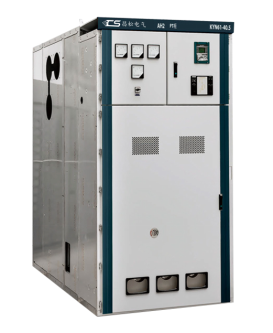
A sudden spike in load doesn't just strain circuits—it exposes every weak assumption in your switchgear selection. Standard ratings on a nameplate tell you almost nothing about how a breaker will behave when inrush currents hit three or four times the steady state. The real question is whether the contacts can handle repeated thermal shock without welding, and whether the arc quenching mechanism is fast enough to prevent a cascade failure in adjacent compartments.
Start by ignoring the marketing jargon around “heavy duty” and instead dig into two rarely discussed parameters: the making capacity under short-circuit conditions and the mechanical endurance under dynamic stress. Many failures occur not because the interrupting rating was too low, but because the operating mechanism binds or the trip unit misreads a transient as a fault. Ask for test reports that show performance with actual motor starting profiles and capacitor bank switching, not just synthetic waveforms.
Finally, consider derating based on altitude, ambient temperature, and enclosure ventilation—factors that quietly erode the margin you thought you had. A switchgear lineup that passes a type test in a climate-controlled lab may behave very differently when mounted next to a furnace or in a dusty mezzanine. The best selection strategy is to treat the nameplate as a starting point, then verify every critical component under the specific spike conditions your facility will actually see.
The Safety Margins Most Spec Sheets Don't Tell You About
When a spec sheet lists a maximum load of 500 pounds, that number rarely reflects the point at which the product will actually fail. Engineers often build in a hidden cushion—sometimes as much as 50% over the stated limit—because they know real-world use involves uneven stress, wear, and occasional mistakes. This unspoken buffer is what keeps a floor joist from cracking when you move a heavy bookshelf across it, or a carabiner from snapping during a slightly off-axis fall.
Consider a roof rack rated for 120 pounds. In controlled tests, it might survive 200 pounds of static weight before showing permanent deformation, and even more before catastrophic failure. Manufacturers almost never advertise that extra capacity, because doing so would invite users to push the product past its safe working load. The margin is there to absorb variables like vibration, temperature swings, and fatigue over years of service—not to give you permission to overload.
These hidden safety factors come from conservative design choices and rigorous testing protocols that go beyond published standards. An aluminum ladder, for instance, may be engineered to handle five times the required load to account for material inconsistencies and manufacturing tolerances. But that resilience isn't infinite; repeated abuse can eat away at the reserve until a failure happens without warning. So while the margins are real and often generous, they're still a safety net—not a license to ignore the numbers printed on the label.
Cutting Energy Losses Without Compromising Protection
Trimming energy waste in power systems has long meant accepting a trade-off: thinner insulation, lower resistance paths, or faster switching often reduce losses but leave equipment more vulnerable to surges, heat, and faults. That bargain is no longer necessary. Composite polymer dielectrics, for instance, can cut leakage current by a third while withstanding transient voltages that would destroy older materials. Pairing these with metal-oxide varistors tuned to clamp only above actual operating peaks keeps protection intact without bleeding power during normal operation.
On the switching side, silicon carbide and gallium nitride devices operate at frequencies that shrink magnetic components and their associated copper and core losses. Instead of relying on bulky snubbers that waste energy, these wide-bandgap semiconductors integrate fast over-current and over-temperature shutdown within the gate driver loop. A fault is isolated in under two microseconds—before damage can propagate—while steady-state efficiency climbs by several points. The protection isn't an afterthought; it's built into the same silicon that saves the energy.
System-level approaches also matter. Adaptive protection settings, derived from real-time load monitoring, allow protective margins to tighten when conditions are stable and loosen only when needed. This avoids the traditional practice of setting trip thresholds conservatively high just in case, which forces every component to run hotter and less efficiently. Dynamic thermal derating, for example, lets a converter safely shed a few percent of its safety margin during cool, predictable operation, then restore full protection instantly when ambient temperature or load variability rises. The result is less wasted energy without a measurable drop in fault coverage.
What Modern Monitoring Adds to Aging HV Installations
Modern monitoring gives aging high-voltage equipment a kind of self-awareness that older control rooms never had. Instead of relying on periodic inspections or waiting for a protection trip, sensors now track partial discharge patterns, bushing capacitance, and dissolved gas levels around the clock. Those measurements are compared against each asset's own history rather than generic thresholds, so a slow drift in tan delta or a subtle rise in hydrogen becomes actionable long before it turns into a fault.
This unlocks a different maintenance logic for installations nearing the end of their design life. Rather than replacing components on a fixed calendar, engineers can extend service intervals only where data supports it, and target limited budgets at the joints, cable boxes, or breakers that actually show early signs of stress. The result is fewer intrusive outages, better use of scarce spare parts, and a much clearer business case for keeping older substations running instead of scrapping them.
Balancing Upfront Cost and Long-Term Switchgear Performance
Procurement teams often fixate on the sticker price of switchgear, but that number rarely reflects the true cost of ownership. A lower upfront bid can hide shorter contact life, weaker insulation coordination, or busbar coatings that degrade faster in humid or corrosive environments. Over a 20-year service life, those compromises translate into more frequent part replacements, longer outages, and higher labor costs.
A more useful comparison looks at total cost per switching operation or per year of reliable service. For example, investing in vacuum or SF6 circuit breakers with higher mechanical endurance, silver-plated contacts, and robust relay protection may add 10–20% to the initial order. In continuous process plants or remote substations, that premium is often recovered after avoiding a single unplanned shutdown or deferred major overhaul.
The right balance depends on how the equipment will be used. Facilities with redundant feeders and easy access for maintenance can tolerate more economical designs. Meanwhile, critical infrastructure, offshore platforms, or sites with high arc-flash risk benefit from designs that prioritize uptime and safety margins. Rather than asking which option is cheaper today, it is more practical to model failure rates, expected downtime, and spare parts availability over the asset’s intended life.
FAQ
Look beyond the voltage rating. Arc containment, internal arc classification, and passive protection against operator error matter as much as interrupting capacity. Ask for a defined pressure relief path and verify that cable compartments are segregated from busbar zones. If the gear will sit in a frequently occupied room, choose an arc-resistant design with a plenum or duct that vents energy away from work areas.
They channel the pressure wave and hot gases through a controlled vent instead of letting them rupture the enclosure. During an internal fault, the design keeps the access covers closed and directs the blast away from the operator. This can prevent serious burns and hearing damage, and it often limits collateral damage to adjacent panels, which shortens downtime after an incident.
Vacuum interrupters and clean-air insulation are becoming the preferred pair for medium and high voltage. Vacuum bottles handle switching and fault interruption without oil or SF6, while clean air or solid dielectric insulation removes the need for fluorinated gases. This combination reduces maintenance intervals and eliminates reporting obligations tied to gas leakage, without sacrificing dielectric strength.
Efficiency is not just about energy losses; it is also about avoiding unplanned outages. Partial discharge sensors, temperature probes, and breaker travel monitors give early warning of insulation breakdown or mechanical wear. When this data is trended over months, maintenance can be scheduled only when needed, which lowers lifecycle cost and extends the service life of the switchgear.
It removes a high-global-warming-potential gas from the asset base while keeping the sealed-for-life convenience of gas-insulated designs. Modern vacuum-based alternatives match the compact footprint of SF6 switchgear, so they fit into tight urban substations. Utilities that adopt SF6-free gear also avoid future regulatory risk and the cost of gas handling, reclaiming, and leak reporting.
Gas-insulated switchgear generally needs less routine work because the active parts are sealed from dust and humidity. Maintenance focuses on checking gas pressure, operating mechanisms, and secondary wiring. Air-insulated switchgear requires more frequent cleaning and insulation testing, especially in humid or dusty environments. Plan for longer outages on air-insulated gear if busbar inspection or re-torquing is required.
Yes, and they add communication and self-diagnostic features that older relays cannot provide. Digital relays support time-stamped event recording, remote setting changes, and integration with asset management systems. However, the replacement must be planned carefully: auxiliary power supply, CT and VT ratios, and trip circuit supervision need to be validated to avoid nuisance tripping or loss of protection during the swap.
A practical sequence includes visual inspection of barriers and interlocks, insulation resistance and high-potential tests, contact resistance measurement on busbar joints and breaker poles, and a functional test of all interlocks and protection trips. For arc-resistant designs, verify that the pressure relief flaps move freely and that the vent path is not obstructed. Finally, perform a full operation test under both local and remote control.
Conclusion
Many power systems depend on high-voltage switchgear that rarely gets attention until something goes wrong. The real value lies in choosing equipment that holds up under sudden load swings, not just in nominal ratings. Manufacturers publish short-circuit and thermal limits, but experienced engineers look past those numbers to things like contact wear, arc-quenching behavior, and how the unit behaves after repeated operations at high current. A conservative choice here prevents cascading failures and keeps the grid stable when demand peaks unexpectedly. Safety margins are often hidden in test reports and field histories—ambient temperature tolerance, insulation aging under harmonics, mechanical endurance of interlocks—and those details separate robust gear from units that merely pass a type test.
Efficiency matters just as much as protection. Reducing resistive and dielectric losses can be achieved without weakening fault clearing; better conductor materials, optimized busbar geometry, and low-loss instrument transformers all contribute. For older installations, adding modern monitoring—partial discharge sensors, thermal cameras, breaker timing analytics—turns an aging switchgear lineup into a predictable asset instead of a black box. The economic case usually favors paying more upfront for designs with easier maintenance access, replaceable contacts, and proven arc-resistant construction. This shifts the discussion from purchase price to cost per reliable switching operation over 20 or 30 years.
Contact Us
Contact Person: Tonglun Chen
Email: [email protected]
Tel/WhatsApp: 8618906642555
Website: https://www.cncsele.com