

Rotary Joint Manufacturer Guide: Ensuring Reliable Fluid Transfer
2026-07-21
Fluid transfer systems rely on rotary joints to maintain seamless flow under pressure, yet even minor inefficiencies can lead to costly downtime. Choosing the right manufacturer means balancing design precision with long-term reliability. In this guide, we break down key factors that ensure consistent performance—and why industry leaders like MOFLON stand out for their engineering excellence and tailored solutions.
The Anatomy of a Reliable Rotary Joint
At its core, a rotary joint is a precision-engineered component that transmits fluid or gas from a stationary source to a rotating part. The reliability of such a joint hinges on several critical elements working in harmony. The most fundamental of these is the sealing mechanism, which must maintain a leak-free connection under varying pressures, temperatures, and rotational speeds. Materials like hardened steel, ceramics, and advanced polymers are often chosen for their wear resistance and ability to cope with thermal expansion. Without a well-designed seal, the entire assembly is prone to failure, leading to downtime and costly repairs.
Beyond the seals, the bearing system plays an equally vital role. It supports the rotating shaft and minimizes friction, ensuring smooth operation over extended periods. High-quality ball or roller bearings are typically employed, but their arrangement and preload must be carefully calculated to handle both radial and axial loads without compromising the fluid passage. In many designs, the bearings are isolated from the media being transferrred, which prevents contamination and extends service life. This isolation often involves additional seals or labyrinthine paths that demand meticulous engineering.
Finally, the structural integrity of the housing and the precision of the internal flow passages cannot be overlooked. The body of the joint must resist deformation under pressure while allowing for thermal dissipation. Internal channels are often polished or coated to reduce turbulence and pressure drop, which is crucial for maintaining consistent flow characteristics. Every component, from the spring-loaded seals to the alignment of the rotating union, contributes to a system that, when properly designed, can operate reliably for millions of cycles in demanding industrial environments.
Matching Joint Design to Fluid and Pressure Demands
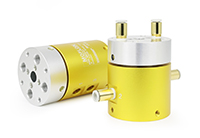
Selecting the right joint begins with a thorough understanding of the fluid being conveyed. Chemical compatibility is the first checkpoint—aggressive media like acids or solvents can rapidly degrade standard elastomeric seals, necessitating materials such as PTFE, FFKM, or even metal gaskets. Fluid viscosity and the presence of suspended solids also steer the design: abrasive slurries demand joints with smooth internal geometries to minimize erosion and avoid crevices where particles can accumulate, while high-viscosity fluids might require larger flow paths and robust sealing mechanisms to prevent clogging and ensure consistent performance under start-up pressure spikes.
Pressure conditions fundamentally shape the joint architecture. Static pressure ratings are a baseline, but real-world systems often experience surge pressures, thermal expansion spikes, and water hammer effects that far exceed nominal values. For high-pressure or cyclic service, joints with all-metal conical seals or captured O-ring designs in sturdy metal flanges are preferred over threaded connections that can loosen. Temperature fluctuations compound the challenge—seal materials must retain resilience within the full operating range without taking a compression set, and the joint structure itself must accommodate thermal expansion without overstressing components. In sanitary or high-purity applications, clamp-style joints with a flush interior profile eliminate dead legs where bacteria might thrive, all while managing the required pressure envelope.
Mismatching a joint to service conditions often reveals itself gradually, through weepage or creep relaxation, but can also lead to sudden failures with costly downtime or safety risks. Engineers should evaluate manufacturer pressure-temperature (P-T) curves meticulously, factoring in aging effects and assembly torque. Beyond catalog numbers, field conditions like vibration, external mechanical loads, and ambient corrosion risk (e.g., coastal installations) can tilt the decision toward a different seal technology or joint reinforcement. In some cases, performing a finite element analysis or requesting a custom joint prototype becomes a prudent investment that extends system reliability far beyond off-the-shelf solutions.
When Material Science Meets Fluid Dynamics
The interplay between material science and fluid dynamics reshapes how we design everything from aircraft wings to medical implants. When a fluid flows over a surface, the material's texture, elasticity, and chemical composition dictate whether the interaction is smooth or chaotic. Tiny surface imperfections can trigger turbulence, while carefully engineered microstructures can repel water or reduce drag. This is not just about passive materials anymore—smart coatings that adapt to flow conditions are emerging, blurring the line between solid and fluid behavior.
Consider the humble lotus leaf, which self-cleans by causing water droplets to bead and roll off. That natural phenomenon, born from a microscopically rough wax surface, has inspired synthetic superhydrophobic materials used in self-cleaning skyscraper windows and anti-icing airplane wings. Yet translating such static designs to dynamic flows introduces new puzzles. A coating that works perfectly in slow rain might fail under high-speed jets, where the momentum of the fluid can overcome surface tension barriers. Researchers now map these boundaries, using high-resolution imaging to watch how droplets splatter and slide at the microscale.
The fusion of these fields also drives progress in soft robotics and biomedical devices. Flexible materials that deform under fluid pressure allow for valves that open and close without mechanical parts, mimicking the peristaltic motion of intestines. Even more fascinating is the use of fluid-structure interactions to create materials that strengthen with use—think of bone tissue remodeling under blood flow. By understanding how fluid forces alter material structure at the molecular level, scientists can grow durable yet adaptable systems, from industrial filters that resist clogging to blood vessel grafts that evolve with the body.
Installation Pitfalls That Compromise Performance
Even the most meticulously engineered equipment can be undone by sloppy installation habits. One of the most common oversights is neglecting to account for thermal expansion. When pipes are rigidly anchored without room to grow, the resulting stress can cause subtle buckling, misalign seals, and eventually lead to premature wear or catastrophic failure. A simple solution, such as incorporating expansion loops or flexible connectors, often gets skipped in the rush to meet project deadlines, yet its absence quietly chips away at system efficiency year after year.
Another silent saboteur is improper foundation preparation. Pouring concrete on inadequately compacted soil or skimping on the curing time before mounting heavy machinery might seem trivial initially, but it invites uneven settling. That slight tilt in a pump base or compressor skid introduces vibration patterns that engineers never designed for, accelerating bearing fatigue and energy waste. The fix is unglamorous—extra days of site prep and patience—but skipping it guarantees a lifetime of compromised performance.
Electrical connections, too, harbor hidden traps. Using undersized wiring or loose terminal torques to save a few dollars generates resistance heating, which degrades insulation and dramatically shortens motor life. The same goes for ignoring the manufacturer’s torque specs on flanges: overtightening deforms gaskets, creating leak paths that worsen under pressure cycles. These aren't assembly mistakes born of ignorance; they’re deliberate shortcuts that backfire, each one quietly eroding the throughput and reliability that the original design promised.
Predictive Maintenance: Beyond the Basics
Once you’ve moved past simple threshold alerts and run-to-failure schedules, predictive maintenance opens the door to a far more nuanced understanding of your equipment. Instead of just reacting to breakdowns or following a rigid calendar, you start combining sensor data—like vibration signatures, thermal images, and oil analysis—with contextual information such as load patterns and operating hours. This blend allows you to spot subtle shifts that would otherwise go unnoticed, turning raw data into a clear, actionable timeline of what’s happening inside every critical asset.
The real leap comes when you connect these patterns across an entire production line. A spike in motor current might seem minor in isolation, but when it coincides with a slight temperature rise in a downstream conveyor, the story changes completely. That’s where modern analysis techniques, often powered by machine learning, help you see correlations no human could track in real time. You’re no longer just predicting a single bearing failure—you’re forecasting how that failure could cascade into stoppages, quality defects, or even safety risks.
Yet, technology alone rarely drives sustained results. The most effective programs pair these insights with clear workflows: who gets the alert, how they verify it, and which repairs get prioritized when resources are tight. It’s about closing the loop between detection and action, often by giving frontline teams direct access to dashboards stripped of technical jargon. When maintenance stops being a surprise and becomes a planned, almost mundane part of operations, that’s when you know you’ve truly moved beyond the basics.
Real-World Failure Scenarios and How to Solve Them
Ever had a production database go down right when your biggest client was running payroll? It happened to us last quarter. The primary cluster froze under load, and the auto-failover script didn’t kick in because of a stale DNS entry. We ended up manually rebuilding the secondary replica while fielding angry calls for three hours.
What saved us wasn’t a tool—it was the boring stuff. We now keep a laminated runbook taped to the server rack with exact steps for DNS flush and failover override. We also added a heartbeat check that pings every five seconds and triggers a Slack alert if the primary falls silent, not just when it crashes. The real fix was admitting that automated solutions fail when assumptions change, so we do a manual failover drill every month, no exceptions.
Another messy scenario: a junior dev pushed a bad migration straight to production on a Friday evening. It corrupted half the user profiles table. We had backups, but the cloud provider’s restore tool kept timing out. The rescue? We had a separate, low-tech nightly dump to a physical server in the office—something we almost canceled to save costs. That dump saved the weekend. Now we run parallel restores every week just to make sure the backup actually works.
FAQ
A rotary joint is a mechanical device that allows fluid (such as water, steam, oil, or air) to transfer between a stationary source and a rotating component without leakage. It's critical because it enables continuous operation of rotating machinery like rollers, spindles, or drums, preventing downtime and ensuring efficient heat transfer or lubrication.
Look into their track record: years in the industry, range of applications served, and customization capabilities. A manufacturer with deep knowledge will offer tailored solutions for different pressures, temperatures, and media types, and they’ll have case studies demonstrating success in challenging environments.
Seal design and material are paramount—PTFE, carbon, or ceramic seals must match the fluid and temperature. Precision machining of the components, proper lubrication/cooling, and protection against contaminants also play huge roles. Regular maintenance schedules further extend service life.
Industries like paper manufacturing, steel processing, plastics extrusion, textile printing, and food production rely on them daily. In paper mills, for instance, steam-heated dryer rolls use rotary joints to maintain consistent temperatures. Semiconductor and wind energy sectors also have niche demands.
Request detailed specifications and test data from the manufacturer. They should be able to provide pressure-velocity (PV) ratings, maximum temperature limits, and material compatibility charts. A responsible manufacturer might even offer trial units or performance guarantees.
Misalignment between stationary and rotating parts is a major one—it accelerates seal wear. Using rigid piping or hoses that impose side loads, insufficient support for the rotating equipment, and overtightening connections can also cause early failure. Always follow the manufacturer’s alignment and torque guidelines.
Absolutely. Reputable manufacturers can modify sizes, connections, seal materials, and even incorporate multiple passages for different fluids. They might also add sensors for temperature or leak detection, or design for extreme environments like high vacuum or aggressive chemicals.
Regular inspection of seals for wear, monitoring for any fluid leakage, ensuring proper lubrication or coolant flow, and keeping the surrounding area clean from debris. Predictive techniques like vibration analysis or thermal imaging can catch issues before they lead to downtime.
Conclusion
A rotary joint’s reliability hinges on how well its internal architecture balances sealing integrity, bearing support, and flow path geometry. Precision-machined components—often featuring hardened shafts, multi-port configurations, and spring-loaded or pressure-compensated seals—form the backbone of uninterrupted fluid transfer. Yet even the most rugged design falls short if it ignores the specifics of the media: high-temperature thermal oils demand graphite-impregnated seals and stainless-steel housings, while aggressive chemicals call for PTFE or ceramic faces. Matching joint configuration to pressure, speed, and viscosity prevents premature leakage and ensures laminar flow, reducing turbulence that can erode seal faces. Material science adds another layer: pairing dissimilar materials at the rotating interface minimizes galling, and advanced coatings like diamond-like carbon can extend service life under abrasive conditions. The interplay between fluid dynamics and metallurgy isn’t theoretical—it dictates whether a joint survives thousands of hours or fails within weeks.
Field performance often unravels not because of design flaws but through installation errors and neglected maintenance. Misalignment, rigid piping that imposes side loads, or inadequate support can distort the joint, causing uneven seal wear and sudden blowouts. Moving beyond simple lubrication schedules, predictive maintenance employs vibration analysis and temperature trending to spot developing issues long before a leak appears. Real-world failures—like a paper mill’s steam joint seizing from condensate buildup or a hydraulic union cracking under water hammer—teach the same lesson: understanding the system’s transient behavior is as crucial as selecting the right hardware. Solving these scenarios involves not just swapping components but redesigning drain paths, adding flexible connections, or tuning pressure relief settings. It’s this holistic grasp, from material choice to operational vigilance, that separates a manufacturer who simply sells parts from one who guarantees dependable fluid transfer under fire.
Contact Us
Contact Person: Xiangpin Li
Email: [email protected]
Tel/WhatsApp: 86 186 1706 8578
Website: https://www.moflon.com