

SLA 3D Printer Manufacturers: The Top 10 You Need to Know Now
2026-06-08
SLA 3D printing remains the go-to for jaw-dropping detail and smooth finishes, but with so many brands flooding the market, picking the right manufacturer feels like a maze. We've cut through the noise to spotlight the top 10 names that actually deliver—and among them, ProtoMat is quickly becoming a favorite for its blend of precision and reliability. Ready to meet the players changing the game? Let’s dive in.
Why SLA Still Dominates High-Detail Prototyping
When precision isn't just a preference but a requirement, stereolithography continues to outpace newer 3D printing methods. The way laser light cures resin layer by layer, at a microscopic scale, produces surfaces that look and feel like final production parts—not rough drafts. Engineers and designers who need to validate fit, form, or fluid dynamics often find that the subtle gradients and complex geometry they create simply can’t emerge from a nozzle-based system without sanding or filler. It’s not about nostalgia; it’s about the physics of photopolymerization giving you clean edges and translucent options that FDM just cannot match.
There's a subtlety to SLA prints that goes beyond smoothness. Because the build process minimizes visible layer lines, you can embed delicate features or intricate textures directly into the model without worrying about post-processing ruining the nuance. For master patterns destined for silicone molds or casting, that crispness means fewer finishing hours, and more importantly, fewer errors introduced by human hands. The material palette has also evolved far beyond brittle first-generation resins—now you’ve got tough, flexible, and even biocompatible options, each tuned for a specific prototype’s demands, from snap-fit assemblies to optical lenses.
Perhaps the quiet secret behind SLA’s staying power is how it handles translucency. While other technologies struggle to produce see-through parts without heavy polishing, a well-built SLA component can be nearly glass-like right out of the vat—essential for fluidic devices or lighting prototypes where the internal view matters as much as the outside. This optical clarity, combined with the ability to hold tolerances tighter than a human hair, keeps SLA on the bench when a prototype needs to not just look like the final product, but perform like it in testing scenarios where detail degradation is a dealbreaker.
The Makers Reshaping Precision: A Look at Today’s Leaders
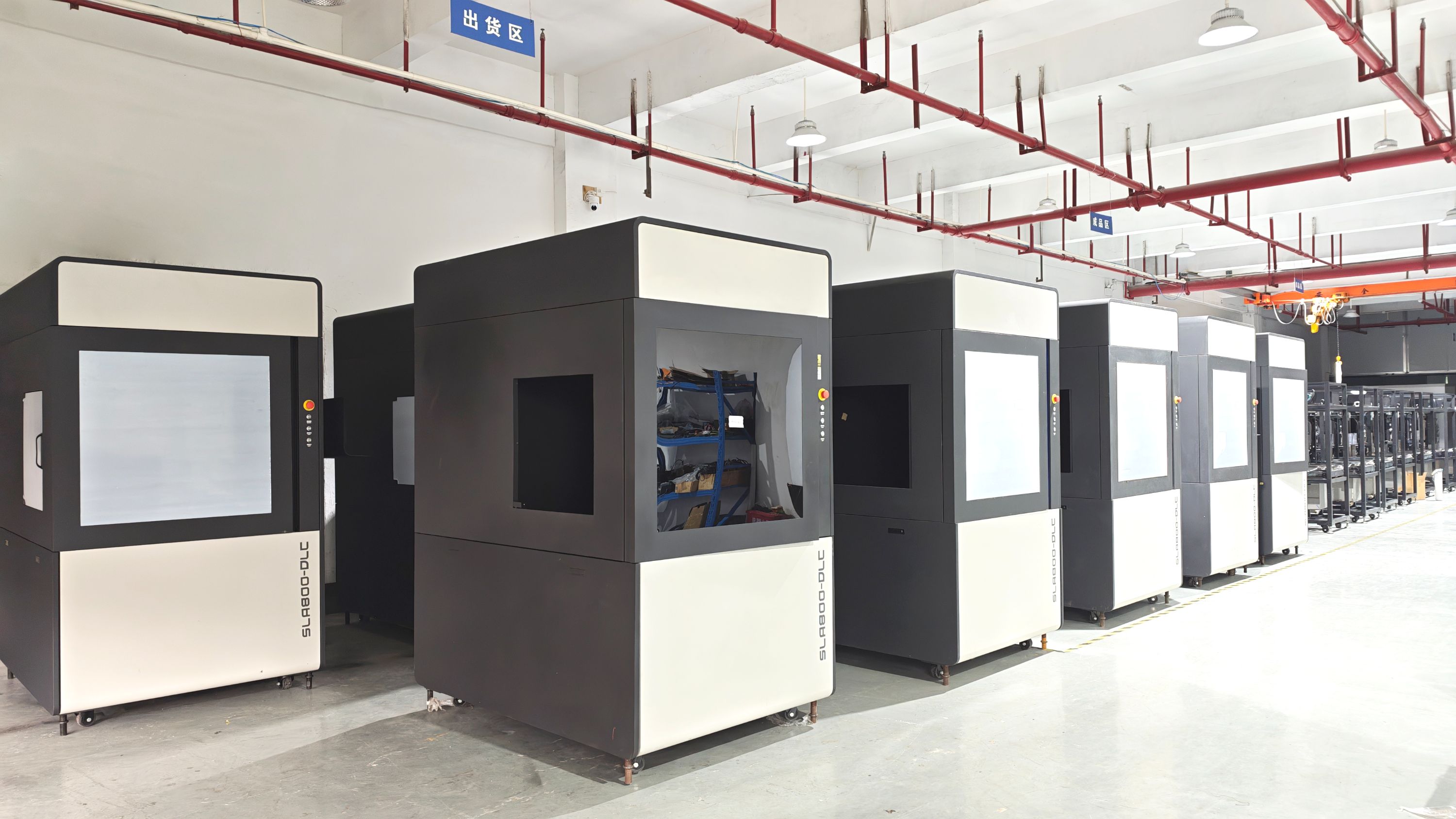
Modern precision isn't just about tighter tolerances—it's about a philosophy that blends old-world craftsmanship with relentless digital refinement. A few standout companies are quietly rewriting the rules, embedding sensor arrays directly into machining centers, and using real-time data to correct micro-deflections before they happen. They don't chase hype; they chase microns, and their work keeps satellites oriented, surgical robots steady, and high-speed trains safe.
What separates today's leaders is an almost stubborn focus on what others overlook. They develop in-house calibration techniques that go beyond industry standards, and their assembly floors have more in common with cleanrooms than factories. Every component is tracked from raw stock to final test, and the people on the line are given both the authority to stop production and the data to know exactly when something feels off. That blend of instinct and information is rare.
Beyond the factory floor, these precision builders are reshaping supply chains that demand zero-defect delivery. Their influence shows up in quieter jet engines, sharper medical imaging, and faster semiconductor fabrication. As they pair nanometer-scale metrology with adaptive machining, the line between prototyping and mass production thins, letting ideas move from digital twin to physical reality with a clarity that was unthinkable a decade ago.
Beyond the Hype: What Separates One SLA Printer from Another
In a market flooded with impressive-sounding specs, the real differences between SLA printers often hide in the details that marketing overlooks. It isn't just about pixel size or build volume—it's how the light engine maintains uniformity across the entire print area, how the Z-axis mechanics minimize layer lines without introducing wobble, and how the resin handling system keeps materials at a consistent temperature without bubbles or dead zones. You'll see it in prints that hold tight tolerances from edge to edge, not just in the center of the platform.
Beyond the hardware, the software ecosystem plays a role that's easy to underestimate. A printer might have an excellent optical system, but if the slicer lacks smart support generation or fails to compensate for resin shrinkage during post-curing, you'll spend hours iterating. Some manufacturers invest heavily in custom algorithms for anti-aliasing and grayscale exposure, which can mean the difference between a surface that looks injection-molded and one riddled with voxel artifacts. The best machines don't just read the file—they optimize it on the fly for the specific resin you’re using.
Then there's the question of long-term reliability. A printer that prints perfectly for the first hundred hours is one thing; what happens after thousands of build cycles matters more in a production environment. Look for how the vat film wears, how quickly the LED array degrades, and whether the build platform locks into place without drift. The printers that truly stand out are those engineered for repeatability, with thoughtful touches like sealed electronics to resist resin fumes and fast recalibration features that reduce downtime between jobs.
Real-World Demands: Matching a Manufacturer to Your Workflow
It’s easy to get caught up in comparing machine lists and certifications, but honestly, those only matter if the manufacturer can plug into your actual way of working. Think about how you manage inventory, how you communicate changes, and how your timelines actually unfold. A factory that expects rigid, unchanging orders won’t last long if your designs shift mid-run. The real match comes down to flexibility: can they absorb the rhythm of your development without constant friction?
Look beyond the quote sheet to the less glamorous details. What’s their true minimum order, not just the one they advertise? How do they handle rush requests or partial shipments? You want clues about their problem-solving reflexes. A plant that sees a deviation as a crisis probably isn’t right if your workflow is iterative. Instead, probe how they’ve adapted for others in similar situations. Their answers will show you whether they view unexpected challenges as part of the collaboration or as interruptions.
Before committing, run a small batch that’s deliberately imperfect. Throw in a mid-production tweak or a packaging change. You’re not testing their machines; you’re testing how your teams sync when plans drift. That trial run exposes everything from cultural fit to willingness to speak up early about potential hiccups. A manufacturer that treats that test as a dialogue, not an inconvenience, is one that genuinely aligns with a dynamic workflow.
Hidden Costs and Long-Term Value in SLA Ecosystems
SLA ecosystems promise reliability and accountability, but beneath the surface lurk hidden costs that can erode the very value they aim to protect. These often come from over-engineering service levels beyond actual business needs—like chasing five-nines uptime for internal tools that tolerate occasional blips just fine. The expense of monitoring, redundant infrastructure, and penalty clauses quietly accumulates, sometimes outweighing the perceived benefits. Teams end up spending more time managing the SLA than solving real user problems.
Looking past the immediate price tag reveals a more nuanced long-term value. A well-tuned SLA ecosystem becomes a framework for continuous improvement rather than a rigid contract. When availability targets align with customer expectations, the investment in resilience pays off in user trust and reduced firefighting. It’s less about hitting abstract numbers and more about shaping operational culture: clear ownership, proactive detection, and smarter capacity planning that prevents incidents before they happen.
The real payoff lies in treating SLAs as living agreements that evolve with technology and usage patterns. Negotiating realistic metrics with stakeholders, automating compliance checks, and regularly revisiting thresholds can turn a potential cost center into a strategic advantage. Instead of merely avoiding penalties, teams unlock efficiencies—like right-sizing resources or deprioritizing low-impact alerts—that feed directly into the bottom line over the months and years.
Where SLA Is Headed Next: Trends That Actually Matter
The days of static, one-size-fits-all service level agreements are numbered. Organizations are waking up to the fact that rigid SLAs often measure what's easy, not what's actually valuable. The trend gaining real momentum is outcome-based SLAs—agreements tied directly to business results rather than technical uptime percentages. Instead of just promising 99.9% server availability, forward-thinking contracts now focus on metrics like transaction completion rates, user satisfaction scores, or even revenue impact. This shift forces providers to truly understand the client's business and align their services with what drives success, making the SLA a living document that evolves as priorities change.
Another major shift is the rise of real-time, transparent performance tracking. The old monthly or quarterly review meeting has become borderline useless in sectors where minutes of downtime can cost millions. Modern SLAs are integrating live dashboards, automated alerts, and collaborative monitoring tools that give both parties instant visibility into service health. This transparency does more than just speed up issue resolution—it fundamentally changes the relationship from adversarial scorekeeping to proactive partnership. When data flows freely and thresholds are mutually agreed upon, trust replaces constant verification, and the conversation moves from “did you breach?” to “how do we prevent the next one?”
Perhaps the most underrated trend is the humanization of SLA language. For decades, these documents have been dense legal artifacts that nobody outside procurement and legal teams actually reads. The new wave strips away jargon, replaces punitive penalty clauses with collaborative improvement plans, and focuses on practical responsibilities rather than theoretical edge cases. By writing SLAs in plain English (or the relevant local language) and building in regular review cycles that involve operational staff—not just executives—companies are turning forgotten contracts into living tools that guide daily decisions. This cultural shift might seem soft, but its impact on actual service quality is substantial.
FAQ
SLA, or stereolithography, uses a laser to cure liquid resin layer by layer, creating highly detailed and smooth parts. Unlike FDM, which extrudes melted filament, SLA achieves finer resolutions and is ideal for intricate models, jewelry, and dental applications. It trades speed and material robustness for exceptional surface quality.
Formlabs remains a fan favorite for accessible yet professional machines. Peopoly and Phrozen offer compelling options for budget-conscious makers. On the industrial end, 3D Systems and Stratasys dominate with large-format, high-throughput systems, while brands like Anycubic and Elegoo continue to push entry-level boundaries.
Start by defining your typical print size and resolution requirements. For miniatures or fine jewelry, a small build volume with high resolution makes sense. Budget often dictates whether you go for a desktop unit like an Anycubic Photon or step up to a Form 3. Also factor in resin costs and post-processing mess—some workflows are cleaner than others.
The main draws are crisped details and silky surface finishes that almost look injection-molded. It’s unmatched for transparent parts, complex geometries, and features like thin walls. Plus, isotropic properties mean parts are fairly strong in all directions, which isn’t always the case with filament prints.
Absolutely. Today’s sub-$300 machines from Elegoo and Anycubic deliver impressive quality. They often come with monochrome LCDs for faster layer times and longer lifespans. You’ll sacrifice some advanced features and build volume, but for hobbyists and tinkerers, the value is hard to beat.
3D Systems casts a long shadow with their Figure 4 and ProX lines, built for high repeatability in engineering and manufacturing. Stratasys also pushes into high-temp resins and large-format builds. Meanwhile, Desktop Metal’s focus on faster, more automated systems is shaking things up for production environments.
Pay close attention to XY resolution—usually determined by the pixel size of the light source—and the Z-axis stepping precision. A decent monochrome LCD capable of 0.05 mm or smaller pixel pitch yields crisp details. Also, the wavelength compatibility matters if you care about specialized engineering resins.
It’s exploded in the desktop space, largely thanks to lower-cost UV light sources and open-source controller boards. Larger color touchscreens, cloud-based slicing, and automated resin handling are becoming standard. Speed has also jumped dramatically with technologies like low-force peeling and continuous printing entering mainstream equipment.
Conclusion
SLA printing has held its ground in high-detail prototyping for a reason—the resin-based process consistently delivers smooth surfaces and sharp features that filament-based methods struggle to match. The current landscape is shaped by a handful of manufacturers who have moved past simply chasing micron ratings and are rethinking precision from the resin chemistry up to the light source. Formlabs remains the go-to for a polished desktop experience, while 3D Systems continues to push the boundaries of what large-format SLA can achieve in industrial contexts. Lesser-known names like Peopoly and Nexa3D have entered the conversation by challenging conventional build speeds and material flexibility. All of this noise makes it easy to get lost in spec sheets; what truly separates one machine from another often comes down to how the manufacturer engineers its peel forces, optical path stability, and thermal management—details that balloon into real differences when you move beyond one-off test prints.
Choosing the right SLA partner demands a cold look at your daily workflow, not just the purchase price. An open-resin system might seem liberating until you factor in failed prints from untested profiles, while a locked ecosystem bundles reliability at a premium. Hidden costs like resin trays, build film replacements, and post-processing labor stack up quickly, and the total cost of ownership over two years can easily eclipse the printer’s sticker price. Long-term value is increasingly tied to how well a manufacturer supports evolving material portfolios—tough engineering resins, biocompatible blends, and ceramic-filled options open doors far beyond aesthetic prototyping. The trends that actually matter signal a shift toward automated part handling, in-situ monitoring that catches failures as they start, and software that learns from every layer. These aren’t flashy bullet points; they’re the quiet forces making SLA a durable workhorse rather than a prototyping novelty. Mapping these capabilities against your own needs is what turns a spreadsheet of top-ten candidates into a single defensible choice.
Contact Us
Contact Person: Joe
Email: [email protected]
Tel/WhatsApp: +8613799507208
Website: https://www.3dprotomat.com/