

Speaker Magnet Wholesale: A Buyer's Guide to High-Performance Audio Magnets
2026-08-29
Most speaker buyers obsess over cone materials and crossover design—then wonder why two drivers with identical specs sound completely different. The hidden variable? The magnet. A weak or inconsistent magnet robs your audio of punch, clarity, and headroom before the signal ever reaches the voice coil. That’s why sourcing high-performance speaker magnets at wholesale shouldn’t be an afterthought. This guide cuts through the noise, showing what separates premium audio magnets from the bulk bin—and how DAWA helps buyers spec, sample, and scale without guesswork.
Supplier Claims Worth Pushing Back On
Some supplier explanations deserve a healthy dose of skepticism, especially when they conveniently shift blame away from the vendor. If you hear that a late shipment was caused by “unprecedented demand” without any prior notice or supporting data, it may be time to ask for specifics. Vague references to “industry-wide shortages” or “logistics bottlenecks” can mask poor planning or overcommitment on the supplier’s side. Push back until you see concrete evidence, such as raw material lead times, carrier tracking logs, or production schedules that back up the claim.
Another red flag is the sudden appearance of quality issues blamed on “minor process adjustments.” If a supplier insists that a change in color, texture, or performance falls within “acceptable tolerance” but your own checks show otherwise, don’t let the conversation end there. Request the original specifications, the revised process documentation, and a clear explanation of why you were not informed before the change took effect. Silently accepting such claims often leads to repeated deviations, eroding the consistency your customers rely on.
Finally, watch out for sweeping statements about cost increases that lack a transparent breakdown. A supplier might say “raw material prices have skyrocketed” or “labor costs doubled” without offering a single invoice, index reference, or contract clause. Before agreeing to any price adjustment, insist on a line-item analysis showing exactly which inputs changed, by how much, and over what period. Compare that with independent market data or your own procurement research. Legitimate cost pressures can be verified; hand-waving cannot.
The Magnet Spec Sheet Fields That Matter
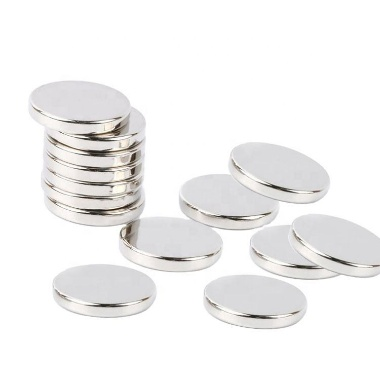
Every magnet spec sheet throws a wall of numbers at you, but only a handful of those fields actually drive real-world performance. Pulling out the right values up front saves you from costly mismatches later. The first set to lock in is the residual flux density, Br, because it tells you how much magnetic punch the material carries after full magnetization. Paired with coercivity, Hc, you get a clear picture of both how strong the magnet is and how stubbornly it holds onto that strength under external demagnetizing forces.
Beyond the headline values, max energy product, (BH)max, often gets treated as the single quality score, but that can mislead if you ignore the shape of the demagnetization curve. A high (BH)max with a low knee point means the magnet collapses under modest temperature or opposing fields, so checking intrinsic coercivity, Hci, matters just as much for hot or high-load applications. Rounding out the essential fields, look for the temperature coefficients of Br and Hci, because they predict how much performance you will lose per degree rise, and the maximum operating temperature, which sets a hard ceiling before irreversible losses kick in.
Finish your review with the mechanical and dimensional tolerance notes. Coating type and thickness, if present, affect corrosion resistance and assembly clearances. The tolerance class directly influences how tightly you can position the magnet and whether you need to compensate with shims or adhesives. Ignoring these secondary fields often leads to magnets that meet the magnetic spec on paper but fail in the actual fixture due to a slightly oversized nickel layer or a chamfer that was never specified.
Coating Choices for Humid and High-Heat Builds
In coastal or tropical builds where humidity routinely exceeds 80%, standard acrylic latex paints often blister within a few seasons. Instead, look for coatings with low moisture vapor transmission rates and high elongation, such as siloxane-modified epoxies or moisture-cured urethanes. These form tighter films that resist water intrusion while still allowing trapped moisture to escape slowly, preventing the peel-and-lift cycle common on shaded walls and soffits.
For high-heat surfaces like metal roofs or mechanical enclosures, ceramic-filled or silicone-based coatings reflect radiant heat and maintain adhesion well past 200°F. Polysiloxane hybrids offer noticeably better color retention than standard epoxies under constant UV and heat, while fluoropolymer topcoats resist chalking on south-facing walls. If the build includes uninsulated ductwork, choose a coating rated for intermittent temperature spikes rather than just continuous operating temperature.
Application timing matters as much as product selection. Apply thinner coats in high humidity to allow proper curing, and schedule work for early morning when the dew point is lowest. On steel exposed to both moisture and thermal cycling, a primer with corrosion inhibitors is non-negotiable; skipping it often leads to rust bleed-through within the first year, even on factory-primed panels.
Why Sample Lots Never Match Production Batches
Sample lots are produced under tightly controlled conditions that rarely survive contact with full-scale manufacturing. Small batches allow for hand-picked raw materials, slower mixing times, and closer monitoring—variables that simply cannot be replicated when a line is running hundreds of units per hour. The shift from benchtop to industrial equipment changes shear forces, heat distribution, and even the way powders compress, so the “identical” formula behaves differently.
Equipment differences also play a larger role than most teams admit. A lab-scale mixer may achieve homogeneity in three minutes, while the production blender needs fifteen—or it may overmix and damage heat-sensitive ingredients. Sampling itself introduces bias: the small lot is often tested immediately after preparation, whereas production batches sit in storage, travel through supply chains, or get exposed to temperature swings that alter viscosity, particle size, or microbial stability.
Finally, human factors creep in. Technicians running pilot batches tend to follow procedures with extra care, whereas production operators work against time targets and shift changes. Minor deviations—a slightly longer hold time, a different cleaning residue, a supplier substituting an excipient—accumulate into a finished product that falls outside the original sample’s specification. The mismatch is not a failure of the formula; it is the gap between a controlled snapshot and a messy, scaled reality.
Freight, Tariffs, and the Real Unit Price
When buyers compare quotes from overseas suppliers, the sticker price on a product rarely tells the whole story. Freight costs can shift dramatically depending on whether goods move by less-than-container load or full container, and the chosen Incoterm determines how early in the journey the buyer takes on risk. A unit price of $2.50 might look attractive until inbound ocean freight, port handling, and last-mile delivery add another $0.90 per piece—effectively erasing the margin you thought you had.
Tariffs add another layer that is often estimated too late. Many importers only calculate duty at the product level, forgetting that the tariff base frequently includes freight and insurance when the declared value follows CIF terms. That means a 10% tariff can quietly become 11% or 12% once logistics costs are folded in. Smart sourcing teams rework the math on a landed-cost basis, comparing suppliers not by the unit price on the invoice but by the true cost per unit sitting in your warehouse.
The real unit price, then, is not a single number—it is the sum of product cost, freight allocation, tariff exposure, and even inventory carrying cost tied to longer transit times. A supplier with a slightly higher base price but a nearby warehouse or a better shipping lane can win on total economics. When you stop negotiating just the ex-works price and start negotiating the full path to your shelf, the purchasing conversation changes completely.
Building a Repeatable Incoming QC Checklist
The first step in making an incoming QC process stick is to strip away any ambiguity about what “good” looks like. Instead of a vague instruction like “check the material,” a repeatable checklist spells out the exact measurements, visual cues, or functional tests required. This might mean listing a specific dimension tolerance, a maximum allowable surface defect size, or a pass/fail voltage range. When every inspector works from the same concrete criteria, the results stop depending on who happens to be on shift that day.
Equally important is the order of operations. A well-built checklist walks the inspector through the steps in a logical sequence that mirrors how the part will actually be used. For example, verify the packaging and labeling before opening, then check the physical dimensions, then run any functional checks, and finally sign off on documentation. This not only reduces the chance of skipping a step but also makes it easy to trace where a failure occurred. Over time, the checklist becomes a training tool: new team members can follow it without needing someone to explain every nuance on the spot.
Finally, a repeatable checklist is never a static document. After enough incoming inspections, patterns will show up—certain suppliers may consistently fail on one criterion, or a particular measurement may rarely catch anything. Use that data to revise the checklist: remove steps that add no value, add steps that catch real problems, and adjust tolerances only when you have evidence they were too tight or too loose. This feedback loop keeps the QC process lean while still protecting the production line from bad incoming material.
FAQ
The main options are ferrite ceramic, neodymium, alnico, and samarium cobalt. Ferrite is the budget workhorse, neodymium offers the highest energy density for compact designs, alnico is often favored for vintage or guitar speakers due to its smooth compression characteristics, and samarium cobalt suits high-temperature or corrosion-prone environments.
Think about size constraints, thermal conditions, and cost. Neodymium delivers far more flux per unit volume, so you can shrink the motor structure significantly, but its strength drops faster as temperature climbs unless you pay for higher-grade heat-resistant variants. Ferrite is bulkier and weaker per volume but stable, inexpensive, and naturally resistant to corrosion, making it a solid pick for larger woofers or outdoor systems.
For neodymium, grades like N42, N48, and N52 are common, but the letter suffix matters just as much as the number. An N48SH can handle higher operating temperatures than a plain N48, which can be critical in a tightly packed voice coil gap. For ferrite, Y30 and Y35 are typical for woofers and midrange drivers, while alnico 5 and alnico 8 appear in high-end tweeters and guitar speakers.
Most reputable suppliers will produce custom discs, rings, arc segments, or fully irregular shapes to match your motor topology. You usually need to provide a drawing or a physical sample, and common tolerances are around plus or minus 0.05 mm on thickness and diameter. Expect to discuss magnetizing direction and any chamfers or grooves early in the process.
A serious supplier will check dimensional accuracy, magnetic flux density, and coating integrity on every batch. You should ask for reports covering coercivity, remanence, and maximum energy product, as well as salt spray test results for coated magnets. Consistency of the magnetizing field is equally important, since uneven magnetization can cause voice coil rub and distortion in the finished driver.
Coating is critical, especially for neodymium, which oxidizes rapidly without protection. Common options include nickel-copper-nickel, epoxy, and zinc. In a speaker, the magnet sits near a voice coil that heats and cools repeatedly, and humidity can enter the gap, so a robust multi-layer coating with good salt spray resistance will extend the driver's life significantly.
This varies widely by specification and whether the magnet is already stocked. Standard ring or disc sizes might have MOQs as low as 500 pieces, while custom geometries often start around 5,000 pieces or more because of tooling setups. Always request a sample order first, even if you have to pay a premium for it, to validate dimensions and magnetic performance before committing to volume.
Request physical samples and measure them independently for flux, size, and coating adhesion. Ask for material certifications and batch traceability documents. A factory video audit or a third-party inspection is worthwhile for first-time orders. Placing a small trial order of a few hundred pieces can reveal how the supplier handles packaging, lead times, and communication under real commercial conditions.
Conclusion
Buying speaker magnets at wholesale volume means pushing back hard on supplier talk about "equivalent" grades and "no difference" between lab samples and scheduled production. A data sheet that omits residual induction (Br), intrinsic coercivity (Hcj), and maximum energy product (BHmax) at the actual operating temperature is not a data sheet—it's a placeholder. When humidity or heat is part of the build, skip bare neodymium and ask for NiCuNi or epoxy coatings with documented salt-spray hours, not vague "weatherproof" claims. Those two pages will filter out most of the noise before you ever wire a purchase order.
Sample lots rarely match production runs because powder batches, pressing tool wear, and sintering profiles shift from pilot to full line. Treat every first article as a benchmark, not a promise, and lock the acceptable tolerance band in writing. Freight and tariffs quietly reshape the real unit price; get the Incoterm and HS code on the quote, and compare landed cost per gauss output rather than invoice price per piece. Finally, build a repeatable incoming QC checklist: measure dimensions, flux, pull force, and coating adhesion on a fixed sample size from every shipment, and quarantine any lot that drifts outside your own spec—not the supplier's.
Contact Us
Contact Person: Kelvin Lo
Email: [email protected]
Tel/WhatsApp: 0769-88561131
Website: https://dawamagnetic.com/