
Taekwondo Uniform Service: From Custom Sizing to Professional Care
2026-08-23
Finding a taekwondo uniform that actually fits is harder than it should be—and keeping it competition-ready is a whole other battle. At PandaWin Sports, we’ve turned that struggle into a single, seamless service: from precise custom sizing to professional care that extends the life of every dobok. Here’s how we help you step onto the mat with confidence, every time.
Getting the Fit Right: How Custom Measurements Shape Your Uniform
A uniform that fits well does more than look polished—it moves with you through every shift. When measurements are taken from your actual body rather than a generic size chart, the fabric lands where it should: sleeves end at the wrist instead of swallowing your hands, and shoulders sit without tugging across the back. That small difference changes how you feel after hours on your feet, because you're not constantly adjusting a hem or rolling up cuffs that were never meant for your arms.
Custom measurements also account for the oddities that off-the-rack clothing ignores. Maybe one shoulder sits slightly lower, or your torso runs longer than average. A tailored uniform absorbs those quirks instead of fighting them, so the waistband doesn't dig in when you bend down and the chest pocket stays flat when you reach forward. It's less about vanity and more about practicality: the less you think about your clothes, the more you can focus on the job in front of you.
There's a quiet confidence that comes from wearing something cut for your frame. It shows in the way you stand, the way you greet a customer, the way you don't have to fix your collar before every meeting. And because the fit is consistent across every piece you order, you stop guessing which size to buy and start trusting that each uniform will feel like it was made for you from the first wear.
Fabric Choices That Hold Up Through Every Kick
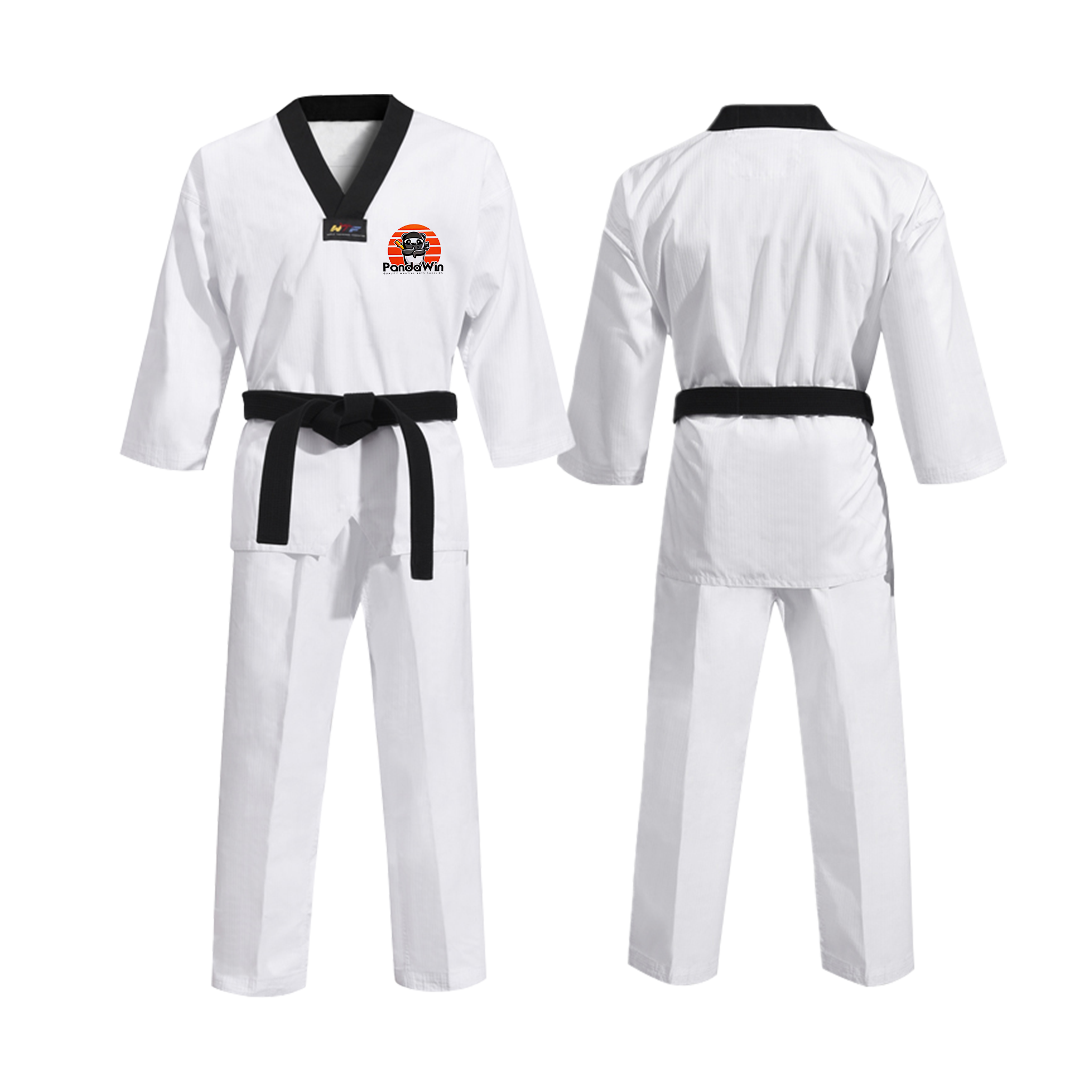
When you're throwing kicks all day, the last thing you want is fabric that gives out at the seams or pills after a few sessions. That's why we lean on ripstop nylon and heavyweight cotton blends—they resist tearing even when you're stretching into high roundhouses or sliding across mats. The weave is tight enough to shrug off friction, but still lets heat escape so you don't feel like you're training in a sauna.
For the hips and knees, we add a bit of four-way stretch into the panels. That means the fabric moves with your leg instead of fighting it, so a hard side kick won't leave the inseam straining. After dozens of washes, the colors stay put and the material keeps its shape—no sagging, no thinning where it matters most.
From First Stitch to Final Hem: Inside the Tailoring Process
Every garment starts with a flat piece of cloth and a set of measurements. Before a single stitch goes in, the tailor chalks the cutting lines, checks the grain, and rough-bastes the major seams with long, loose thread. This first pass is not about polish; it is about finding where the fabric buckles, where a shoulder drops, or where the back panel sits too tight. Those early stitches are meant to be ripped out and redone, sometimes more than once.
Once the fit settles, the real construction begins. Seam allowances get trimmed and pressed open, canvas or interfacing is worked into the chest and lapels, and the tailor starts easing sleeve heads into armholes with a slight extra fullness that gives the shoulder its shape. Each pressing between steps matters as much as the sewing itself, because wool and cotton remember heat and steam. The garment gradually stops resembling fabric pieces and begins to hold its own architecture.
The hem comes last, but it is rarely an afterthought. A tailor might mark the hem while the client stands in the shoes they intend to wear, then catch-stitch the folded edge by hand so the outside shows no heavy thread. Final touches—a bar tack at a pocket corner, a button sewn with a shank, a last pass of the iron over the finished length—are what make the difference between a garment that simply fits and one that moves with the person wearing it.
Care Routines That Keep Your Uniform Competition-Ready
Most uniform damage happens long before you step onto the floor, and it usually starts in the wash. Tossing your jacket or dress into a hot cycle with regular detergent is one of the fastest ways to fade embroidery, weaken seams, and set in those dull gray streaks. I learned the hard way that cold water and a mild, dye-free soap make a real difference, especially for performance fabrics with stretch or moisture-wicking panels. For small stains around collars or cuffs, treat them with a soft brush and a tiny bit of diluted soap instead of scrubbing hard — aggressive rubbing wears down the fibers and leaves a shiny patch that stands out under bright lights.
Steam is your best friend when it comes to keeping crisp lines without scorching. Set your iron to the lowest heat that still relaxes wrinkles, and always use a press cloth between the iron and any printed or embroidered areas. For pleats, try hanging the uniform in a steamy bathroom for ten minutes first, then gently finger-press the folds back into place. Skip the dryer entirely if you can; even low heat breaks down elastic and causes collars to curl. Instead, let everything air-dry on a wide hanger shaped to support the shoulders, and never hang a damp uniform in direct sunlight — that's how whites turn yellow and bright colors go flat.
Before every competition, do a five-minute inspection that most people forget. Check every button, snap, and hook for looseness, and run a needle through any thread that looks fuzzy. Trim stray threads with small scissors rather than pulling them, because pulling can unravel an entire seam. Store your uniform in a breathable garment bag, not a plastic dry-cleaning bag, and keep it away from cedar chests or scented sachets — those smells cling to fabric and can irritate your skin mid-routine. A little consistent care during the week means you walk in feeling sharp, and that confidence shows before the music even starts.
Why Off-the-Rack Sizing Falls Short for Serious Practitioners
Most commercial gi manufacturers size their products around a generic body type that doesn't account for the wide variations in limb length, torso thickness, and shoulder breadth among serious grapplers. A stock A2 might fit your chest but leave sleeves flapping past your wrists, or an A3 could bind across the back the moment you shrimp. The result is constant adjusting mid-roll, unnecessary fabric for opponents to grip, and an overall feel that works against your movement rather than with it.
For practitioners who train five or six days a week, those small fit issues compound quickly. Sleeves that ride up repeatedly or pants that need retying between every round aren't just annoyances—they break concentration and force you to think about your gear instead of your technique. Off-the-rack cuts also tend to use a single fabric weight and weave for all sizes, ignoring how a heavier build needs different reinforcement than a lankier one. Serious grapplers notice the difference immediately, especially in knee and armpit stress zones that start to fray after a few months.
Beyond durability, there's a psychological edge. Wearing a gi that fits your exact measurements, with the right taper and sleeve tension, lets you move with confidence. You stop worrying about whether your collar is flaring open or your pants are slipping. That small shift allows you to stay fully present on the mat, which is where progress actually happens.
The Lifecycle of a Taekwondo Uniform: From Order to Ongoing Care
Ordering a Taekwondo uniform is rarely as simple as grabbing the first white dobok you see. The fabric weight, weave, and cut all influence how it performs during sparring or poomsae, and many clubs insist on a specific style or badge placement. Before placing an order, it's worth checking with your instructor about any requirements—this avoids the frustration of sending back a uniform that doesn't meet dojang standards. Once the package arrives, try it on with your belt and any protective gear to make sure nothing pulls or restricts movement.
Before the first class, wash the uniform separately in cold water to remove factory starch and set the fibers. Skip the fabric softener, which can coat the cotton blend and reduce its ability to wick sweat. Hang drying indoors or in the shade keeps the white from turning yellow, and it also prevents the kind of shrinkage that a hot dryer cycle can cause. A little attention at this stage goes a long way toward maintaining the uniform's crisp appearance.
After training, resist the urge to leave a sweaty dobok balled up in a gym bag overnight. Rinse or wash it promptly, and treat any grass or blood stains with a gentle spot cleaner before they have a chance to set. Over time, a well-cared uniform will soften and become more comfortable, but the collar and cuffs should stay sharp with occasional ironing on a low setting. This routine turns a simple piece of clothing into a reliable training partner for years.
FAQ
We don't rely on generic letter sizes alone. You send us your height, weight, chest, waist, arm length, and inseam for each athlete. We then cut the dobok panels to those numbers, adjusting the jacket drop and trouser length so the uniform sits cleanly over the chest protector without pulling. Every order also includes a fit preview sketch before cutting.
For sparring, most competitors go with a lightweight polyester-cotton blend, often 65/35, because it wicks sweat and dries fast between matches. For poomsae or demonstrations, a heavier cotton-rich weave gives crisper snapping sounds and holds its shape during slow, precise movements. We can also add mesh underarm vents if someone overheats easily.
Turn it inside out, use cold water, and choose a mild detergent without bleach or fabric softener. Fasten all zippers and Velcro, then wash on a gentle cycle. Hang dry in the shade, never tumble dry, because heat weakens embroidery backing and shrinks cotton panels. If you need to remove wrinkles, use a steamer rather than a hot iron directly on the embroidery.
Yes. We create a sizing matrix for your school: we collect measurements from white belts to black belts, group them into size bands, and produce individual uniforms that still match your school's design. You get a spreadsheet with each student's name, size, and tracking number so nothing gets mixed up before testing day.
Standard production takes about 10 to 14 business days after measurements are confirmed and payment is cleared. If you need uniforms for an upcoming tournament, we offer a 5-business-day rush option for an extra fee, but only if you approve the digital fit preview within 24 hours. International shipping adds 3 to 7 days depending on your location.
Yes. We keep your original file on hand, so if a sleeve tears or name embroidery frays, you can mail the uniform back to us. We'll replace the damaged panel, re-secure the embroidery, and reinforce stress points like the collar and side vents. Repairs usually take 5 to 7 business days, and we'll send you a photo before shipping it back.
Before cutting anything, we pre-wash and dry the fabric at higher temperatures than normal laundry. That removes most of the shrinkage potential. Then we cut the pattern to your measurements. You should still follow our cold-wash and hang-dry instructions, but even if the uniform accidentally goes through a warm dryer, the fit should remain stable within about 2%.
Conclusion
A well-fitted dobok isn't just about appearance; it starts with precise measurements that account for shoulder slope, arm length, torso proportion, and even how the fabric will drape during dynamic kicks. Off-the-rack sizing forces practitioners into generic small-medium-large boxes, leaving excess fabric that catches on knees or restricts high kicks. Custom tailoring solves this by mapping the body in a fighting stance, not a static pose. The fabric itself matters just as much: lightweight cotton blends breathe during intense sparring, while reinforced polyester-cotton twill resists tears from repeated snaps. Every seam is assembled with flat-felled stitching so the inside doesn't chafe, and hems are adjusted to sit cleanly over the ankle without dragging.
Once the uniform is delivered, professional care keeps it competition-ready. Washing in cold water with a mild detergent prevents shrinkage and preserves the crisp white color, while air-drying avoids the brittleness that high heat causes. Stains from sweat or floor mats are treated promptly, and heavy starch is avoided because it cracks along fold lines. A proper care routine also extends the garment's lifecycle—practitioners who rotate two uniforms and inspect seams early catch loose threads before they become tears. From the first consultation to ongoing maintenance, a dedicated taekwondo uniform service treats the dobok as training equipment, not disposable sportswear. That difference shows in how the uniform moves, holds its shape, and projects discipline every time it's worn.
Contact Us
Contact Person: Fei Xu
Email: [email protected]
Tel/WhatsApp: +8618631245578
Website: https://www.pandawinsports.com/