

Top Laser Cutting Machine Manufacturing: What Sets Industry Leaders Apart
2026-08-14
Every laser cutting machine manufacturer promises speed, precision, and reliability. Yet only a few consistently deliver all three when the metal is thick, the runs are long, and the margins are thin. The difference rarely shows up in a brochure—it lives in beam path design, gantry rigidity, motion control quality, and the support behind the sale. JIAN MENG has built its reputation by sweating those exact details. What follows is a closer look at the engineering and service decisions that genuinely separate industry leaders from the also-rans.
What Keeps a Laser Cutting Machine Honest After 10,000 Hours?
After 10,000 hours of cutting, the honest machines are the ones where nobody skipped the boring stuff. The linear rails still hum because someone actually wiped them down weekly and refused to let micro-slag build up in the bearing blocks. The lens stays clean not by magic, but because the operator treats the protective window like a ritual—checking it between sheets, swapping it before the first hint of pitting. It's the accumulation of disciplined habits: greasing the rack and pinion before it complains, monitoring chiller coolant pH instead of waiting for a overheat alarm, and replacing drive belts on a schedule rather than after they snap and take a mirror with them.
Then there's the structural honesty that comes from the original build. A frame that was stress-relieved after welding doesn't twist itself out of square over five years of thermal cycling. The gantry doesn't sag because the manufacturer didn't cheat on aluminum extrusion wall thickness or bearing preload. When you hit 10,000 hours, you find out whether the machine was designed with real redundancy—like shielded cables that survive repeated flexing, or a control system that compensates for slight mechanical drift instead of pretending it doesn't exist. The honest machine ages gracefully because its foundation was never about shaving cost, but about maintaining a cutting tolerance that doesn't decline with every thousand hours.
Finally, honesty is enforced by a feedback loop that most shops ignore: you keep cutting test squares and measuring them, even when production is screaming. You log the kerf width drift on different materials. You listen for the subtle change in pitch when the high-pressure air assist starts leaking at a fitting. At 10,000 hours, the machine that stays honest is the one treated as a precision instrument rather than a commodity tool—where every shift starts with a five-minute walk-around that catches a loose mirror mount before it becomes a $4,000 optics replacement and two days of downtime. It's not one heroic fix; it's the refusal to let small deviations become the new normal.
The Overlooked Link Between Machine Rigidity and Edge Quality
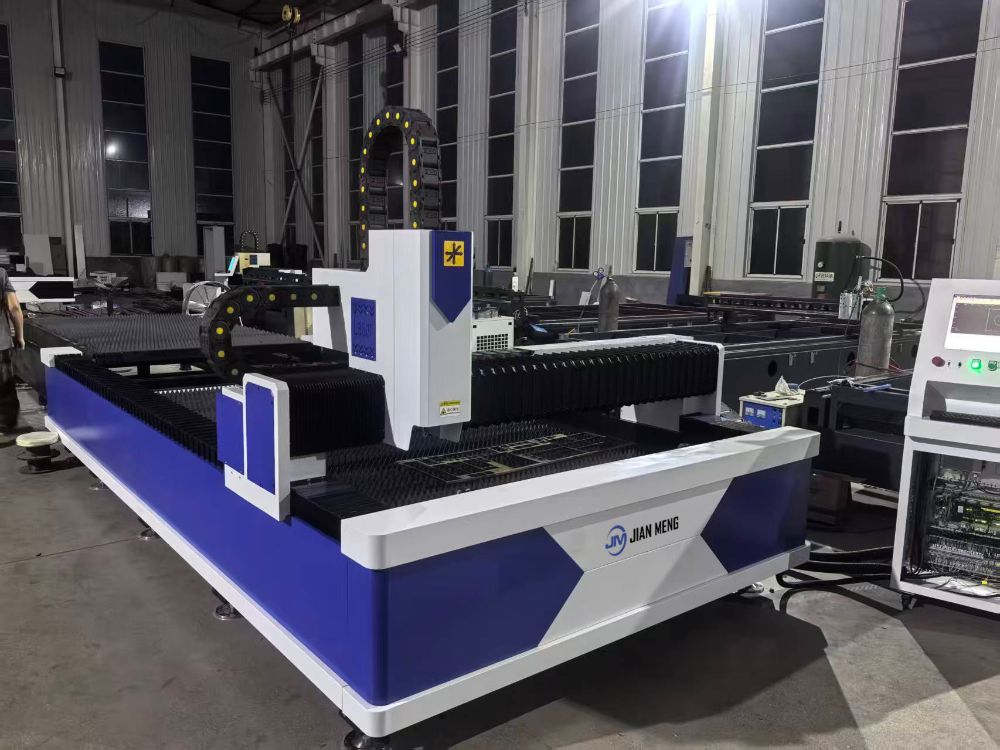
Most machinists chase sharper tools or fancier coatings when an edge starts looking ragged, yet the quiet culprit is often the machine frame itself. Every cut sends a shockwave through the spindle, tool holder, and bed. If those components flex even a few microns under load, the cutting edge no longer follows the intended path—it scribbles a broader, shallower arc across the workpiece. That tiny wandering motion leaves a torn, inconsistent edge that no amount of hand deburring can truly fix.
What gets missed is that rigidity isn't just about how heavy the casting is. A massive machine with poor joint fit or a worn gib can ring like a bell, amplifying vibration at certain depths of cut. The tool then hammers the material instead of shearing it cleanly, producing micro-chipping and a frosty surface along the very edge you're trying to keep crisp. This is why two machines with identical horsepower and identical tooling can produce dramatically different edge quality on the same stock.
The practical takeaway is to read the edge as a diagnostic. If you see uneven shine, fine tears, or a burr that shifts from side to side along the cut, stop reaching for another insert. Check the spindle preload, tighten the gibs, or stiffen the setup with a shorter tool and a more substantial workholding. Chasing rigidity first often eliminates edge defects that no tool change ever would.
Why Control Software Separates Weekend Hobbyists from Industrial Leaders
A weekend hobbyist wiring a CNC router or a homebrew 3D printer usually gets by with open-loop moves and a prayer. They send a G-code file, watch the gantry lurch into position, and shrug off a millimeter of drift because the part still looks roughly right. Industrial leaders, on the other hand, run closed-loop systems where every encoder pulse is counted, every servo error logged, and every motion profile pre-calculated against known inertia and resonance. The difference is not just the price tag on the hardware; it is the control software's ability to turn raw motion into a repeatable, verifiable process.
Real control software separates leaders from hobbyists by treating the machine as a system, not a collection of motors. It manages jerk limits to avoid exciting structural vibrations, coordinates multi-axis interpolation so circular paths do not corner-cut, and interpolates lookahead buffers to keep feed rates smooth through tight geometry. If a spindle load spikes or a limit switch trips, the software does not just stop — it decelerates along a safe trajectory, saves the state, and tells the operator exactly which axis, which fault code, and which line of code was active. A hobbyist can afford to lose a $20 end mill; an industrial leader cannot afford to lose a $20,000 workpiece or a day of production to a crash that should have been predictable.
Perhaps the clearest dividing line is how the software handles variability. Hobbyist workflows assume the machine, tooling, and material are close enough to the CAD model. Industrial control software integrates probing cycles, thermal compensation, and tool wear offsets into every job. It logs data from previous runs and adjusts feed override or spindle speed to stay inside a tolerance band. That feedback loop — measure, compare, correct, repeat — is what turns a noisy garage experiment into a production process. Without it, even the most expensive iron will behave like a toy.
Every Micron Counts: The Tolerance Standards Top Builders Actually Use
In high-end cabinetry and architectural millwork, the difference between a seamless reveal and a glaring gap often comes down to a single micron. Top builders don't rely on nominal dimensions or casual eyeballing—they work from tolerance bands refined through years of on-site frustration and client scrutiny. A drawer front that's off by 0.2mm might pass inspection in a production shop, but in a custom home with raking light across a long run of panels, that same error reads as a shadow line nobody specified.
The most respected shops quietly maintain a two-tier system: structural tolerances for carcasses and framing allow ±0.5mm, while visible joinery, inset reveals, and edge alignment are held to ±0.1mm or tighter. This isn't about chasing perfection for its own sake—it's about predictability. When every component lands within the same narrow range, assembly moves faster, adjustments disappear, and the final gap consistency becomes a signature rather than a surprise.
Material choice, humidity swings, and even tool warm-up cycles eat into these margins daily. Builders who actually hit micron-level consistency aren't using magic; they're compensating for wood movement before it happens, calibrating CNC routers every shift, and rejecting stock that drifts more than 0.05mm after a test cut. The tolerance standard isn't a number printed on a spec sheet—it's the accumulated habit of measuring twice, cutting once, and knowing exactly when a shaving-thin pass is the difference between right and almost right.
When the Machine Breaks at 2 a.m.: What Support Really Looks Like
At 2 a.m., when the production line halts or the server goes silent, the last thing anyone needs is a support script. Real support shows up as a calm voice on the phone who already knows your machine's history, asks whether the error code is the same intermittent fault from last month, and walks you through bypassing the failed sensor instead of reading a troubleshooting tree. It's not about cheerfulness; it's about competence at an hour when nothing else is moving.
That kind of support doesn't come from a call center rotation. It comes from someone with grease under their fingernails, who has seen this exact failure at three other plants and remembers that the service manual misses a crucial step. They'll stay on the line while you climb into the access panel, describe the wiring colors they expect, and tell you to tap the relay housing twice before replacing it. When you ask if they can send a technician, they've already dispatched one with the right part loaded in the van before the call ends.
The follow-up matters just as much. By 6 a.m., there's an email with a root-cause summary, a photo of the burned contactor they suspected, and a note that the firmware patch will be pushed later that week. You never once heard the phrase "I understand your frustration." Instead, you heard someone treat your 2 a.m. breakdown like it was their own machine down, their own shipment late, their own night interrupted. That's what support looks like when it's real.
Material Libraries: The Secret Weapon of Serious Manufacturers
Every manufacturing team eventually hits the same wall: a designer specifies a polymer, the engineer substitutes an alloy, and procurement orders something else entirely. A material library shuts that loop. It consolidates approved grades, test data, supplier contacts, and processing notes into one place that everyone actually uses. No more digging through old spreadsheets or trusting a 2019 PDF.
The payoff shows up in lead time and scrap rates. When new hires can pull up thermal limits or chemical resistance tables without asking around, they make fewer wrong guesses. When the library tracks cost per kilogram and regional availability, engineers stop designing parts around materials that are back-ordered or wildly over budget. Serious manufacturers treat this not as a nice-to-have but as the same kind of infrastructure as tooling or calibration records.
The best libraries also grow with use. A machinist logs a surface finish issue on a particular stainless batch; a composites engineer adds a curing note for a new epoxy. Over months, this accumulated know-how becomes the company's actual competitive edge, far harder to copy than any single machine or patent.
FAQ
It usually comes down to how obsessively they control beam quality and motion accuracy. The leaders don't just assemble components; they tune the resonator, optics, and drive system as one integrated unit, so the cut edge looks clean at high speed instead of just acceptable on a test coupon.
The difference is often in the frame and thermal management. Top companies use stress-relieved steel or polymer composite bases, actively cool the optics and drives, and run long-cycle accuracy tests before shipping. That prevents the slow deformation that cheaper machines develop after thousands of hours.
More than most buyers expect. The best firms write their own control algorithms for piercing, corner acceleration, and gas pressure ramping. That is what lets an operator load a complex nest and walk away, instead of babysitting every sheet for burn marks or missed pierces.
Look for whether they treat support as a revenue stream or a reputation builder. Leaders stock critical modules locally, offer remote diagnostics from the machine's own logs, and can often dispatch a technician with the right part in one trip. If the company cannot show you a clear response-time framework, that is a red flag.
They focus on delivery. A well-engineered 6kW machine with fast, stable motion and intelligent gas control will often outperform a poorly integrated 12kW system on thin and medium sheet. Leaders talk about cut quality per kilowatt, not just maximum wattage.
They design machines as nodes in a workflow, not standalone tools. That means built-in nozzle changers, automatic focus calibration, real-time sensor feedback for pierce detection, and clean interfaces for loaders, towers, and ERP systems. The goal is that the machine can correct itself rather than stop and wait for a person.
A leading builder tunes the machine for more than mild steel. They optimize assist gas flow, focal length, and cutting tables for stainless, aluminum, brass, and even coated materials. That kind of broad capability usually reflects deep application testing rather than a generic one-size-fits-all design.
Conclusion
After 10,000 hours, a laser cutter's true character emerges. Leaders build frames that don't just look rigid—they measure deflection under load and map how vibration from the gantry translates into edge waviness. Tolerance claims on spec sheets mean little unless you ask what temperature range they're verified in and whether thermal compensation updates in real time. Control software is where serious manufacturers diverge: not just G-code parsing but how the motion planner handles corner deceleration, kerf compensation, and adaptive pulse frequency for different material thicknesses. Meanwhile, the library of pre-tested cutting parameters for everything from 0.5 mm stainless to 20 mm mild steel is often the difference between a machine that ships with promise and one that ships with proof.
At 2 a.m. on a Saturday, the real support model becomes apparent. Industry leaders don't hide behind ticket queues—they have engineers on call who can remotely log in, check servo logs, and often fix a parameter conflict before the operator finishes their coffee. Machine rigidity isn't just about thick steel plates; it's about the casting stress relief, linear rail alignment, and how the bed holds flatness after years of thermal cycling. These details compound: a machine with tight static alignment but poor thermal growth modeling will cut beautifully for the first hour, then wander off tolerance by mid-shift. The leaders are not simply assembling better components; they are engineering a system where mechanical stiffness, control algorithms, material data, and service response reinforce each other. That integration is what separates a brand that works for a demo from one that works for a decade.
Contact Us
Contact Person: Jeanie
Email: [email protected]
Tel/WhatsApp: +86 19805122954
Website: https://www.jianmeng.com