

Travertine Flexible Stone Recommendations for Stunning Home Renovations
2026-08-22
Real travertine has a way of stealing the show—until you realize what it costs, weighs, and how easily it chips during a renovation. That’s where travertine flexible stone changes the game. At Magic Stone, we’ve watched homeowners and designers use this lightweight, bendable alternative to capture that same sun-worn Italian texture on accent walls, kitchen islands, and even curved surfaces. Instead of sifting through conflicting advice, here are the exact recommendations we share with clients to get that stunning, high-end finish without the traditional stone headaches. Ready to see which spots in your home deserve this upgrade first?
Why Flexible Travertine Keeps Showing Up in Gorgeous Home Renovations
Most people associate travertine with thick, unforgiving slabs that crack when you try to bend them. Flexible travertine flips that idea. It’s real stone shaved thin and bonded to a backing that lets it curve around columns, rounded kitchen islands, and even arched doorways without awkward seams or bulky trim. Renovators love it because it eliminates the usual fight to make natural stone follow the shape of a room, not the other way around.
There’s also the look. Flexible travertine keeps all the soft beige and warm gray tones, the subtle pits and mineral streaks that make the stone feel grounded and lived-in. Because each sheet is sliced from actual rock, no two are alike, but the color range stays calm enough to blend with everything from white oak cabinets to matte black fixtures. It reads as custom and expensive, yet it installs more like wallpaper than masonry.
In practice, that means a contractor can wrap a curved shower bench in an afternoon, or a DIYer can cover a fireplace breast without renting a wet saw. The material is thin enough to cut with a utility knife, and it works with standard tile adhesive. For homes that mix old bones with new additions, flexible travertine bridges the gap because it handles slight movement and irregular surfaces without popping or chipping the way rigid tile often does.
The Lightweight Difference That Makes Flexible Travertine Feel Premium
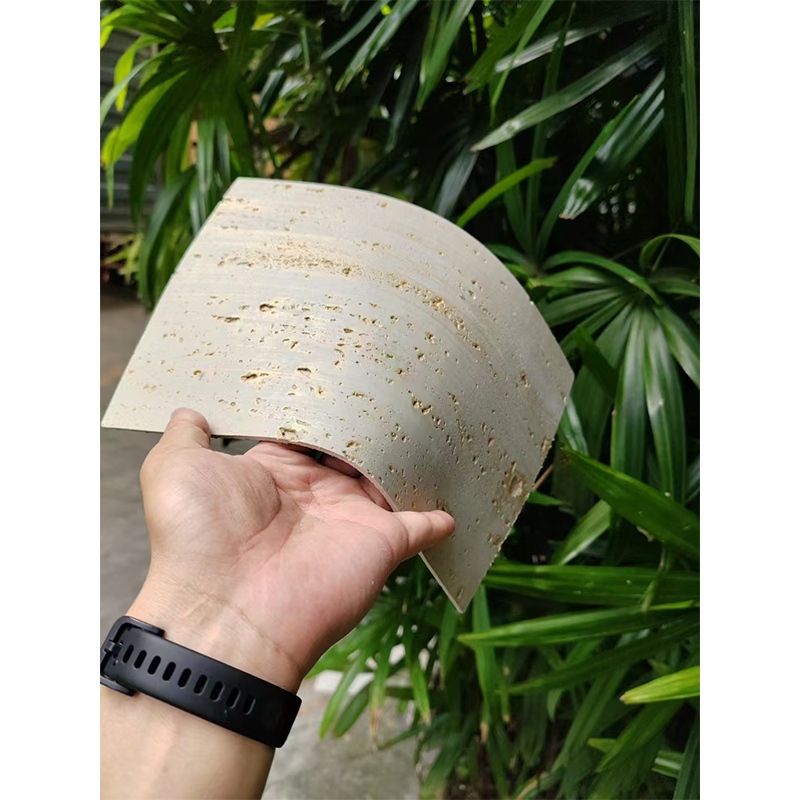
Most people expect stone to weigh a ton, but flexible travertine breaks that assumption without losing its composure. The slim profile takes the strain off walls, tools, and your back while still offering the layered, organic surface you'd normally associate with thick slabs.
That reduced weight changes the way it feels during installation. Edges align with less effort, adhesive grabs quickly, and there's no need to over-engineer the substrate just to support the material. You end up with a quieter, cleaner job that doesn't sacrifice the natural depth travertine is known for.
It also means the product travels better and arrives in better shape. Fewer cracked corners, less wasted material, and a finish that stays crisp from box to application. The lightness isn't a compromise; it's what lets the stone feel more refined in the hand and on the wall.
No More Straight Lines Only - Flexible Travertine Loves Curves and Arches
Travertine has long been prized for its soft, earthy character, but the assumption used to be that it belonged on flat expanses—floors, countertops, straight feature walls. That thinking is fading fast. Designers are now bending this porous limestone around sweeping curves, wrapping it into archways, and shaping it into sculptural forms that feel more organic than architectural. Its naturally layered texture becomes even more pronounced when curved, catching light and shadow in a way that rigid stone never could.
What makes flexible travertine possible is a backing of fiberglass or fabric that lets thin slices of the stone follow almost any radius. This isn't a printed imitation or resin-heavy composite—it's real travertine, honed to a few millimeters, allowing it to wrap around columns, barrel ceilings, and curved kitchen islands without cracking. The result reads as authentic stone, yet behaves almost like veneer, opening up applications that were once off-limits.
Arches and rounded niches gain a quiet monumentality when lined with this material. Instead of competing with the curve, the travertine's natural veining and open pores reinforce it, adding depth that painted drywall or tile can't match. In a bathroom, a curved shower wall becomes a tactile experience. In a hallway, a series of arched alcoves lined in warm beige travertine feels less like a trend and more like a return to something timeless.
Can Flexible Travertine Survive Real Life in Bathrooms and Kitchens?
Let's be straight: flexible travertine isn't as fragile as some critics claim, but it also won't shrug off daily abuse the way a full-thickness porcelain tile will. In a real kitchen or bathroom, the main enemies are standing water, grease, and rapid temperature swings. The thin stone veneer does have a protective seal, but that seal can wear down around the sink and cooktop. If you're the type to wipe spills as they happen, you'll be fine. If you tend to let water sit on the counter overnight, expect discoloration or lifting at the edges over time.
Heat resistance is another point where flexible travertine shows its limits. It can handle the ambient warmth of a bathroom or a coffee mug on a coaster, but placing a hot pan straight from the burner will likely scorch the surface or soften the adhesive underneath. In a bathroom, steam isn't an immediate dealbreaker, but poor ventilation combined with constant moisture can cause the backing to swell. The right primer and a high-quality polymer-modified adhesive make a real difference—skip that step and you're inviting peeling joints within a year or two.
None of this means flexible travertine is a bad choice for these rooms. It just demands a realistic placement strategy. Use it on vertical surfaces or as a backsplash away from direct water spray, apply a fresh coat of penetrating sealer every six to twelve months, and avoid abrasive cleaners. Treated that way, it can survive real life—and still look better than most mass-produced alternatives.
A Weekend Install? What to Expect When Working with Flexible Travertine
Most flexible travertine panels are thin enough to cut with a standard utility knife, which takes a lot of the dust and noise out of the equation. You’ll spend the first hour or two mapping the wall, treating uneven spots with a skim coat, and letting the surface dry completely. After that, the adhesive choice matters more than you might think—a polymer-modified thinset grabs faster and gives you a little extra open time when you’re fitting pieces around outlets or corners.
Expect to finish a standard accent wall in a single day if you’ve already prepped the room and have a second pair of hands for the larger sheets. The real time sink is usually not the cutting but the dry-fitting: because the stone has natural colour shifts, you’ll want to lay a few panels out first and swap them around until the veining flows the way you like. That extra fifteen minutes can save you from a patchy-looking wall that bugs you every time you walk past.
Cleanup is surprisingly quick since you’re not dealing with grout lines. A damp sponge and a soft cloth take care of adhesive smears before they set, and a light sealant coat at the end adds maybe forty minutes. If you’re doing a kitchen backsplash, leave the power off to the outlets and remove the cover plates before you start—it’s the kind of small step that keeps the job from stretching into Sunday night.
Getting That Natural Stone Warmth Without the Demolition Drama
There is a certain quiet luxury to natural stone that no manufactured material quite manages to imitate. The subtle variations in tone, the imperfect veining, the way light seems to settle into the surface rather than bounce off it—these are the details that make a room feel grounded and lived-in. But for most of us, the thought of installing real stone means dust, noise, and a renovation timeline that stretches beyond reason. That is where the new generation of stone veneers and lightweight cladding has changed the game entirely.
Thin-cut stone panels, often less than an inch thick, deliver the same tactile warmth and organic texture without requiring structural reinforcement or messy demolition. They can be applied directly over existing drywall, brick, or even tile, which means you get the look of a centuries-old farmhouse wall without tearing out the existing surface. Some products are flexible enough to wrap around curved fireplace surrounds or kitchen islands, while others come in interlocking systems that a confident DIYer can handle in a weekend.
What is often overlooked is how these modern alternatives actually improve on the original. Real stone can be cold to the touch and prone to staining, but high-quality veneers are often sealed or engineered to be more resistant to moisture and wear. You get the warmth without the upkeep, the character without the cost, and the comfort of knowing the project will be finished before your next dinner party.
FAQ
It is a thin veneer made from real travertine bonded to a flexible backing, so you get the authentic pits, veins, and warmth of natural stone in a material that bends around curves and hugs uneven walls, unlike standard rigid tiles that crack or require perfectly flat surfaces.
A floor-to-ceiling fireplace surround, a kitchen island front, or a powder room accent wall. Those are the spots where guests notice the layered texture and soft color shifts most, and the material’s pliability lets you finish edges cleanly without bulky trim.
Yes, as long as the existing tile is clean, dry, and firmly adhered, you can apply it directly on top with a polymer-modified thin-set or a high-quality flexible adhesive. That saves a huge amount of time and mess compared to demolition.
Ivory, light walnut, and soft pewter tones are the safest bets because they mimic aged European stone and pair well with both warm wood and matte black fixtures. Avoid heavily dyed or high-gloss versions if you want the room to feel current in ten years.
The material itself is often less expensive per square foot than slab travertine, but the real savings come from lower labor and prep costs because you do not need a fabricator, heavy mortar bed, or special substrate reinforcement. Expect to pay a premium over vinyl or laminate, but far less than custom stonework.
Wipe it with a damp cloth and a pH-neutral stone cleaner for everyday messes, and reseal it once every one to two years with a penetrating sealer to keep wine, oil, and soap scum from staining the porous surface. Avoid acidic cleaners like vinegar, which can etch the stone.
If you have experience hanging wallpaper or large-format tile, you can handle a straightforward accent wall or backsplash, especially since the flexible sheets are light and easy to cut with a utility knife. For large, curved installations or full shower surrounds, hiring a pro is smarter because adhesive coverage and seam alignment matter a lot.
Do not cover every wall in a small room, as the heavy texture can make the space feel dark and busy. Instead, treat it like jewelry: use it on one focal wall, a chimney breast, or a pair of columns, and leave the surrounding walls in a flat, muted paint to let the stone breathe.
Conclusion
Flexible travertine shows up in gorgeous renovations because it solves an old problem: real stone's weight and rigidity. Pick up a sheet and you'll understand—it feels almost like thick leather-backed veneer, yet it carries the same pits, swirls, and warm tones people love about quarried travertine. That lightweight difference changes what's possible. Arches, barrel ceilings, wrapped columns, and curved islands stop being budget breakers. Designers can follow the room's shape instead of forcing every surface into a straight line, and that freedom is exactly why the look keeps spreading.
For bathrooms and kitchens, the practical question matters. Once sealed correctly, flexible travertine tolerates humidity, splashes, and everyday cleaning without losing its charm. It isn't pretending to be waterproof vinyl; it's still stone, so treat it like stone and it responds well. Installation is not a month-long disruption. Most homeowners can finish a backsplash or accent wall in a weekend with basic tools, low dust, and no need to reinforce framing. If you want that natural stone warmth but dread demolition, this material is the recommendation to start with. Honed ivory suits airy spaces, while walnut and silver tones add drama.
Contact Us
Contact Person: Vito
Email: [email protected]
Tel/WhatsApp: 86 13088879266
Website: https://www.magicstonemcm.com