

Wheat Flour Machinery Factory Insights: Engineering Excellence for Modern Milling
2026-07-10
Step inside a world where precision engineering meets the age-old craft of milling. At PINGLE, innovation isn't just a buzzword—it's the silent pulse behind every bag of flour. As modern demands reshape the industry, we're pulling back the curtain on what truly makes a wheat flour machinery factory excel. Get ready to rethink efficiency, durability, and the smart technologies quietly revolutionizing the mill floor.
Engineering the Heart of Grain Transformation
True grain processing doesn't begin with the first crack of the kernel—it unfolds long before, in the precise engineering that shapes every roller, sifter, and air channel inside a mill. The machinery that sits at the core of a facility is often mistaken for brute force, yet it's better understood as a controlled orchestration of pressure, shear, and airflow. Each component is designed with a singular purpose: to separate the inseparable, preserving what's valuable while discarding what's not, all without overheating or degrading fragile nutrients. This isn't simple crushing; it's a deliberate and calibrated act of material science.
What sets apart the most effective systems isn't raw capacity but the ability to respond to variability. Grain arrives with inconsistent moisture, hardness, and foreign matter—and the equipment must adapt instantly. That's why modern designs embed sensors that measure load and wear in real time, coupled with actuators that can tweak roll gaps by microns. These adjustments happen silently, often unnoticed by operators, yet they are what keep flour within spec hour after hour. The heart of the transformation, then, is not a fixed point but a living, self-correcting loop.
The evolution of this engineering reflects a quiet shift in priorities. Older models chased pure throughput, but today's emphasis has moved toward gentle handling and energy frugality. Precision-ground rolls made from advanced alloys, bearing systems that eliminate metal-to-metal contact, and airflow designed to lift and cool rather than just transport—these details matter. They collectively ensure that what emerges from the mill isn't just fine powder, but a product that still carries the character and nutrition of the original grain. Getting that right is what keeps the craft alive.
Where Consistency Meets Capacity in Flour Production
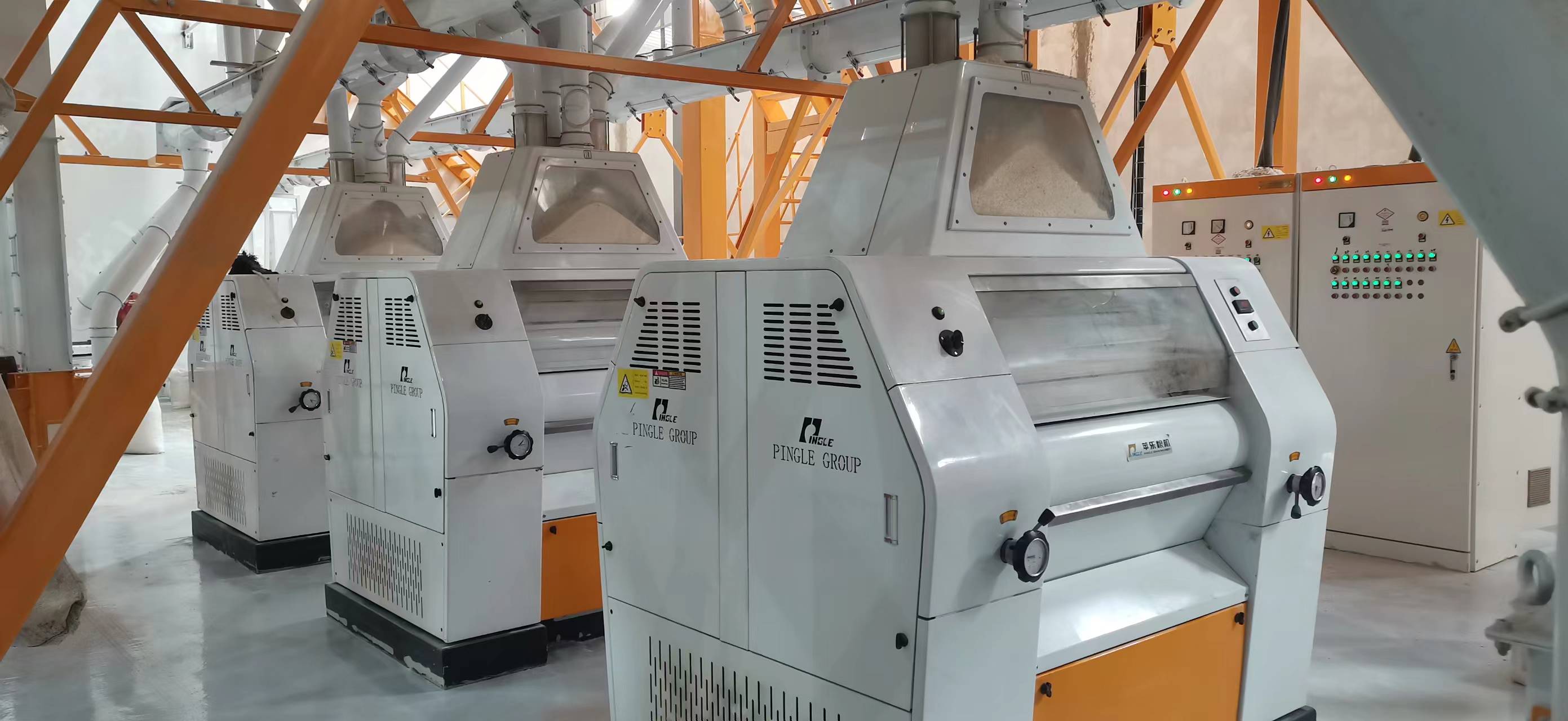
In the world of modern milling, consistency isn’t just a target—it’s the foundation that supports every batch of flour leaving the facility. True consistency means every granule behaves predictably, whether it’s absorbing water in a dough mixer or developing gluten under the hands of a baker. Achieving that level of uniformity requires more than precise machinery; it demands a deep synergy between raw material selection, climate-controlled environments, and real-time process adjustments. When a mill can deliver flour that performs identically from one silo to the next, it earns the trust that turns first-time buyers into long-term partners.
Capacity, often misunderstood as simply scaling up, is where many operations stumble. Bolting on extra sifters or running motors faster rarely solves the puzzle because throughput gains usually come at the expense of quality. The art lies in engineering systems that expand output without introducing variance. This means designing flow paths that minimize peak loads, using multi-stage tempering to stabilize kernel moisture, and adopting gentle grinding techniques that preserve starch granule integrity even at higher volumes. When capacity grows hand in hand with consistency, a mill can meet surging demand without ever compromising the flour’s signature performance.
The real breakthrough happens when these two ideals—consistency and capacity—are treated as interdependent, not competing. It’s about building a facility where every conveyor, every roller mill, and every purifier shares a single rhythm, orchestrated by data from in-line sensors and historical run logs. Operators aren’t just watching screens; they’re interpreting trends and nudging parameters before deviations occur. That proactive culture turns a production line into a living system that adapts to incoming wheat variations without missing a beat. In the end, a mill that masters this balance doesn’t just produce flour—it delivers reliability at scale, bag after bag, day after day.
Silent Innovations Powering Today's Mills
Behind the steady hum of today’s mills lies a wave of quiet advancements that rarely make headlines. From precision-engineered roller bearings that reduce friction to near-zero levels, to advanced vibration-dampening materials embedded in structural frames, these subtle upgrades have collectively cut energy consumption by double-digit percentages without altering the exterior silhouette of a single factory.
On the software side, real-time monitoring systems now track microscopic gear misalignments long before they become audible to the human ear, scheduling maintenance only when truly necessary. Meanwhile, adaptive lubrication technologies adjust their own flow rates based on temperature and load, releasing precisely metered droplets that extend equipment life by years. None of these solutions clamor for attention, yet they fundamentally reframe what a modern mill can achieve.
Even in the realm of airflow and dust management, computational fluid dynamics simulations have quietly reshaped ductwork layouts, capturing airborne particles more efficiently while using less suction power. It’s a world where incremental gains in bearing seals, belt materials, and micro-calibrations stack to create a cumulative leap in performance—all without a single press release.
Built to Last, Designed to Evolve
True endurance isn’t about resisting change—it’s about welcoming it without losing your core. We build things that don’t just survive the years; they gain character and capability as time passes. Every component is chosen for longevity, but also for its capacity to be updated, refined, or reimagined. What you hold onto should still excite you a decade from now, not remind you of a purchase you’ve outgrown.
Evolution is built into the blueprint, not treated as an afterthought. The structure remains solid while the features can shift to match new needs. Think of it as a living platform—one that grows alongside you, adapting to the rhythms of your life and work. We avoid rigid designs that age poorly; instead, we leave intentional space for future innovation, so the product you invest in today is already prepared for tomorrow’s possibilities.
This philosophy frees you from the cycle of constant replacement. Why discard something that still functions perfectly? Our approach means the object in your hands becomes a collaborator in your journey, not a disposable tool. It’s a quiet kind of confidence: knowing that what you rely on is meant to stay relevant, not just stay intact.
Precision That Starts at the Wheat Kernel
The journey to exceptional flour begins long before the milling process—it starts with the wheat kernel itself. Every grain is a tiny universe of potential, carrying distinct characteristics shaped by soil, climate, and careful cultivation. We treat each kernel as an individual triumph of nature, scrutinizing its size, weight, and protein content with a level of attention that borders on obsession. This meticulous selection ensures that only the most robust specimens move forward, laying the groundwork for flour that performs consistently, batch after batch.
Once the wheat arrives at our mill, precision takes on a physical form. Our machinery is calibrated to respect the kernel’s integrity, using gentle pressure and gradual reduction to separate the bran, germ, and endosperm with surgical accuracy. It’s not about speed—it’s about preserving the essential qualities that make each variety unique. Clean, even cuts expose the pure heart of the grain, allowing us to capture flavors and nutrients that coarser methods might sacrifice. This stage is a quiet dialogue between engineering and nature, and we listen intently.
Ultimately, this kernel-first philosophy means that every bag of flour tells a story of intentionality. Bakers notice the difference in dough that stretches smoothly, crusts that crackle just right, and crumbs that stay tender. By honoring the wheat from its very origin, we give you more than an ingredient—we hand over a foundation for creativity. Precision at this microscopic scale might seem invisible, but its effects ripple outward, transforming simple recipes into extraordinary experiences.
From Field to Flour: A Seamless Process
It starts quietly, with soil and seed. The wheat is planted in well-prepared ground, where it spends months drawing up nutrients from the earth and energy from the sun. Farmers pay close attention to moisture levels and growth stages, knowing that the quality of the grain is set long before harvest. When the stalks turn golden and the heads bow under their own weight, the timing has to be just right—cut too early and the kernels are immature, too late and they may shatter. The combine moves through the field, threshing and winnowing in a single pass, leaving nothing but chaff and stubble behind.
From the field, the grain makes its way to a receiving pit at the mill, where it’s weighed, sampled, and gently cleaned. Screens and air currents lift away bits of straw, dust, and any seeds that don’t belong. Magnets pull out any stray metal, and a scourer rubs the kernels clean. What’s left is pure, whole wheat, ready for the next step. The transition is continuous: the mill never really stops, and the grain moves through like a steady stream, often within just a few hours of being trucked in.
Grinding itself is a patient, multi-stage affair. The wheat first passes between fluted break rolls that crack it open, carefully separating the endosperm from the bran and germ. Sieves and purifiers sort the fragments by size and density, sending each fraction to the next set of rolls. The goal isn’t to pulverize everything at once, but to gradually reduce the endosperm to fine flour while keeping the bran in larger flakes that can be sifted out. By the end, the mill has produced a bright, consistent powder, and the whole journey—from the waving field to the bag of flour on a baker’s shelf—feels almost like a natural, uninterrupted flow.
FAQ
Modern machinery integrates precision engineering and automation, resulting in higher efficiency and consistent flour quality. It also reduces waste and energy consumption compared to traditional systems.
Reliability comes from robust design, quality components, and rigorous testing. Regular maintenance protocols and real-time monitoring systems also play a crucial role.
Key innovations include smart sensors for process optimization, advanced sifting technologies, and computer-controlled blending systems that allow millers to produce a wide range of flours with precise specifications.
Most reputable factories offer customized solutions based on the client's capacity needs, grain types, and end-product goals. They work closely with millers to design layouts that maximize space and throughput.
Challenges include maintaining consistent product despite varying wheat qualities, minimizing downtime, and adhering to food safety standards. Addressing these involves adaptive control systems, robust cleaning sections, and stainless steel construction.
After-sales service ensures that the equipment operates at peak performance over its lifespan. Prompt technical support, spare parts availability, and operator training are essential for minimizing disruptions.
Yes, many modern mills are designed to process wheat, corn, rice, and other grains with minimal adjustments. Multi-purpose milling equipment can switch between grains efficiently.
Quality control starts with raw material inspection and continues through each fabrication stage, with final performance testing. Precision machining and adherence to international standards ensure durable and accurate machinery.
Conclusion
At the core of modern flour milling lies a profound engineering discipline that transforms humble wheat grains into life's essential ingredient. This intricate process begins with a meticulous respect for the raw kernel—every roller mill, sifter, and purifier is calibrated to unlock the grain's potential with microscopic precision. From the moment wheat enters the facility, a seamless choreography of cleaning, conditioning, and grinding unfolds, ensuring that nothing is wasted and every constituent is directed toward its optimal end-use. The journey from field to flour is not just a series of mechanical steps but a reflection of how deeply integrated systems can honor the integrity of the grain while meeting exacting standards. It's this foundational engineering that breathes life into milling operations, balancing tradition with cutting-edge automation to handle diverse wheat varieties with uncompromising quality.
Beyond the initial transformation, the true measure of a machinery factory's expertise reveals itself in the relentless pursuit of consistency and capacity. Modern mills demand more than sheer output; they require equipment that can maintain uniform granulation, moisture, and protein distribution across vast tonnages. Silent innovations—advanced acoustics, energy-efficient drives, self-monitoring bearings—quietly elevate performance without disrupting the operational flow. Durability is engineered into every component, but so is adaptability: modular designs allow mills to evolve with shifting market demands, whether for artisan flours or bulk commodity grades. This blend of robustness and flexibility ensures that today's investment remains relevant for decades, embodying a philosophy where factories are not just built to last, but designed to thrive amid change.
Contact Us
Contact Person: Jiakuo Wu
Email: [email protected]
Tel/WhatsApp: +86-13011566087
Website: https://www.pinglemachine.com