

Wheat Grain Mill Manufacturer Unveils Advanced Milling Solutions for Modern Bakeries
2026-07-22
Behind every exceptional loaf of bread is a milling process that doesn’t cut corners. As bakeries push for higher standards, PINGLE has stepped up with a new lineup of grain mills engineered to deliver unmatched consistency and efficiency. Here’s why the latest innovations are turning heads in the baking industry.
Precision Grinding for Uniform Flour That Bakers Can Rely On
Achieving consistent flour texture starts with precise control over the grinding process. The mill employs a meticulously calibrated roller system that maintains exact gap distances, ensuring each grain is reduced to the same particle size. This uniformity eliminates pockets of coarse grit or overly fine powder, giving bakers a flour that behaves predictably in every batch—whether it’s for delicate pastries or hearty artisan loaves.
Temperature management is equally critical. As grain passes through the rollers, friction can generate heat that damages starch and protein structures. Our low-temperature grinding technology preserves the integrity of these components, preventing overheating that would otherwise compromise dough development and rise. The result is a flour with stable absorption rates and reliable fermentation performance, batch after batch.
From whole wheat to refined white flours, this attention to detail means fewer adjustments in the bakery. Doughs hydrate evenly, gluten develops consistently, and fermentation proceeds at a steady rhythm. Bakers can trust that the flour’s granulation profile won’t shift with the seasons, giving them the confidence to scale recipes without second-guessing their core ingredient.
Tailor-Made Milling Setups to Match Any Bakery Profile
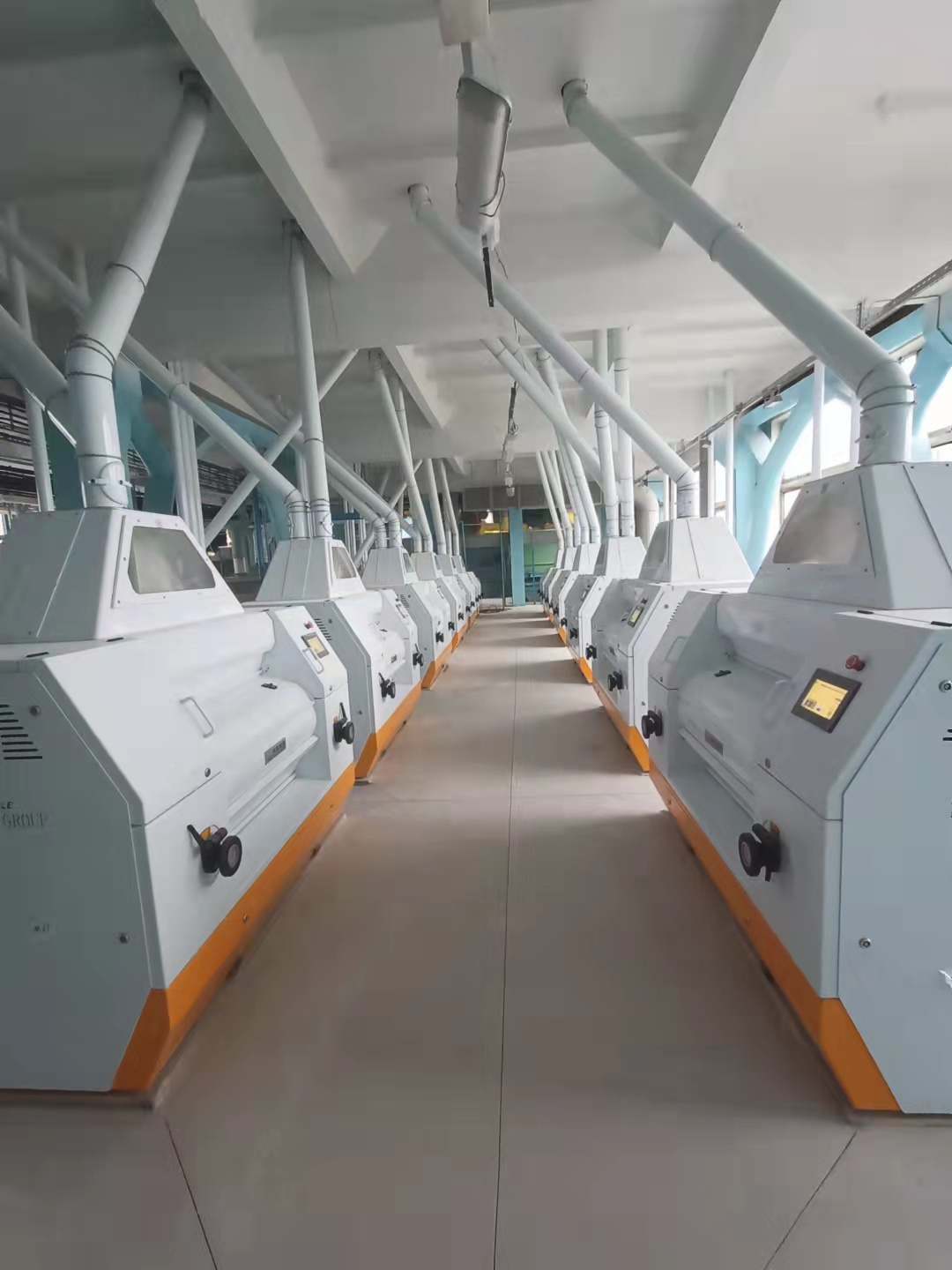
Every bakery has its own rhythm—some craft delicate pastries, others focus on rustic sourdough, and many juggle a bit of both. Off-the-shelf milling systems often force compromises, pushing you to adapt your recipes to the flour instead of the other way around. A tailor-made setup changes that, letting you define exactly how your grain is cleaned, conditioned, and milled so the flour matches your signature products from day one.
What makes a custom configuration truly stand out is the freedom to choose components that reflect your production goals. Whether you need a compact stone mill for small-batch whole grain flavors, a high-efficiency roller mill for consistent white flour, or a hybrid line that switches between both, the layout is built around your space and workflow. Variable speed drives, sifter cascades, and blending options become part of a coherent system, eliminating bottlenecks and reducing manual adjustments.
Beyond the hardware, a personalized approach means considering your future too. A well-designed milling setup grows with you—capacity can be increased by adding modules, and control systems can be updated as automation standards evolve. This way, you’re not just investing in today’s production needs but securing a flexible foundation that adapts to new bread trends, seasonal ingredients, or a sudden spike in demand without requiring a complete overhaul.
Boosting Output While Keeping Energy Consumption in Check
Balancing higher output with manageable energy use often comes down to rethinking routine operations. One practical approach is to audit how equipment runs throughout the day—many systems hum at full capacity even when demand dips, wasting power without adding value. Adjusting process schedules to match real-time needs or upgrading to variable-speed motors can trim consumption sharply while preserving—or even lifting—output levels.
Another tactic focuses on recovering energy that’s usually lost. Waste heat from machinery or exhaust streams doesn’t have to disappear unused; feeding it back into heating, preheating, or generating auxiliary power turns a cost into an asset. Simple heat exchangers or more integrated cogeneration setups can redirect that thermal energy, cutting the facility’s net draw from the grid without touching production targets.
Beyond hardware, small behavioral shifts add up. Training teams to spot and report minor leaks, misaligned conveyors, or compressed-air overuse creates a culture where efficiency becomes second nature. When operators know that dialing back a pump by just a few percent can maintain flow while saving kilowatts, those daily decisions amplify gains across the whole floor—more output from every unit of energy consumed.
The Link Between Milling Technology and Dough Behavior
The way grain is milled has a direct and often underestimated influence on how dough behaves during mixing, fermentation, and baking. Particle size distribution, starch damage, and even the heat generated during grinding can alter water absorption rates and gluten development. For instance, stone-ground flour typically contains larger particles of bran and germ, which can disrupt gluten networks and lead to a denser crumb, while roller-milled flour produces a finer, more uniform particle that hydrates quickly and yields a more consistent dough. These differences force bakers to adjust hydration levels and mixing times, proving that milling choices are not just technical but deeply practical.
Beyond particle size, the temperature and pressure applied during modern milling can denature proteins or gelatinize starch prematurely, creating subtle but significant shifts in dough extensibility and gas retention. High-speed roller mills, while efficient, often generate enough friction to raise flour temperature, which may reduce gluten strength over time. Conversely, low-speed milling methods preserve more of the grain’s native enzymes and lipids, contributing to longer fermentation windows and better flavor development. Understanding this interplay allows millers and bakers to design flours tailored to specific products—like a high-starch-damage flour for crisp crackers or a low-impact milled flour for artisan breads requiring long bulk fermentation.
Ultimately, the milling process becomes a hidden ingredient in every bakery, shaping dough rheology and final product quality. Even subtle adjustments in roll gap settings or sifting screens can mean the difference between a dough that springs back uncontrollably and one that relaxes gracefully into shape. This explains why bakeries often form close partnerships with mills, exchanging feedback to refine extraction rates and ash content. It’s a dynamic relationship where technology and tradition converge, and where knowing the language of milling gives bakers a powerful tool for consistency and creativity in their craft.
Smarter Particle Control for Fuller Flavors and Better Crumb
Achieving a crumb that feels open yet tender hinges on how we handle particle size throughout the process. Instead of simply grinding everything to the same fine dust, we pay close attention to the natural variations in ingredients—coarser bits of grain or seed can create micro-pockets during baking, releasing trapped aromatics in stages. This approach doesn't just alter texture; it deepens flavor as the palate encounters subtle bursts tied to those larger fragments.
Our mills now operate with adaptive gap adjustments, responding in real time to moisture shifts and kernel hardness. This preserves the integrity of volatile oils in spices or the nuanced sweetness in heritage grains, elements easily lost when everything is pulverized uniformly. The result is a dough that ferments more predictably, with yeast activity gently coaxed along by the uneven surfaces these smarter-sized particles create.
You can taste the difference in a crust that shatters lightly and a crumb that stays moist longer. It’s the kind of control that turns a good loaf into a memorable one, without relying on additives or over-processing. By letting the ingredients guide the grind, we unlock fuller, more layered flavors naturally.
Hassle-Free Upkeep Designed for Real-World Bakery Shifts
When you're in the middle of a busy shift, the last thing you want is equipment that demands constant attention. That's why every component, from the sealed bearings to the snap-out crumb trays, has been engineered to need minimal interaction. A quick wipe-down after the morning rush is genuinely all it takes to keep things running smoothly. No special tools, no confusing manuals—just components that work with the rhythm of your bakery, not against it.
We've paid close attention to the details that usually get overlooked: drip channels that guide excess moisture away from electronics, smooth surfaces that don't trap flour, and sensors that self-calibrate overnight. This means your team spends less time on maintenance rituals and more time on what actually matters—getting fresh product out to customers without interruption.
Real-world testing in high-volume bakeries showed us that even small design tweaks—like angled control panels that shed debris instead of collecting it—can save minutes each day. Over a month, those minutes add up to hours of reclaimed productivity. It's not just about durability; it's about creating a workhorse that fits seamlessly into the chaos of daily production without becoming another task on your checklist.
FAQ
A wheat grain mill manufacturer has introduced new advanced milling solutions designed specifically for modern bakeries.
Modern bakeries aiming to improve flour quality and production efficiency will benefit the most.
They incorporate cutting-edge technology that enhances precision, energy efficiency, and consistency in flour production.
They enable bakeries to produce a wider variety of high-quality flours while reducing waste and operational costs.
Yes, the equipment is versatile and can process various grains such as wheat, rye, and spelt to meet diverse baking needs.
The systems feature intelligent automation, real-time monitoring, and fine-tuning capabilities that optimize the milling process from start to finish.
Absolutely, the solutions are built to minimize energy consumption and material waste, aligning with eco-friendly practices in the baking industry.
It could set a new standard for flour quality and production efficiency, helping bakeries large and small elevate their products and meet consumer expectations.
Conclusion
A new generation of milling equipment is redefining what bakeries can expect from their flour. At the heart of these advanced systems is precision grinding that delivers uniform particle size batch after batch, eliminating the guesswork that often plagues dough consistency. Bakers gain tight control over extraction rates and granulation profiles, with setups engineered to match the specific demands of artisan loaves, high‑volume pan bread, or delicate pastry work. This adaptability translates directly to the bench: when flour is milled to suit a bakery’s unique fermentation and handling methods, dough development becomes more predictable, hydration tolerances widen, and final crumb structure improves. Rather than adjusting techniques to fit the flour, bakeries now have tools that align the raw material with their craft.
Beyond output quality, the manufacturer has tackled the daily realities of running a production bakery. Smart particle control not only boosts extraction efficiency but also preserves volatile flavor compounds and natural grain character, yielding bread with richer aroma and a more open, tender crumb. Energy draw has been systematically reduced through drive‑train refinements and optimized roll geometries, cutting operational costs without sacrificing throughput. Maintenance, too, has been designed for real‑world shifts: accessible components, quick‑change sieves, and wear‑resistant surfaces keep downtime to a minimum. For bakeries that operate around the clock, these practical improvements mean less time spent on service and more time turning out consistent, high‑scoring products that keep customers coming back.
Contact Us
Contact Person: Jiakuo Wu
Email: [email protected]
Tel/WhatsApp: +86-13011566087
Website: https://www.pinglemachine.com