

Working Principle of All-in-One Air Compressors: How They Operate
2026-07-12
Ever wondered how all-in-one air compressors manage to pack compression, storage, and regulation into a single efficient unit? These versatile machines are the backbone of many workshops and industries, yet their inner workings often remain a mystery. In this post, we strip away the complexity to reveal the core principles that make them tick—from the pistons to the pressure controls. Whether you’re looking to optimize your setup or simply satisfy your curiosity, understanding these fundamentals is key. And with Seize Air, you get cutting-edge design built on these very principles.
The Compression Core: Unpacking the Rotary Screw and Piston Mechanics
At the heart of most industrial air compressors lies a tug-of-war between rotary screw and piston designs, each with a distinct rhythm for squeezing air into usable energy. Piston compressors operate like a bicycle pump, drawing air into a cylinder with a downward stroke and compressing it on the upward motion. This simple, brute-force method creates pulses of pressure, relying on crankshaft inertia to smooth out the delivery. In contrast, rotary screw compressors use two interlocking helical rotors that mesh without contact, trapping air in the cavities and progressively shrinking the volume as it moves along the screw length. The result is a continuous, vibration-free airflow that sidesteps the pounding beat of pistons.
The mechanical contrast shapes their personalities in real-world settings. Piston machines thrive in intermittent use — think workshops or tire inflation — where their robust, repair-friendly anatomy handles stop-start cycles without complaint. They’re the workhorses that don’t mind idling. Screw compressors, meanwhile, are built for stamina, running 24/7 in factories where constant pressure matters more than peak bursts. Their oil-flooded variants bathe the rotors in a cooling and sealing film, boosting efficiency and longevity, while oil-free models answer the call of sensitive applications like food packaging. The choice ultimately hinges on whether you’re asking for a steady marathon runner or a powerful sprinter.
What often gets overlooked is how these two technologies manage heat and wear. Pistons deal with friction through rings and oil control, but high temperatures at the valves demand regular maintenance. Rotary screws spread the thermal load across a larger surface, and with proper oil cooling, they can maintain lower operating temperatures. This subtle engineering dance — balancing thermal dynamics, friction, and duty cycles — defines not just compressor lifespan but also the hidden cost of ownership that technicians learn to respect over decades on the shop floor.
Power Transfer: How the Motor and Drive System Fuel the Process
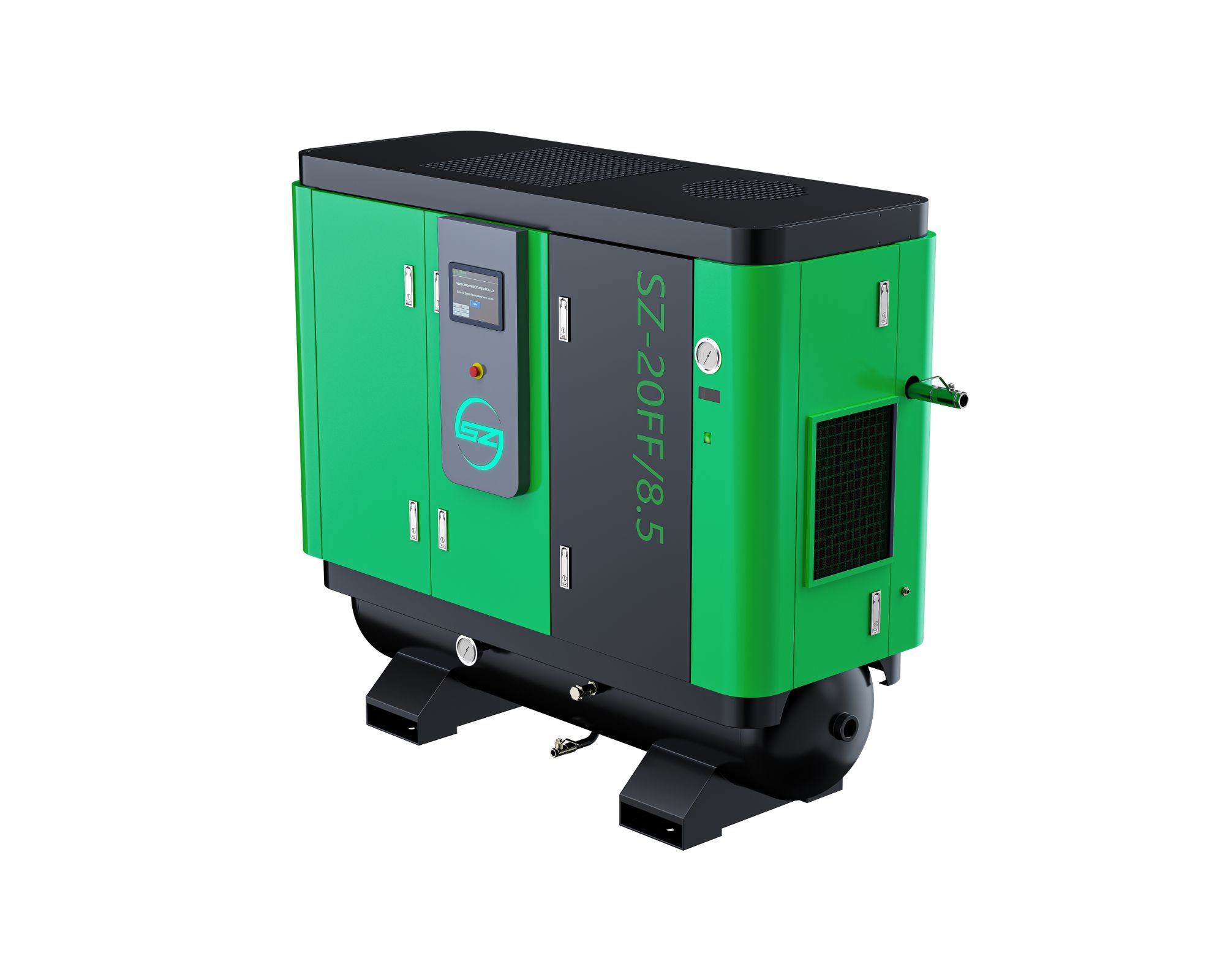
At the core of any industrial process lies the motor and drive system, quietly converting electrical energy into the precise mechanical motion that keeps production lines moving. It's not just about spinning a shaft—modern drives carefully regulate speed, torque, and direction to match the exact needs of the task, whether it's gently handling fragile materials or powering a heavy-duty crusher. This seamless translation of power is what turns raw potential into consistent, reliable output.
The real intelligence sits in the drive, which acts as the brain of the operation. By continuously monitoring load conditions and making micro-adjustments, it avoids energy waste and mechanical stress. For example, a conveyor belt might slow down automatically during low-demand periods, saving power without any human intervention. This dynamic control not only extends equipment life but also allows the entire process to breathe—adapting in real time to upstream and downstream changes.
Ultimately, the pairing of motor and drive is what turns a rigid machine into a flexible, responsive asset. When configured correctly, it can communicate with sensors and control systems to anticipate demand, smooth out power peaks, and even self-diagnose issues before they cause downtime. In an era where efficiency and adaptability matter more than ever, this invisible transfer of power is the unsung hero of manufacturing and processing facilities worldwide.
Thermal Dynamics: Managing Heat in a Compact Package
When everything is packed into a space no larger than a deck of cards, heat doesn’t just dissipate—it lingers, building up in hotspots that can throttle performance or shorten component life. We tackled this by pairing a custom vapor chamber with strategic airflow channels carved directly into the chassis. The result isn’t just efficient cooling; it’s a system that stays whisper-quiet even under sustained load, because the heat moves out before the fans ever need to scream.
Materials play a quiet but critical role here. Instead of defaulting to aluminum across the board, we used a copper-graphite composite for the primary thermal path, which spreads heat laterally almost twice as fast. The outer shell acts as a secondary radiator, deliberately textured to increase surface area without adding bulk. You can feel it working—the warmth spreads evenly across the underside, never concentrating in one uncomfortable spot.
Unexpectedly, the biggest challenge wasn’t the CPU or GPU but the power delivery components, which run hot in confined spaces. We re-routed the main power plane to act as a heat spreader, sinking waste energy into the mid-frame. It’s the kind of thing that doesn’t make it into spec sheets, but it’s why this device can maintain peak clocks for hours while others throttle in minutes.
Purifying the Output: Filtration and Air Treatment Stages
Most air purification systems rely on a carefully sequenced series of filtration and treatment stages to progressively strip contaminants from the air stream. The journey often begins with a pre-filter, designed to capture larger particles such as dust, lint, and pet dander. This not only improves overall air quality but also protects the more delicate downstream filters from premature clogging. Typically made from foam or non-woven polyester, the pre-filter is washable and reusable, offering a cost-effective first line of defense. In some designs, an activated carbon layer follows, targeting odors, volatile organic compounds (VOCs), and smoke by adsorbing gas molecules onto its porous surface.
The core purification stage in high-performance units is usually a HEPA filter, which traps 99.97% of particles as small as 0.3 microns – including mold spores, bacteria, and most airborne allergens. Air passes through a dense mat of randomly arranged fibers, where particles are intercepted through impaction, interception, and diffusion. To address what filters alone cannot capture, many systems incorporate a final treatment stage: ultraviolet germicidal irradiation (UVGI) or photocatalytic oxidation. UV-C light inactivates microorganisms by disrupting their DNA, while photocatalytic reactors create reactive oxygen species that break down volatile organic compounds at the molecular level. This multi-stage approach ensures that the output air is not only visibly clean but genuinely purified, free from both particulate and chemical pollutants.
Intelligent Regulation: Sensors and Controllers in Action
Modern systems thrive on real-time data, and sensors are the unsung heroes collecting everything from temperature to vibration. A thermocouple inside a furnace, for instance, translates heat into millivolt signals with remarkable consistency. These tiny translators don't just gather numbers—they capture the pulse of a process, feeding controllers the raw material they need to make split-second calls. Without this steady stream of input, even the smartest controller would be flying blind, reacting to yesterday's conditions instead of this moment's reality.
Controllers take on the heavy lifting once data flows in, comparing current readings against target values and calculating how much to adjust an actuator. A PID loop might tweak a valve opening by a fraction of a millimeter to hold pressure steady, while a feedforward algorithm preempts disturbances before they ripple through the line. It's not just math—it's a constant negotiation between stability and responsiveness, where well-tuned parameters can mean the difference between seamless operation and a costly ripple of errors. The real artistry lies in bridging the gap between sensor precision and actuator mechanics, often in environments that throw curveballs like electrical noise or thermal drift.
Seamless Integration: How Components Unite in an All-in-One System
Bringing together distinct tools into a single platform is often less about the technology itself and more about how intuitively they communicate. When a CRM, an email marketing module, and an analytics dashboard sync without visible seams, the user stops thinking about logistics and starts focusing on outcomes. The real magic happens when these blocks share a common data language, eliminating the need for manual exports or clunky workarounds.
Behind the scenes, an all-in-one system treats every component as part of a larger conversation. A contact update in one corner instantly reflects across every relevant view, and automation rules pull from the same source of truth. This isn’t just convenience—it fundamentally changes how teams operate. Discussions move from “how do we get this data from A to B” to “what can we build now that everything speaks the same language.”
What often goes unnoticed is the design thinking that prevents feature bloat. Instead of bolting on capabilities, the best unified platforms weave them into a coherent workspace where each addition feels like a natural extension. Navigation stays predictable, and the learning curve flattens because every tool follows similar logic. That continuity turns a collection of features into a genuine system you don’t have to decode before you can use it.
FAQ
An all-in-one air compressor integrates the compressor pump, motor, storage tank, dryer, and filters into a single compact unit, unlike traditional systems where these components are separate. This design saves space, simplifies installation, and reduces energy losses from interconnecting piping.
They operate by drawing in ambient air through an intake filter, compressing it using a piston or rotary screw mechanism, storing the compressed air in an integrated tank, cooling it via an aftercooler or built-in dryer to remove moisture, and finally delivering clean, dry air directly to the application point.
Most all-in-one compressors feature a refrigerated or desiccant dryer that cools the compressed air, causing water vapor to condense and separate out, often combined with a coalescing filter to remove oil aerosols and fine particles, ensuring the output air is free of contamination.
Key components include the air intake filter, compression element (piston or screw), electric motor, storage tank, aftercooler, dryer, moisture separator, pressure switch, safety valve, and control system, all housed within a soundproof enclosure for quiet operation.
Their compact design minimizes pressure drops and heat losses caused by long pipe runs between separate components, and they often use variable speed drives that adjust motor speed based on demand, significantly cutting energy consumption during partial load conditions.
Regularly cleaning or replacing intake filters, draining condensate from the tank and dryers, checking belt tension (if applicable), monitoring oil levels (in lubricated models), and inspecting seals and hoses prevent failures and maintain efficiency. Following the manufacturer's service schedule is crucial.
They are ideal for dental clinics, laboratories, small manufacturing workshops, laser cutting machines, and packaging lines where reliable, high-quality compressed air is needed in a limited footprint. Their quietness also suits point-of-use installations in noise-sensitive environments.
A microprocessor-based controller monitors system pressure and adjusts motor speed or starts/stops the compressor accordingly. Advanced units use load/unload cycles and may feature remote monitoring, ensuring stable pressure while avoiding unnecessary energy waste.
Conclusion
The heart of an all-in-one air compressor lies in its compression mechanism, where rotary screw or piston designs convert atmospheric air into high-pressure output. In rotary screw models, intermeshing rotors spin at high speeds, trapping air and progressively squeezing it down the length of the screws. Piston compressors, on the other hand, rely on a crankshaft-driven piston that repeatedly draws in air and forces it into a smaller volume with each stroke. This core action is driven by an electric motor or sometimes a gas engine, which transfers rotational energy through belts or direct couplings to the compression chamber. The drive system must deliver consistent torque despite load variations, often using variable-speed technology to match air demand precisely, reducing energy waste. As compression generates intense heat, managing thermal dynamics becomes critical. Integrated cooling systems—air-to-air or air-to-water heat exchangers—dissipate heat rapidly within the compact frame, preventing overheating and maintaining component longevity.
Once the air is compressed, it carries moisture, oil, and particulates that must be removed to meet application requirements. Refrigerated or desiccant dryers built directly into the unit condense and extract water vapor, while coalescing and particulate filters capture contaminants down to the micron level. This multi-stage treatment ensures the output air is clean, dry, and reliable for sensitive tools and processes. Intelligent regulation comes via an array of sensors and microprocessor-based controllers that monitor pressure, temperature, dew point, and flow in real time. They adjust motor speed, cooling fan operation, and drain valves automatically, optimizing performance and protecting against faults. The beauty of the all-in-one design is how these subsystems—compression, power, cooling, purification, and control—are seamlessly integrated into a single, plug-and-play package. Piping, wiring, and structural mounting are pre-engineered to minimize footprint and installation complexity, enabling the unit to deliver compressed air with minimal noise and maintenance, ready to power workshops or industries from a compact, cohesive assembly.
Contact Us
Contact Person: Mia
Email: [email protected]
Tel/WhatsApp: +86 19821985894
Website: https://www.seize-air.com